Bruise From Mounjaro Injection: What Is Normal and What to Do About It
Medically reviewed by Puja Vyas, Lead Clinical Pharmacist.
Mounjaro bruising at the injection site is one of the most commonly reported experiences among women using tirzepatide for weight loss. If you’re one of them, you’ve got no reason to worry. It’s completely normal.
We’ve covered everything from why it happens, which technique mistakes make it worse, how to prevent it, and the signs that mean you should contact your clinician.

Why Mounjaro Causes Bruising at the Injection Site?
You’ve Nicked a Small Blood Vessel
Mounjaro is a subcutaneous injection, meaning that it needs to be injected in the fat layer of the skin and not into the blood vessels. But the subcutaneous tissue in your abdomen, thigh, and upper arm is threaded with a network of tiny capillaries.
When the needle passes through one, a small amount of blood leaks into the surrounding tissue and forms a bruise. It is not harmful and does not affect the efficacy of the medication at all. It usually heals on its own within 5-10 days in most cases.
Skin Sensitivity
Any injection when administered every week in the same area, the skin and tissue at that site can become sensitive over time. Mounjaro injections are no different. This is why rotating sites every week helps.
Other Factors That Increase Bruise Risk
- Skin tone and how easily you bruise generally. This can differ a lot from person to person.
- Blood-thinning medications like aspirin and ibuprofenall increase bruising risk.
- Lower body fat, making the needle sit closer to muscle and vessels
- Hormonal fluctuations, which can affect skin fragility. These are more relevant across the menstrual cycle and perimenopause
- Iron deficiency or anaemia can increase bruise tendency. This is more common in women.
Common Types of Mounjaro Injection Site Reactions
While most of the reactions might look like bruising, there can be other types of reactions too. Here’s how you can tell them apart:
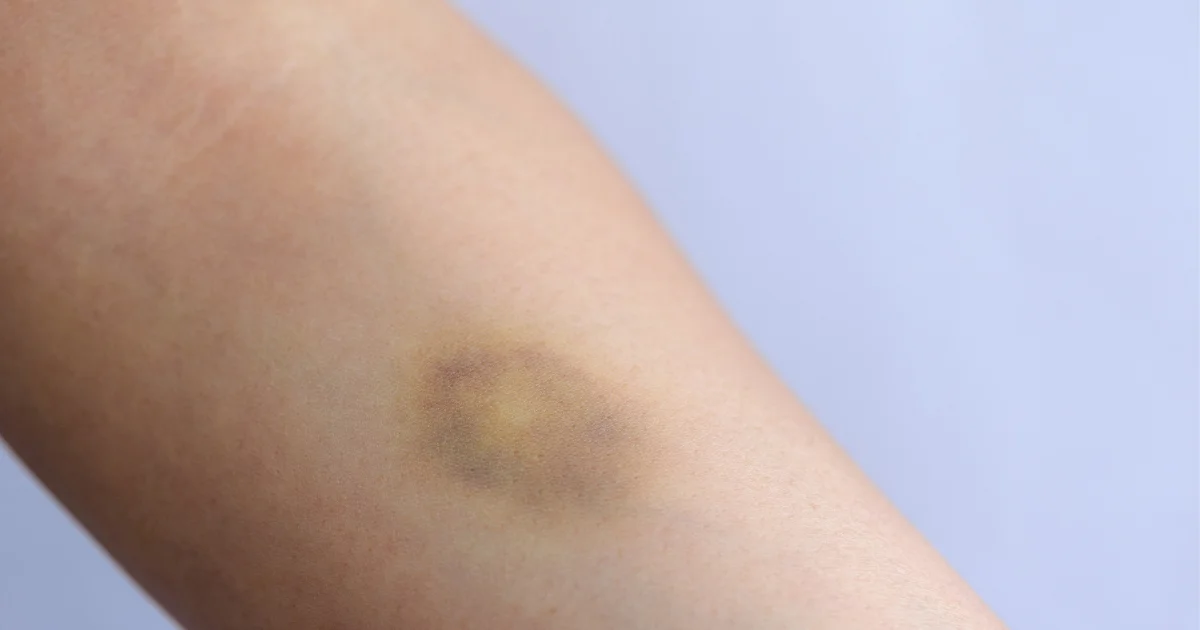
- Bruising: Discolouration from red/pink to purple/blue, usually within a 1–2cm radius. Appears within hours to a day, tender to touch, fades within a week.
- Redness and swelling: Mild redness and slight swelling directly around the site is normal for up to 48 hours. If the redness spreads further, it may be something else.
- A small lump or hard area: This is called lipohypertrophy and it usually develops if the same site is used repeatedly. Rotating sites prevents it.
- Itching: Brief itching around the site is common and usually resolves quickly. It’s just your body’s normal localised response.
How to Prevent Mounjaro Bruising
Choose the Right Site and Rotate Every Week
Approved sites for Mounjaro injection are the abdomen (at least 5cm from your navel), outer thigh, and upper arm. Each contains a slightly different capillary density.
The outer thigh usually has the least vascular area, and hence provides the least chance of bruising. However, irrespective of the site you choose, you must not inject in the same spot twice in a row. A simple rotation (left abdomen, right abdomen, left thigh, right thigh) gives tissue time to heal.
This is your best way to avoid bruising.
Injection Technique
- Let the pen sit at room temperature for 30 minutes before injecting. A cold solution increases tissue trauma
- Clean the site and let it dry fully before injecting. Wet skin can cause stinging and micro-tears
- Avoid rubbing the site afterwards. It spreads blood into surrounding tissue, making bruising worse
- Hold the pen firmly and keep it still for 10 seconds after injecting
- Never inject through clothing
- Pinch the skin slightly only if recommended by your clinician. Pressing it too hard can compress your vessels
Watch Certain Medications Before Injection Day
NSAIDs like ibuprofen, and supplements including fish oil, vitamin E, and ginkgo, can increase bruising at times. It’s best if you speak to your clinician before changing any medication or supplement routine.
How Long Does a Mounjaro Bruise Last?
Typically 5–10 days. Like any bruise, it follows a colour cycle as it heals: starting red or pink, deepening to purple or blue, then fading to green and yellow before disappearing.
The important thing to know and remember is that bruising does not affect absorption and has no impact on your weight loss journey. It’s just a surface reaction. You may want to contact your clinician if the bruise doesn’t disappear after 2 weeks, keeps growing or gets unusually painful.
When to contact a clinician for Mounjaro Bruising?
You must contact your clinician if:
· The bruise is significantly larger than a 50p coin and expanding
· The skin feels very hot, hard, or has visible red streaking (possible infection)
· You have a fever or flu-like symptoms alongside the bruise
· The bruise hasn’t faded at all after two weeks
· You are experiencing unusual pain in the affected area
Bruising vs an Allergic Reaction
An allergic reaction to Mounjaro is rare, but some people might experience hives, swelling beyond the injection site, difficulty breathing, or dizziness. These are not the same as localised bruising. If you experience any of these, you must stop the injection immediately and seek urgent medical advice.
What to Do if You Bruise Easily on Mounjaro
- Apply a cool compress immediately after injecting (no direct ice, ever)
- Do not press or massage the site afterwards
- Review your injection technique with your clinician/prescriber. Wrong techniques can be harmful. Even small adjustments often make a big difference
- Check whether any other medications could be contributing
- Consider switching sites, for example, from abdomen to thigh

Frequently Asked Questions
Is it normal to get a bruise from a Mounjaro injection?
Yes, bruising at the Mounjaro injection site is common and usually nothing to worry about. It happens when the needle clips a tiny blood vessel under the skin. The bruise typically fades within 5 to 10 days and does not affect how well the medication works.
How do I stop bruising from Mounjaro injections?
Rotate your injection site every week, let the pen warm to room temperature before use, and avoid rubbing the area afterwards. Do not inject into the same spot twice in a row. If bruising is frequent or severe, speak to your prescribing clinician.
How long does a bruise from a Mounjaro injection last?
Most bruises from Mounjaro injections last between 5 and 10 days. They typically change colour from red or purple to green and yellow as they heal. If a bruise has not faded after two weeks or is getting larger, contact your clinician.
Should I be worried about a large bruise from my Mounjaro injection?
A bruise slightly larger than usual is acceptable. However, if the bruise is expanding, the skin feels hot or hard, there is red streaking around the area, or you develop a fever, these could be signs of infection, and you should contact a clinician promptly.
Can I inject Mounjaro in the same spot if I have a bruise?
No. You should avoid injecting into or near an existing bruise. Wait for the bruise to fully heal before using that site again. Rotating between approved sites (abdomen, outer thigh, upper arm) each week helps prevent repeated bruising in the same area.
Does Mounjaro bruising affect weight loss?
No. A bruise at the injection site does not affect the absorption of tirzepatide or reduce how effective Mounjaro is for weight loss. The medication is absorbed into the subcutaneous tissue around the injection site, and surface bruising does not interfere with this process.
Why do I bruise more on Mounjaro than on other injections?
It can be down to individual skin sensitivity, the specific injection sites used, or technique. Hormonal factors and certain medications can also make bruising more likely. Please speak with your clinician if you’re concerned.
Sources & Further Reading
1. Cochrane Library — Subcutaneous Injection Technique and Tissue Trauma
2. Mounjaro KwikPen Patient Information Leaflet (EMC / MHRA)
3. Mounjaro KwikPen PIL — Injection Site Rotation Instructions (PDF)
4. Diabetes UK — Lipohypertrophy
5. British Journal of Diabetes — Injection Site Rotation as Preventive Strategy
The content on the SheMed blog is provided for general informational and educational purposes only. While SheMed provides professional weight loss services and strives to ensure the information shared is accurate and up to date, we make no representations or guarantees as to its accuracy, completeness, or timeliness. This content should not be taken as personal medical advice or a substitute for consultation with a qualified healthcare provider. Always speak with your doctor or licensed medical professional about your individual health or medical needs before starting any new treatment or programme. Never disregard or delay seeking professional medical advice because of something you have read on this site. SheMed is not responsible for any actions you may take based on the information provided in this blog.
Related Articles