Acanthosis Nigricans and Skin Tags in PMOS (Formerly PCOS): What They Mean

Dark, velvety patches on the back of your neck or under your arms, or new skin tags around the same area, are common skin changes and are harmless. But they can be a visible clue of something deeper going on in your body: insulin resistance.
Insulin resistance sits at the heart of PMOS (formerly PCOS). The medical term for those dark patches is acanthosis nigricans. While they are not a part of the criteria for diagnosing PMOS, understanding what they signal and what you can do about them can be very important to you.
Key Takeaways
- Acanthosis nigricans (dark, velvety skin patches) and skin tags are both associated with insulin resistance, a core feature of PMOS.
- Neither skin change confirms PMOS or diabetes on its own. They are clues, not a diagnosis.
- Dark patches often improve when the underlying cause is addressed, though this can take months and results vary.
- Existing skin tags will not disappear on their own. A GP or dermatologist can discuss removal options.
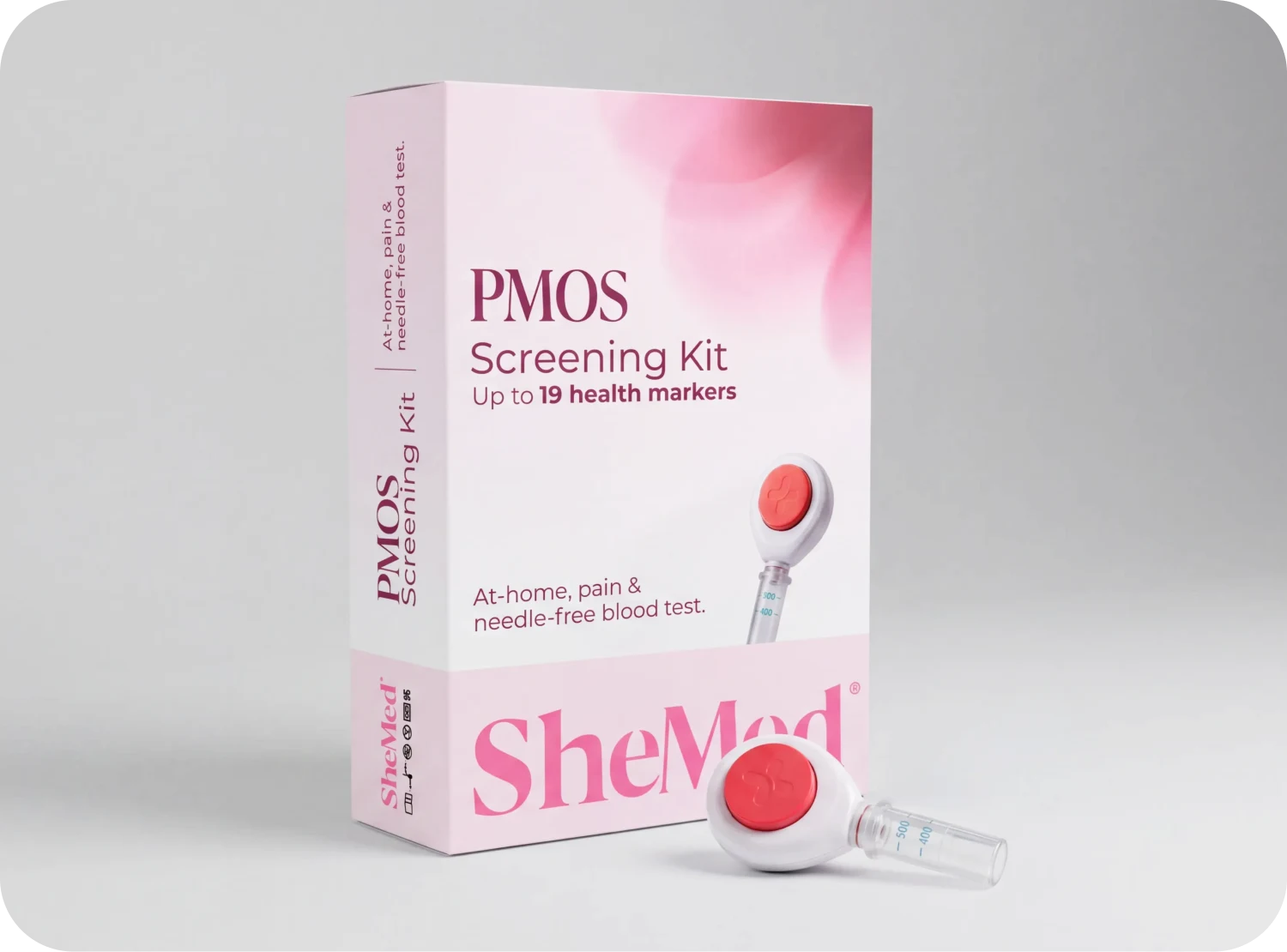
- If you are seeing these skin changes alongside other PMOS symptoms, the PMOS Screening Kit can check up to 19 hormone and metabolic markers from home.
What are acanthosis nigricans and skin tags?
What is acanthosis nigricans?
Acanthosis nigricans is a skin condition where patches of skin become darker, thicker, and velvety in texture. These patches are not bruises, rashes or caused by poor hygiene. Many women with PMOS talk about scrubbing the affected area, only to realise that discolouration does not come off.
On a Reddit community named r/PCOS, one woman described it as her "biggest insecurity, next to facial hair". She had been trying to wash it away for years before learning what it actually was.
What are skin tags?
Skin tags are small, soft growths that hang from the skin on a thin stalk. They are not dangerous and, most importantly, not a sign of cancer. They are very common and affect almost half of all adults at some point, says the NHS.
What causes skin tags? In most cases, friction between the skin and clothing causes them. But when they appear alongside acanthosis nigricans, particularly in folds and creases, insulin resistance is often a contributing factor.
They are not a part of the Rotterdam criteria used for diagnosing PMOS, but if you see them along with other symptoms, it’s worth discussing with your GP.
Where do they appear on the body?
Both acanthosis nigricans and skin tags usually cluster in the same places: skin folds and areas with friction and warmth. These include -
Neck
The back and sides of the neck are the most commonly affected areas for acanthosis nigricans and skin tags related to insulin resistance. Dark patches on the neck are often the first visible sign (people who have a term for it – “dirty neck”).
These patches may look like a shadow at first but deepen over time. Skin tags on the neck often appear in small clusters, and you’ll mostly notice when jewellery catches on them.
Armpits
Dark armpits are another very common form of skin tags. The underarm skin is prone to heat, moisture and friction, and hence these tags. Women on Reddit often talk about their underarms getting darker after shaving. We’ve read comments like "I avoid shaving. It makes my underarms darker." Waxing or epilating may reduce that irritation.
Groin and under the breasts
The groin, inner thighs, and skin folds under the breasts are also common locations. These areas can be harder to notice. They are also sometimes dismissed as chafing or hyperpigmentation from shaving. If you see dark patches in these areas alongside other PMOS symptoms such as irregular periods or unwanted hair growth, you must raise it with your GP.
Why does PMOS cause dark skin patches and skin tags?
The insulin resistance link
It’s the insulin resistance. PMOS causes body cells to respond abnormally to insulin. To compensate for it, the pancreas ends up producing more insulin than usual. These elevated insulin levels stimulate receptors in skin cells, causing them to multiply faster than they should. This thickens the skin and creates that dark, velvety texture of acanthosis nigricans.
The same high insulin environment also promotes the growth of skin tags in areas where skin is folded or under friction.
Weight, friction, and hormones
Insulin resistance is the primary driver, but not the only one responsible. High body weight increases skin-to-skin friction in folds and creases, which encourages both acanthosis nigricans and skin tag formation. Higher androgen levels (male hormones) caused due to PMOS also play a broader role in it.
A 2021 study published in Dermatology Reports (Abusailik et al.) examined 146 women diagnosed with PCOS and skin issues like acanthosis nigricans and skin tags were significantly associated with higher BMI. This doesn’t mean that only women with a high BMI suffer from them, but weight does contribute to a significant level.
How common are they in PMOS?
It is difficult to produce a single figure as studies vary widely depending on how they define and measure these skin changes. The same Abusailik et al. study found acne as the most common feature at 75.3% and hirsutism at 59.6% among the 146 women studied. Acanthosis nigricans and skin tags were identified as notable features but were not reported with a separate percentage.
What we do know is that both are disproportionately common in women with PMOS compared to the general population, and that their presence asks for an insulin resistance check.
Are dark patches and skin tags a sign of PMOS?
They can give you a hint, but are not a diagnosis. Acanthosis nigricans and skin tags are not part of the Rotterdam criteria used to diagnose PMOS. So if you have either, it does not confirm anything about PMOS. Think of them as signs asking you to investigate further, especially if you also suffer from irregular periods, unwanted hair growth, or difficulty losing weight.
Other possible causes
Acanthosis nigricans can be caused by factors other than PMOS, with Type 2 diabetes and prediabetes being the most common ones. The skin connection with insulin resistance is the same in them. Some medications, including high-dose niacin and certain steroids, can also trigger it.
Skin tags are common among the general population, and can develop simply due to skin friction, without any underlying metabolic condition. Having them alone does not say anything about diabetes or insulin resistance.
When to see a GP
See your GP if:
· Patches appear quickly or spread rapidly
· There is no obvious cause like friction or weight gain
· You have other PMOS-related symptoms alongside the skin changes
· Or you are concerned about any skin change you cannot explain.
If you have existing skin tags that are not bothering you, you can leave them as they are. But new ones that bleed, change colour, or appear in large numbers are worth getting checked.
We’ve written about PCOS diagnosis criteria if you want to know more about what a GP looks for when investigating PMOS.
How are dark skin patches and skin tags checked?
A GP or a dermatologist would usually diagnose Acanthosis nigricans by looking at it, without any biopsy. A GP may then order blood tests to check fasting blood glucose and insulin levels.
According to the Primary Care Dermatology Society (UK), GPs should also consider raised androgens when acanthosis nigricans appear in women of reproductive age. And this is exactly where the PMOS connection comes into the picture.
If you are seeing these skin changes alongside other possible PMOS symptoms, SheMed’s PMOS Screening Kit checks up to 19 hormone and metabolic markers. You can do it at home and your results will be reviewed by a GP.
Can acanthosis nigricans and skin tags go away?
Treating the underlying cause
For acanthosis nigricans linked to insulin resistance, addressing the root cause is the most effective long-term approach. When insulin sensitivity improves, improvement in skin usually follows. It’s not guaranteed and it takes time.
On Reddit communities like r/PCOS, several women have reported visible fading after dietary changes and regular exercise. A user described their patches fading "over two years after cutting pop, drinking more water, and swapping out bread and pasta."
We understand that these are personal accounts and not clinical reports. But they do provide some level of assurance that consistent lifestyle changes that improve insulin sensitivity can lead to gradual skin improvement. There’s research to prove this as well.
Metformin, a medication a GP may prescribe for insulin resistance in PMOS, has been shown in some studies to help reduce acanthosis nigricans over time. Weight management medicines support improvements in insulin resistance, which in turn can support your skin health.
Your GP or clinical team can advise based on your individual picture. For more on GLP-1 medications and PMOS, see our article on GLP-1 medications and PMOS.
Treating the skin itself
Dark patches
Topical treatments can improve the appearance of dark patches but cannot help resolve them, as the underlying cause would still be active. A dermatologist may discuss options like retinoid creams, exfoliating acids, and vitamin D analogues.
A user on Reddit commented on glycolic acid, saying "it takes a couple of weeks to show visible effects." Laser treatments are another option some consider.
But here’s what you absolutely need to avoid: heavy scrubbing and unproven home remedies. The patches are not dirt. Scrubbing will just irritate the skin. And no bleach will lighten the area overnight.
Skin tag removal
Existing skin tags will not shrink or disappear on their own. The NHS does not fund cosmetic removal. Your private treatment options include cryotherapy (freezing), surgical removal, and cauterisation.
Dermatologists highly recommend not trying removal at home. Cutting, tying off, or burning skin tags at home carries a risk of infection, bleeding, and scarring.
Diet and lifestyle tips for insulin resistance in PMOS
Lifestyle change is the most consistently evidence-backed approach to improve insulin sensitivity for PMOS. Skin improvement comes as a side benefit with it over time. We’ve developed a detailed PCOS diet guide if you’re interested. Here are its core principles:
- Eating low-GI foods - prioritising foods that release glucose slowly (oats, legumes, non-starchy vegetables, whole grains) over refined carbohydrates and sugars.
- Adequate protein and fibre at each meal to slow glucose absorption and support satiety.
- A combination of strength training and moderate cardio - both improve insulin sensitivity through different pathways. Here’s a guide to PCOS-friendly exercise.
- Consistent sleep and stress management - both affect cortisol and insulin sensitivity.
If weight loss is your focus, we’ve written a PCOS weight loss guide that includes approaches that work specifically for the metabolic profile of PMOS.
Want to understand your hormones? Try the PMOS Screening Kit
If these skin changes have made you wonder about your hormones, or if you have other PMOS symptoms you have not yet had checked, the PMOS Screening Kit is a good next step. It checks up to 19 hormone and metabolic markers, including insulin-related markers, androgens, and thyroid function. It comes with a painless Tasso+ finger-prick collection from home, and your results will be reviewed by a clinician.
It does not diagnose acanthosis nigricans or insulin resistance directly, but it gives you and your GP a detailed picture to work with.
Bestie Tip
Those dark patches are not dirt and they are not your fault. They are your body waving a flag that is worth paying attention to.
Get the information, speak to your GP, and know that these things can improve when you address what's driving them. You deserve to understand what's happening in your own body. 💜
Frequently Asked Questions
Can PCOS cause acanthosis nigricans?
Yes. Acanthosis nigricans is associated with the insulin resistance that commonly underlies PMOS (formerly PCOS). Elevated insulin levels stimulate skin cell growth, producing the dark, velvety patches. It is not caused by all cases of PMOS, and it is not part of the diagnostic criteria, but the connection with insulin resistance is well established.
Does PCOS cause skin tags?
PCOS skin tags are linked to the same insulin resistance mechanism. High insulin levels and the skin friction common in areas affected by acanthosis nigricans both appear to promote skin tag growth. Skin tags alone do not confirm PMOS, but their appearance alongside other symptoms warrants investigation.
Why do I have dark patches on my neck and armpits with PMOS?
Dark patches on the neck and armpits in PMOS are most commonly acanthosis nigricans caused by insulin resistance. Elevated insulin stimulates rapid skin cell growth in skin folds, producing thickened, discoloured patches. They are not caused by hygiene and cannot be washed off.
Are skin tags a sign of insulin resistance?
Skin tags and insulin resistance are linked, particularly when tags appear in the neck, armpit, and groin areas alongside darker skin patches. That said, skin tags are extremely common in the general population, and most are simply caused by friction. If you have skin tags alongside other metabolic or PMOS symptoms, it is worth discussing with a GP.
Do skin tags mean I have diabetes?
Not necessarily. Skin tags and diabetes share the insulin resistance connection, but skin tags are also common in people without any metabolic condition. Having skin tags alone is not a reliable indicator of diabetes or prediabetes. If you are concerned, a GP can check your fasting blood glucose.
Does acanthosis nigricans go away?
Acanthosis nigricans can improve significantly when the underlying cause is addressed. If insulin resistance improves through lifestyle changes, medication, or weight management, the patches often fade over time, though this may take months and may not fully resolve. Topical treatments can help with appearance while you address the root cause.
Is acanthosis nigricans dangerous?
Acanthosis nigricans is not dangerous in itself. The patches are not cancerous and do not require urgent treatment. However, they are a signal that insulin resistance may be present, which is worth investigating.
Concerned about your hormones?
The PMOS Screening Kit checks up to 19 hormone and metabolic markers from home, with a GP-led review of your results. Find out more about the PMOS Screening Kit.
References
- NHS – PMOS (Polyendocrine Metabolic Ovarian Syndrome)
- NHS – Skin tags
- DermNet – Acanthosis nigricans
- Primary Care Dermatology Society UK – Acanthosis nigricans
- American Academy of Dermatology – Acanthosis nigricans diagnosis and treatment
- Cleveland Clinic – Acanthosis nigricans
- Cleveland Clinic – PMOS (formerly PCOS)
- Abusailik et al. (2021) – Cutaneous manifestation of polycystic ovary syndrome. Dermatology Reports, 146 women.
- Al-Shehri et al. – Acanthosis nigricans and metabolic features of PCOS. PubMed 25272362
The content on the SheMed blog is provided for general informational and educational purposes only. While SheMed provides professional weight loss services and strives to ensure the information shared is accurate and up to date, we make no representations or guarantees as to its accuracy, completeness, or timeliness. This content should not be taken as personal medical advice or a substitute for consultation with a qualified healthcare provider. Always speak with your doctor or licensed medical professional about your individual health or medical needs before starting any new treatment or programme. Never disregard or delay seeking professional medical advice because of something you have read on this site. SheMed is not responsible for any actions you may take based on the information provided in this blog.
Related Articles