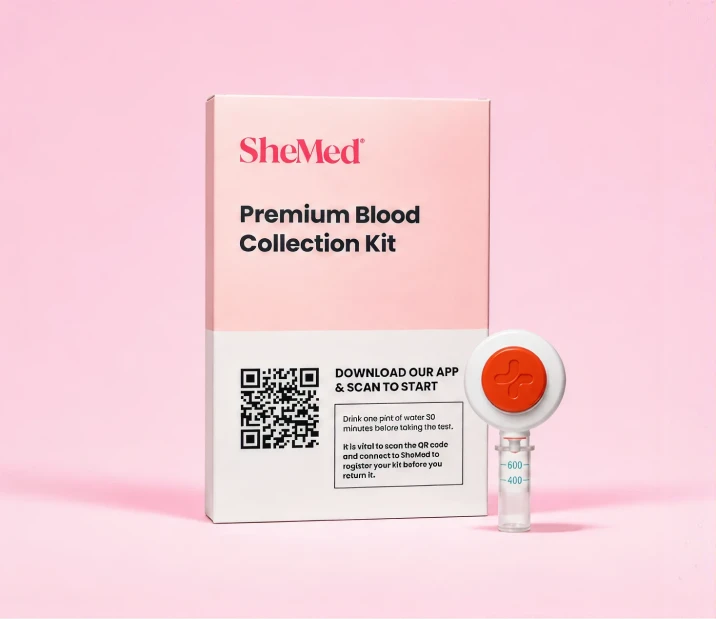
Welcome to SheMed
A pain-free, needle-free blood test you can do at your kitchen table. Assessed by a SheMed clinician
How it works
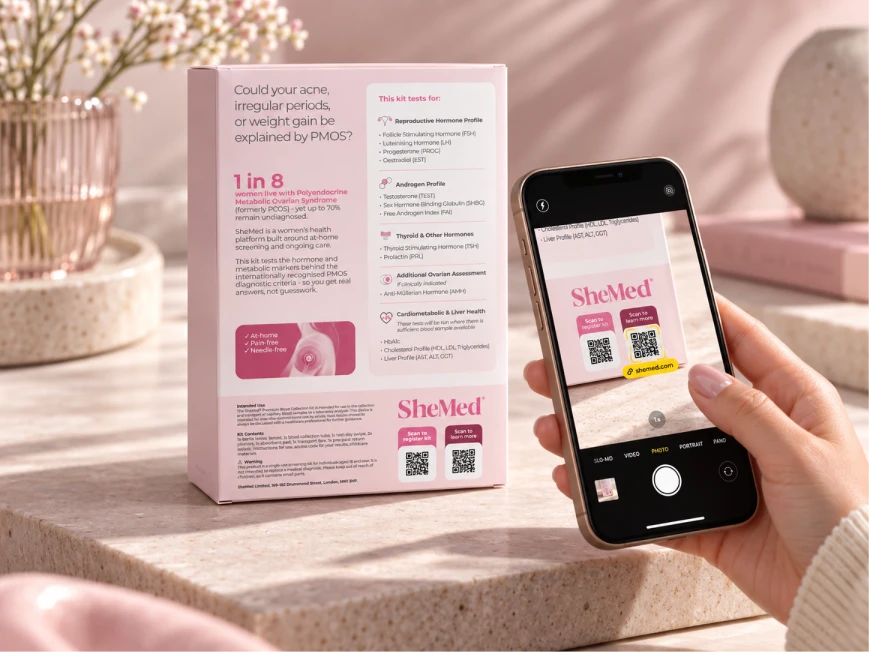
Scan the code on your box to get started
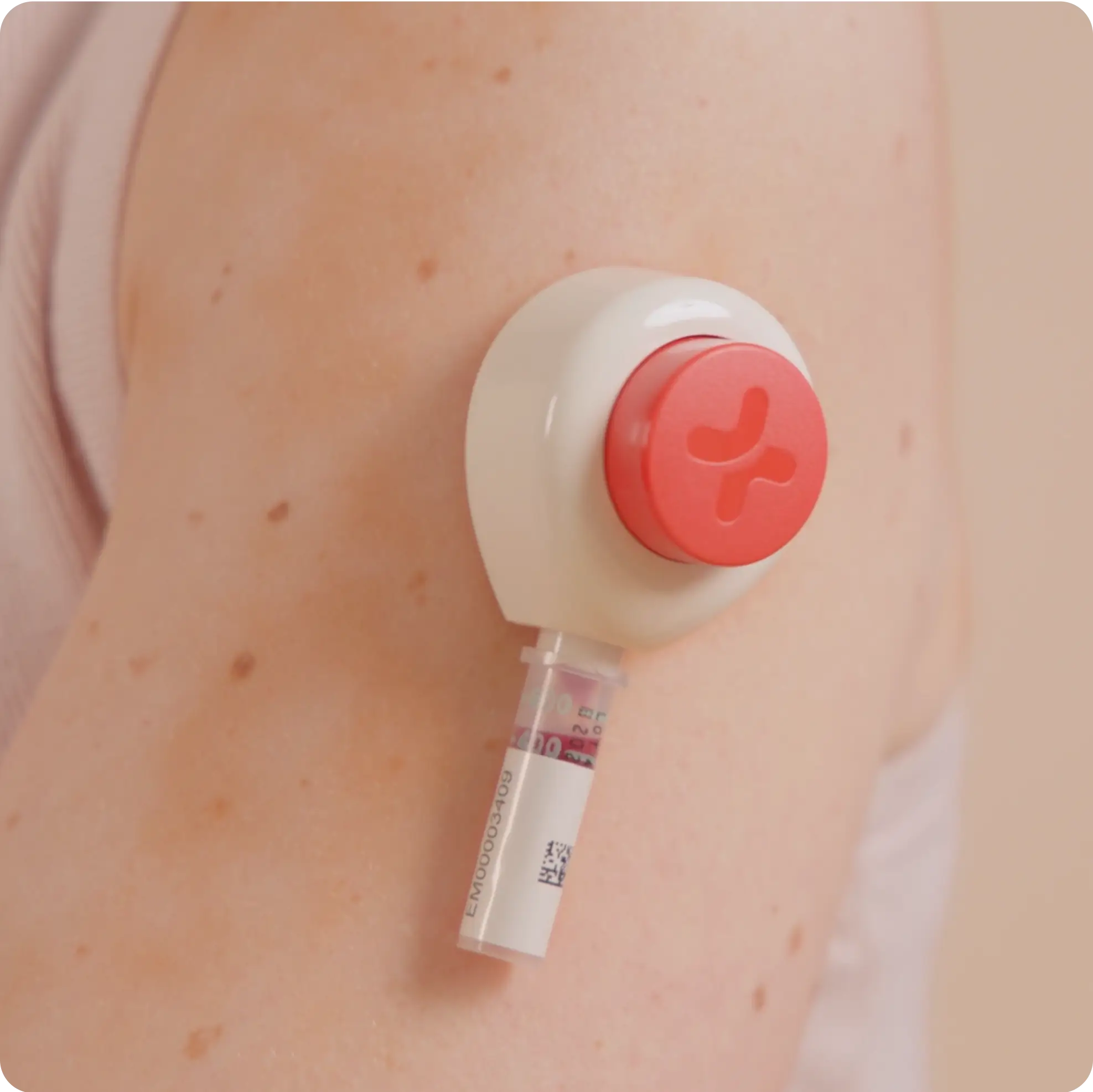
Complete your health assessment from home by pressing the device onto your upper arm. No needles, no finger-pricking and no clinic visit required.
.webp)
Place it in the pre-paid envelope and drop it into any postbox. We’ll take it from there.
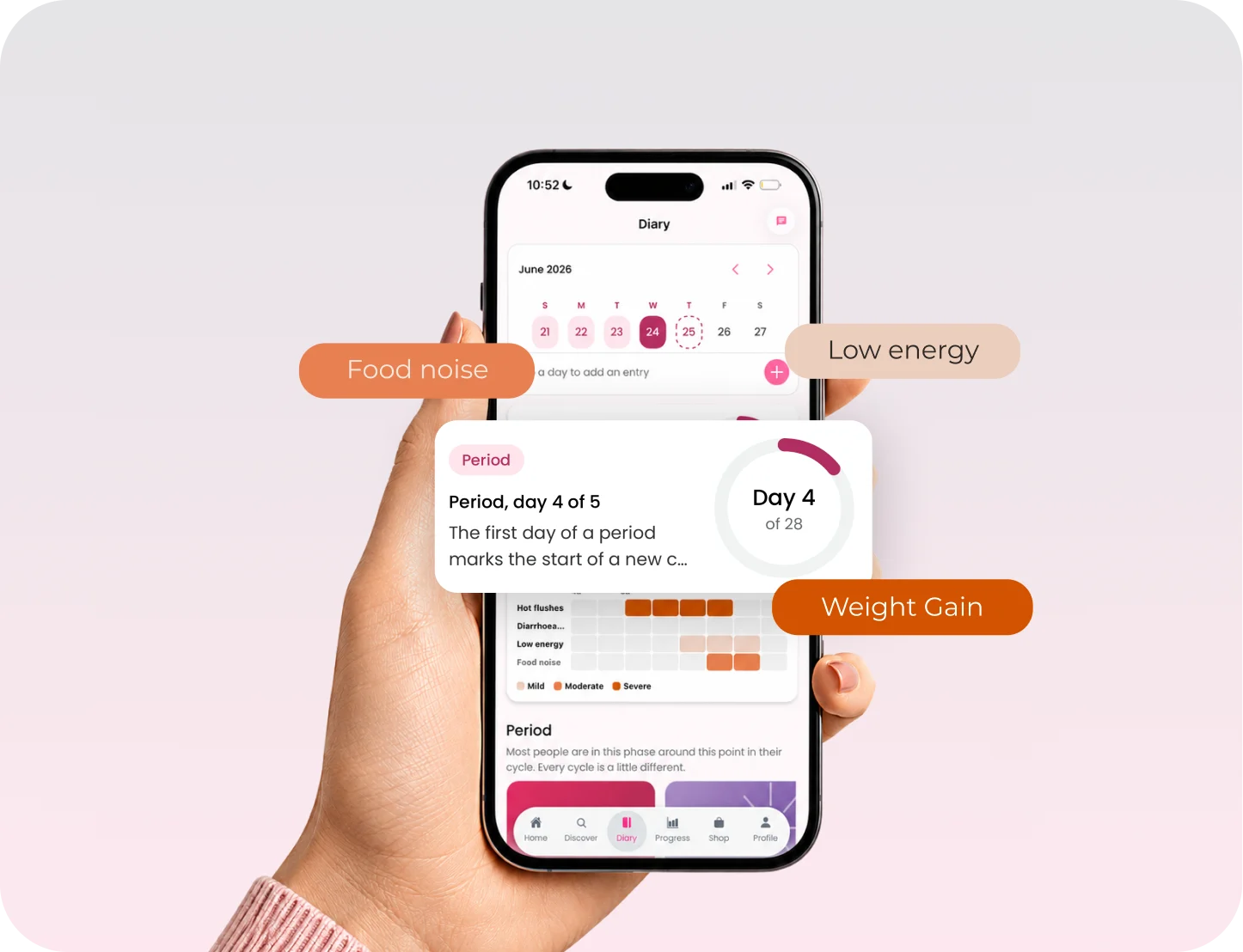
A SheMed clinician reviews every result - a person, not an algorithm - and your full panel is available in the SheMed app, with a downloadable copy for your records.
Most results are back within 48 hours of your sample reaching the lab.
What's in your panel
.webp)


99% of women who test with SheMed have at least one result outside the normal range.
Based on SheMed internal data, 2025.
Every result is yours to keep, download and share with your GP. It's your data.
The acne that never quite cleared up after your teens
Periods that turn up whenever they feel like it
Weight that goes on easily and comes off like it's being negotiated
Being tired in a way that sleep doesn't fix
Taken together, they can be PMOS.
of women worldwide are estimated to have PMOS - one of the most common hormonal conditions in women.
of women with PMOS have never been diagnosed. Most are living with symptoms they've been told are normal.
1 in 3 women waited more than two years for a diagnosis. Nearly half saw three or more health professionals before anyone joined the dots.
Sources: World Health Organization; Gibson-Helm et al., Journal of Clinical Endocrinology & Metabolism, 2017 (1,385 women, 48 countries).
In that same study, only 15.6% of women were satisfied with the information they were given after they were finally diagnosed.
Getting the answer is one thing. Being told what it means is another.
It did. In May 2026, after 14 years of work and input from more than 22,000 patients and health professionals, polycystic ovary syndrome was formally renamed polyendocrine metabolic ovarian syndrome (PMOS) in a global consensus published in The Lancet.
The old name put all the emphasis on the ovaries and on cysts - which made it sound like a fertility problem and nothing else. It isn't. It affects metabolism, cardiovascular health, skin, sleep and mental health, and the new name reflects that.
Clinical review
Most at-home blood tests hand you a PDF and wish you luck. Ours is the front door to an actual pathway.
If your results and medical history make you eligible, you may also be able to eligible for GLP-1 medication through SheMed. For people with PMOS who are living with overweight or obesity, weight management can be an important part of improving metabolic health and may support wider PMOS management.
GLP-1 medicines have consistently been shown to support weight loss and improve insulin resistance in women with PMOS. Some studies also show improvements in cycle regularity, though that evidence is still developing. Your clinician will talk you through what's realistic for you.
Eligibility is always a clinical decision. Treatment is prescription-only, assessed individually, and not suitable for everyone.
The SheMed app
Cycles, perimenopause, menopause, treatment. Spot the patterns and walk into your next appointment with evidence.
Trends, not a number that ruins your morning.

Log your cycle alongside your symptoms and your bloods, so the connection becomes clear.

Matched to your results, your stage of life and what you're actually tracking. Not a generic library.

Menopause specialists, doctors, nutritionists, physiotherapists and mental health professionals - exclusive to members.

Partner discounts across movement, nutrition and wellbeing.
.webp)
Two years for a diagnosis. Three doctors. Being told it's stress, or your age, or that you should try losing a bit of weight - when the weight is the symptom.
Almost every woman we've met has a version of this story. They've just quietly accepted that this is how healthcare goes. We didn't.
So we made testing something you do at home, in ten minutes, without a needle. We made sure a real clinician reads every result. We made the data yours, in plain English, in an app you actually own.
Welcome to SheMed.
Questions
No needle, no finger-prick - a tiny mechanism sits on your upper arm. Most women describe a light tap or a flick. Full instructions are in the box and there's a video in the app.
Within 48 hours of your sample arriving at the lab. We'll notify you in the app the moment they're in.
Yes. Every panel is reviewed by a SheMed clinician before it's released to you.
No single blood test can - diagnosis considers your symptoms, your history and sometimes a scan. This panel gives you and a clinician the metabolic and hormonal picture that's most often overlooked.
Your clinician will tell you clearly what it means and what to do. If your GP needs to see it, you'll get a report you can hand straight over.
Yes, and we'd encourage it. Download the full report from the app any time.
Your kit, return postage, UKAS-accredited lab analysis, clinician review, your full results in the app, and SheMed app access.
Contact us at support@shemed.co.uk and we'll sort it.
Activate your kit and let's find out what's actually going on.