Is Porridge Good for Weight Loss? What the Science Says for Women
Medically reviewed by Puja Vyas, Lead Clinical Pharmacist.
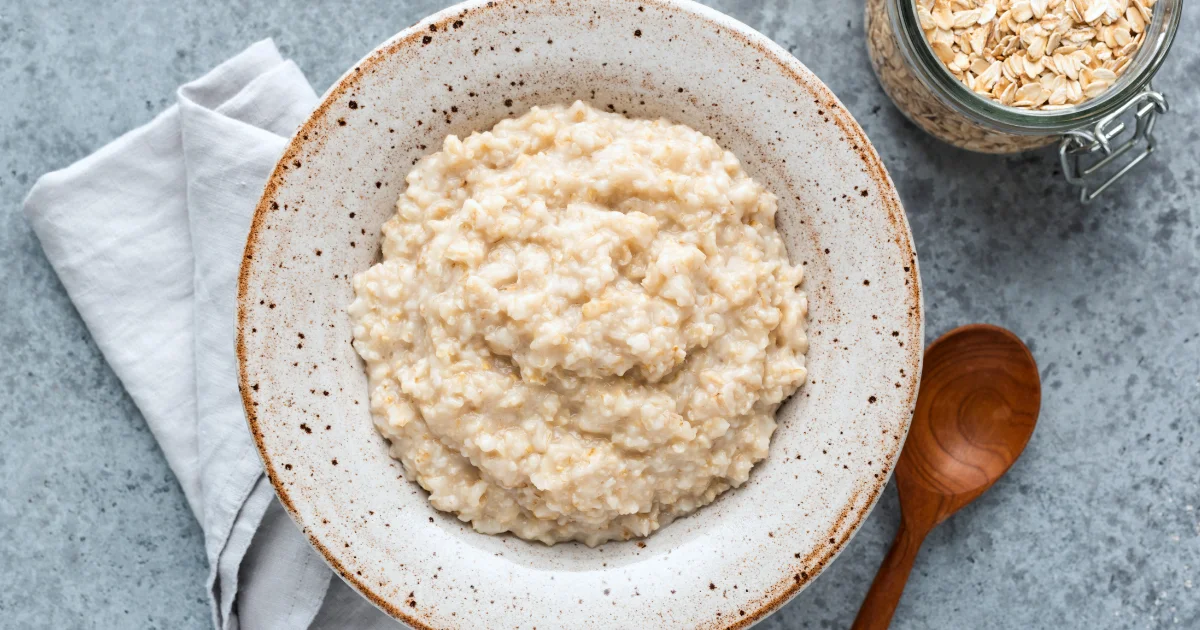
Yes, porridge is genuinely good for weight loss, and there is strong evidence to support this statement.
A standard serving of 40g bowl is low in calories, high in fibre and contains a unique compound called beta-glucan that helps in weight management (confirmed by EFSA).
Porridge has been a British breakfast staple for generations. But in 2024, University of Arizona researchers confirmed something that made it a superfood for weight loss. The fibre present in oats trigger the same biological pathway that GLP-1 weight loss medications do. It’s not as strong, but enough to make a difference alongside the medications.
This article covers the full picture: what oats actually contain, how they support weight loss, what the science says for women specifically, and how to build a bowl that earns its place in your morning routine.

What Is Porridge? Types of Oats and Why It Matters
First of all, porridge and oatmeal are the same thing – just different names for cooked oats. It’s the same old UK vs US terminologies. It’s porridge for us in the UK and oatmeal for our distant relatives in the US. (they like things simplified; sidewalk vs pavement, garbage bin vs bin)
Now the oats themselves are a whole grain cereal. So porridge oats are nothing but oat groats that have been steamed and flattened.
Rolled Oats, Steel-Cut, Instant and Overnight: Which Type Is Best?
- Steel-cut oats: Whole oat groats cut into pieces. Lowest GI (glycaemic index) (~42–55), most beta-glucan intact. Takes 20–30 minutes. Best for blood sugar control.
- Rolled oats (porridge oats): Steamed and flattened. GI ~55. Ready in 3–5 minutes. Good balance of nutrition and convenience. The most common UK option.
- Instant oats: Further processed, GI slightly higher (~65–70). Less beta-glucan due to processing. Convenient but slightly less effective for satiety and blood sugar management.
- Overnight oats: Rolled oats soaked overnight. Resistant starch forms as they cool, which is beneficial for gut health and further lowers the glycaemic response.
The ranking for best type of oats for weight loss is as follows - steel-cut ≥ rolled ≥ overnight > instant. There are differences but not massive. A bowl of instant porridge still outperforms most alternatives.
Are Oats Carbs? What That Means for Weight Loss
Yes, oats are carbohydrates, but unlike refined carbs like white bread and sugary cereals, oats are complex carbohydrates with a low to medium glycaemic index.
They digest slowly, don’t spike blood sugar sharply, and the fibre they contain feeds the good bacteria in your gut. So all those talks about oats being carb heavy and hence as unhealthy as white rice and white pasta are not evidence based.
🔗 Source: NHS Eatwell Guide — Starchy Foods and Fibre
Is Porridge Good for You? The Nutritional Evidence
Major health organisations including the NHS, the British Heart Foundation, and the European Food Safety Authority consistently consider oats/porridge as one of the most nutritionally dense breakfast foods available.
Beta-Glucan: The Fibre That Makes Oats Unique
Beta-glucan is a soluble fibre found almost exclusively in oats and barley. When you eat porridge, beta-glucan forms a thick gel in your digestive tract. And this is what it does in there -
- Slows how quickly food leaves your stomach, making you feel full for longer
- Flattens the sugar spike in your blood by reducing the rate at which glucose enters your body
- Feeds beneficial gut bacteria that produce short-chain fatty acids, including butyrate
This is why the EFSA has authorised the health claim: “Beta-glucan contributes to the maintenance of normal blood cholesterol levels” and to weight management as part of a calorie-restricted diet.
Even the British Heart Foundation endorses porridge as a heart-healthy breakfast, because of the strong beta-glucan evidence.
Porridge Calories: What a Bowl Actually Contains
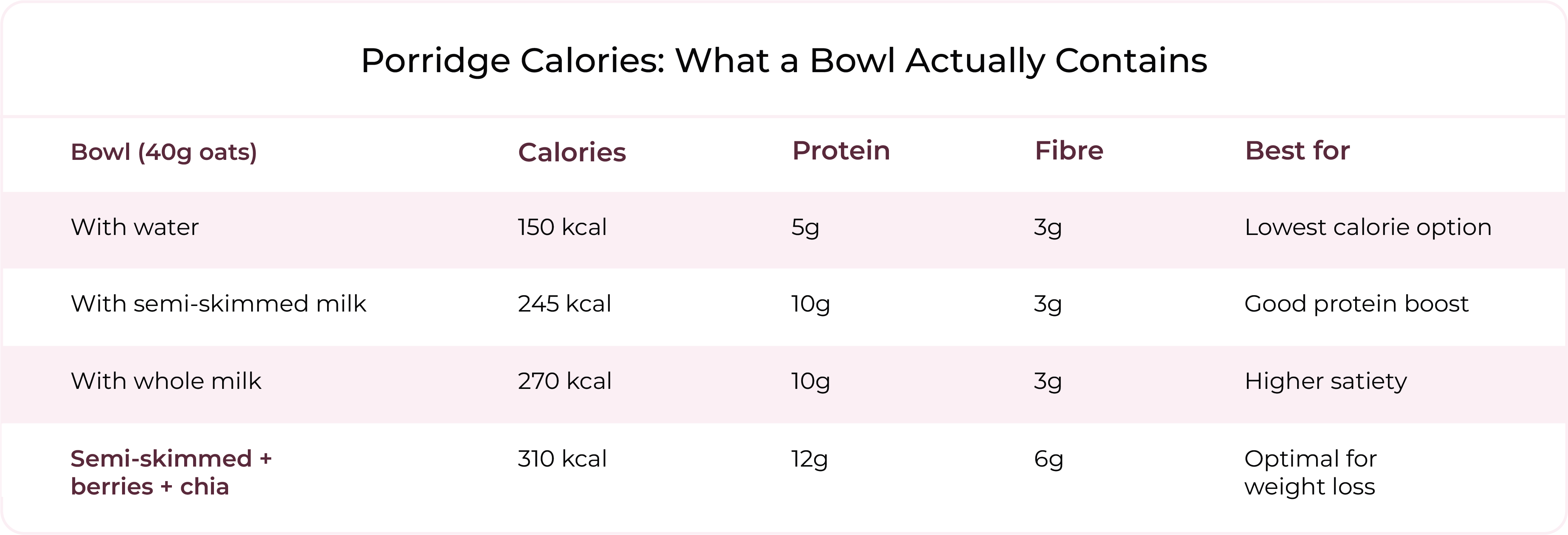
A plain 40g bowl of porridge made with water is approximately 150 kcal. Here’s what a full bowl looks like depending on how you make it:
Important note: Please avoid sweetened versions of any plant milk. The added sugar in sweetened oat milk, sweetened almond milk, etc. can add 5–10g of sugar per serving and undermine the low-GI benefit entirely.
The table clearly shows what we would recommend as your best option as a woman trying to lose weight.
You might think that it also has the highest number of calories. But the extra protein, fibre, and all the omega-3 fatty acids and antioxidants that berries bring make it an option with more nutritional value per calorie.
Blood Sugar, Glycaemic Index and Appetite Control
Porridge’s glycaemic index is around 55, placing it in the low-to-medium category. For your comparison, cornflakes stand at around 81 and white bread around 75.
But how does it matter, especially for people not suffering from Diabetes?
A low GI breakfast means a slower, more sustained energy release. This translates directly to reduced hunger in the hours that follow, solving the fundamental problem of weight gain. Moreover, for women with insulin resistance or pre-diabetes, the low GI difference proves to be clinically meaningful.

Is Porridge Good for Weight Loss? What the Evidence Shows
Yes, and the reason is not just calories. Porridge manages appetite biology directly, not just caloric intake.
How Porridge Supports a Calorie Deficit and Reduces Hunger
A randomised controlled study conducted in 2018 found that beta-glucan increased feelings of fullness and satiety. A review in Current Nutrition Reports in 2023 stated that oats regulate appetite-related hormones including GLP-1 and PYY.
The GLP-1 Connection: Why Porridge and Wegovy or Mounjaro Work Together
This is where the magic happens, and this is what most nutrition guides miss.
In 2024, researchers at the University of Arizona tested five different plant-based fibres for their effect on body weight and fat. Only beta-glucan, the fibre found in oats, produced meaningful reductions in body weight and fat mass, as well as improvements in glucose regulation.
They found that beta-glucan gets fermented by gut bacteria into butyrate, which directly triggers the release of the GLP-1 hormone in the gut.
Now here’s how both porridge and GLP-1 medications work together – Medications like Wegovy and Mounjaro that work on the GLP-1 hormone provide sustained GLP-1 activity throughout the week. Porridge at breakfast complements this by supporting your body’s own natural GLP-1 release using butyrate.
So you’re basically reinforcing the same outcome from two angles.
Porridge and Women’s Health: Why This Breakfast Matters More for Women
Porridge and PMOS (formally PCOS)
70-80% of women with PMOS experience insulin resistance. And when that happens blood sugar spikes drive hunger, fat storage, and hormonal imbalance.
Porridge’s low GI, beta-glucan content, and direct effect on fasting glucose and HbA1c make it one of the most evidence-supported foods for women managing PMOS alongside or prior to medication.
A 12-week study in type 2 diabetes patients found that daily oat beta-glucan supplementation significantly reduced HbA1c and improved insulin sensitivity.
Porridge During Perimenopause and Menopause
Perimenopause comes with declining oestrogen, which in turn disrupts blood sugar regulation, increases cortisol-driven cravings, and shifts fat storage towards the abdomen.
A low-GI breakfast like porridge helps stabilise the blood sugar fluctuations that worsen these symptoms. The soluble fibre also supports gut microbiome diversity. Emerging research links it to better metabolic outcomes in menopausal women.
Porridge won’t fix the hormonal changes, but it does support the metabolic environment you’re managing them in.
Eating Porridge on a GLP-1 Programme
Porridge is bland, warm, soft and digests steadily. These are all the properties needed for it to be gentle on the stomach that is adjusting to slowed gastric emptying. Hence, making it one of the easiest foods to tolerate on Wegovy or Mounjaro, particularly during the early dose escalation phase when nausea is most common.
There are no food interactions between oats and semaglutide or tirzepatide, the active ingredients in Wegovy and Mounjaro, respectively. Porridge does not need to be taken at a specific time in relation to Mounjaro’s weekly injection, and it doesn’t interfere with the 30-minute fasting window required by the Wegovy pill (as long as it’s eaten after the wait period).
How to Build the Best Porridge Bowl for Weight Loss
With porridge, you’re in for a quick and convenient breakfast. Just take 40g rolled or steel-cut oats and add some plain water for the lowest calories or semi-skimmed milk for more protein.
Water vs milk:
Water keeps it at its lowest calorie. Semi-skimmed milk adds around 95 kcal but nearly doubles the protein (5g → 10g) and more protein means longer satiety.
For women on a GLP-1 programme, muscle preservation matters, and the extra protein from milk is usually worth the extra calories.
Portion size:
40g dry oats is the standard serving and the basis for all data in this article. Oats expand when they are cooked, so you’ll have a pretty satisfying bowl there. Going to 50-60g won’t be an issue as long as you keep the toppings in check.
Toppings can make a solid difference -
- Green light toppings: berries (blueberries, raspberries, strawberries), chia seeds, flaxseeds, plain Greek yoghurt, cinnamon, a small handful of walnuts or almonds
- Caution toppings: banana (fine in moderation, higher GI than berries), honey (small amount), dried fruit (calorie-dense, go easy)
- Avoid: golden syrup, maple syrup, Nutella, jam, commercial flavoured sachets. These are the quickest ways to turn a perfectly healthy bowl into a high-sugar, high-calorie meal that works against your goals
Does Porridge Cause Weight Gain?
No. Oats/porridge, when eaten in appropriate portions, do not cause weight gain. People who believe otherwise are usually carb-phobic and won’t have any real evidence to show you.
What causes weight gain in a porridge context is what you add to it: golden syrup, full tablespoons of peanut butter, commercial flavoured packets loaded with added sugar, or oversized portions topped with granola.
Porridge vs Other Options
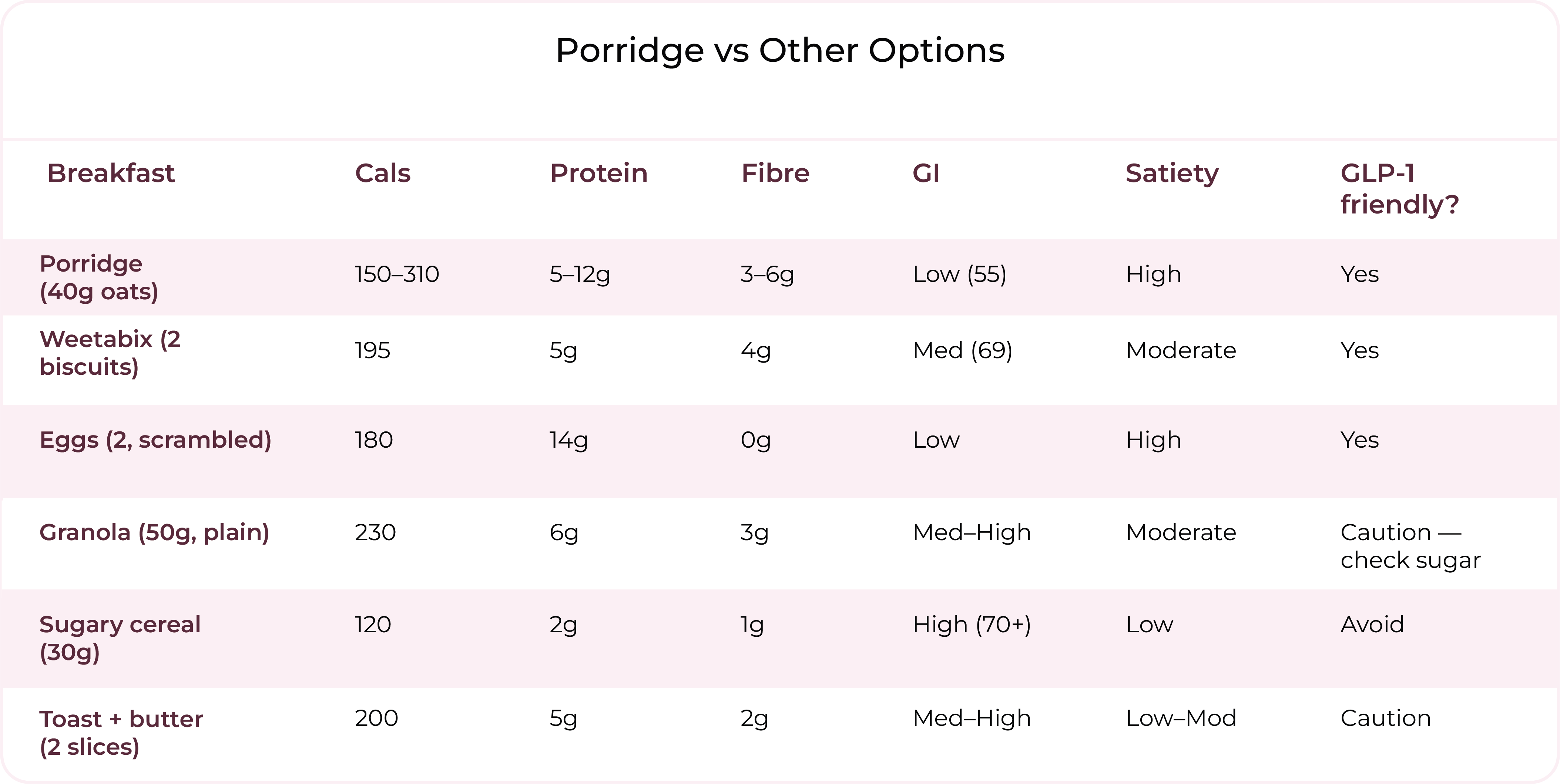
For weight loss, porridge consistently outperforms most common UK breakfast options on the metrics that matter most: sustained satiety, blood sugar stability, and GLP-1 programme compatibility.
Weetabix or porridge for weight loss?
Both are good wholegrain choices. Where porridge wins is the lower GI (~55 vs ~69), higher satiety due to beta-glucan, and better blood sugar management. Weetabix is surely faster and more convenient. If the choice is between Weetabix and sugary cereal, Weetabix wins, undoubtedly.
Frequently Asked Questions
Why is porridge good for you?
Porridge is a whole grain food rich in beta-glucan soluble fibre, with an EFSA-authorised health claim for supporting normal cholesterol levels and contributing to weight management. It also has a low glycaemic index, meaning it digests slowly and supports stable blood sugar and sustained fullness.
Is porridge good for breakfast?
Yes. Porridge is one of the most evidence-supported breakfast choices for weight management. Its low GI, beta-glucan content, and protein and fibre combination reduce hunger hormones for hours after eating, making it easier to stay within a calorie deficit throughout the day.
What is the best porridge for weight loss?
Steel-cut oats provide the most beta-glucan with the lowest GI, but rolled oats are nearly as effective and far more convenient. The best weight loss bowl recipe includes 40g rolled oats, semi-skimmed milk, mixed berries, and a tablespoon of chia seeds. You’re looking at approximately 310 kcal with around 12g of protein and 6g of fibre.
Can I eat porridge on Wegovy or Mounjaro?
Yes, and it’s good for you. Porridge is easy to tolerate on GLP-1 medications, especially during early dose escalation when nausea is common. There are no food interactions between oats and semaglutide or tirzepatide. University of Arizona research (2024) also confirms that oat beta-glucan supports the same GLP-1 pathway your medication works on, making porridge a perfect complement to GLP-1 medications.
Are oats good for weight loss?
Yes. Oats are one of the most studied foods for weight management. Beta-glucan, the soluble fibre in oats, reduces hunger, lowers blood sugar spikes, and also triggers natural GLP-1 release via butyrate production in the gut.
Is porridge good for diabetics?
Yes. Porridge has a lower GI than most breakfast cereals, which makes it well-suited for blood sugar management. Diabetes UK highlights oats as a suitable food for people with type 2 diabetes. Choose rolled or steel-cut oats over instant, and avoid adding sugar or golden syrup. A 12-week clinical study found daily oat beta-glucan significantly reduced HbA1c in type 2 diabetes patients.
How many calories are in a bowl of porridge?
A standard 40g serving of porridge oats made with water is approximately 150 kcal. Made with semi-skimmed milk, it’s around 245 kcal. With semi-skimmed milk, mixed berries, and chia seeds, the most nutritionally complete option, it’s approximately 310 kcal.
Is porridge good for you every day?
Yes. Eating porridge daily is associated with better cholesterol levels, more stable blood sugar, and improved gut microbiome diversity. The NHS Eatwell Guide recommends whole grains as a daily component of a balanced diet. Variety in toppings ensures you’re getting a broad range of micronutrients alongside the beta-glucan.
Is instant porridge good for you?
Mostly yes. Instant oats are more processed and have a slightly higher GI than rolled or steel-cut oats, meaning slightly less beta-glucan and a faster blood sugar response. However, they are still better than most breakfast alternatives on fibre and satiety. Try to avoid commercial instant sachets with added sugar or flavouring.
Are porridge oats the same as rolled oats?
Essentially yes. Porridge oats and rolled oats both refer to oat groats that have been steamed and flattened. In UK supermarkets, ‘porridge oats’ is the common labelling for what is sold as ‘rolled oats’ in other markets. Both are suitable for making porridge and have the same nutritional profile.
Sources & Further Reading
1. University of Arizona — How Your Morning Oats Could Help You Manage Your Weight (2024)
2. EFSA Journal — Beta-Glucan Health Claims
3. British Heart Foundation — Is Porridge Good For You?
4. NHS Eatwell Guide — Starchy Foods and Fibre
5. PubMed — Effects of Oat Beta-Glucan on Satiety and Glycaemia (2018)
6. Springer — Impact of Oats on Appetite Hormones and Body Weight Management (2023)
7. Diabetes UK — Glycaemic Index and Diabetes
8. Harvard T.H. Chan School of Public Health — Oats
9. NICE TA875 — Semaglutide for Weight Management
10. Journal of Food Science and Technology — Nutritional Advantages of Oats (Rasane et al., 2015)
11. SheMed - Carbs on Mounjaro and Wegovy: How Many to Eat, Which Types Are Best and Why You Crave Them
The content on the SheMed blog is provided for general informational and educational purposes only. While SheMed provides professional weight loss services and strives to ensure the information shared is accurate and up to date, we make no representations or guarantees as to its accuracy, completeness, or timeliness. This content should not be taken as personal medical advice or a substitute for consultation with a qualified healthcare provider. Always speak with your doctor or licensed medical professional about your individual health or medical needs before starting any new treatment or programme. Never disregard or delay seeking professional medical advice because of something you have read on this site. SheMed is not responsible for any actions you may take based on the information provided in this blog.
Related Articles