The Pink Salt Trick for Weight Loss: Does It Actually Work?
Medically reviewed by Puja Vyas, Lead Clinical Pharmacist.
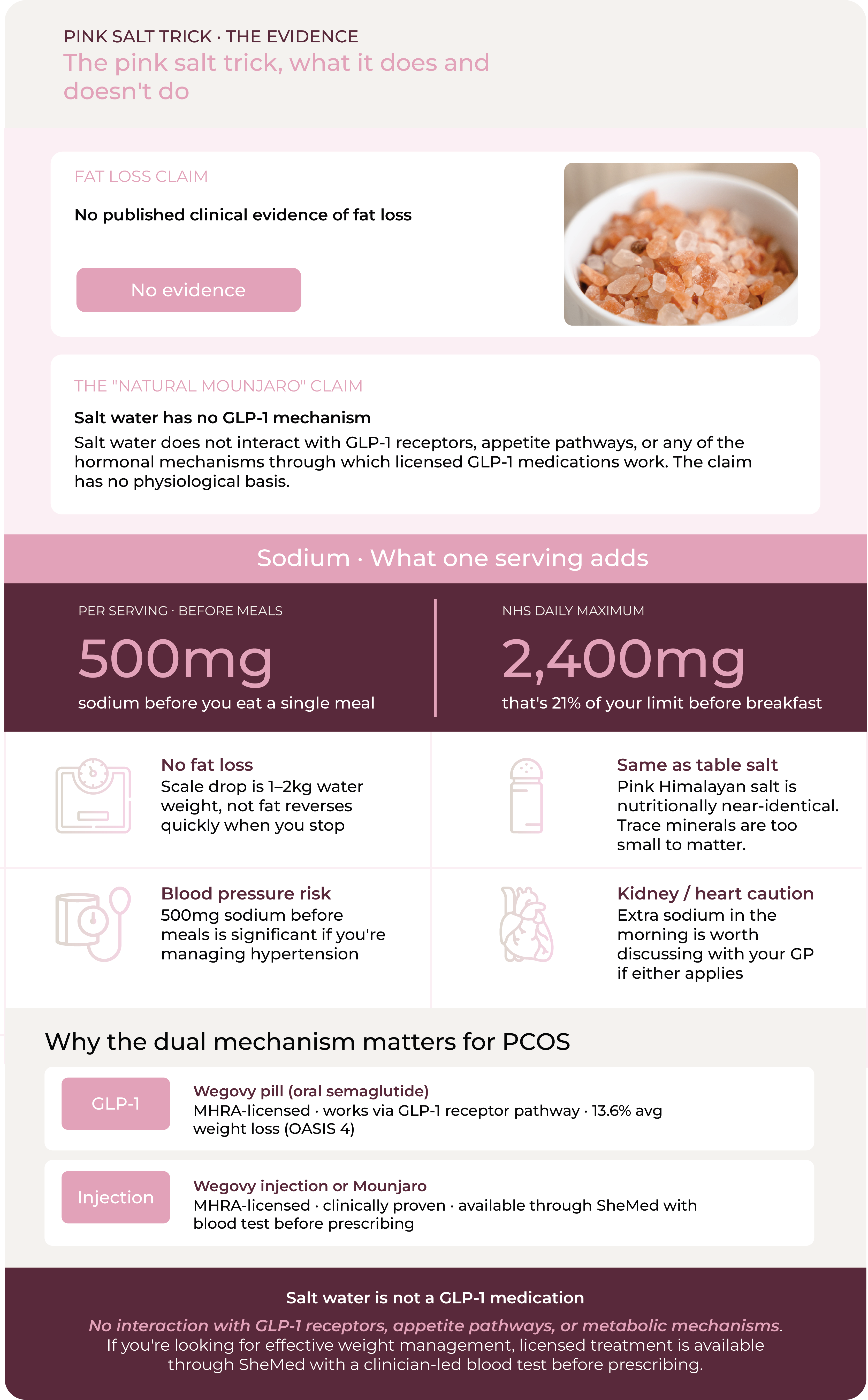
Let’s start with a plain fact - There is no clinical evidence that drinking pink salt water causes fat loss. The pink salt drink trick is a TikTok creation.
It is a drink made from warm water, pink Himalayan salt, and lemon juice. Some versions include apple cider vinegar, cayenne, or honey. The so called ‘fit-fluencers’ claim that it boosts metabolism, reduces bloating, and acts as a "natural Mounjaro" or natural GLP-1.
None of these claims are backed by any sort of clinical evidence. Any weight change people notice is simply water retention shifting, not fat loss, and has nothing to do with the salt being pink.
What Is the Pink Salt Trick?
The Recipe
· 8 to 12 ounces (roughly 250 to 350ml) of warm water
· a quarter to a half teaspoon of pink Himalayan salt
· a squeeze of fresh lemon juice.
This is the basic recipe. There are other versions now going viral on social media that include a tablespoon of apple cider vinegar, a pinch of cayenne pepper, or a small amount of honey. It’s supposed to be drunk first thing in the morning, on an empty stomach.
How it all Started and Why It Went Viral
TikTok was the first culprit. And then naturally other creators saw that this recipe is gaining virality, so Instagram and YouTube added their fair share of buzz to this trend.
If you see, it ticks all the checkboxes needed for a viral wellness trend: it is cheap, uses ingredients most people already have, promises something significant (metabolism boost, fat loss, "detox"), and produces dramatic before-and-after claims that are very easy to film but equally difficult to verify.
To elevate the trend even further, influencers started using terms like ‘natural GLP-1’ because of the mainstream awareness that semaglutide and tirzepatide now have. So, some creators started positioning pink salt water as a free, at-home alternative.
We, at SheMed, want to address this particular claim because there are people like you who are looking for genuine weight loss solutions and are being misled.
The Fake Celebrity Endorsements
If influencers and keywords like ‘GLP-1’ weren’t enough, AI-generated deepfakes started circulating on social media falsely showing well-known celebrities appearing to endorse pink salt weight loss products.
Snopes and other fact-checking organisations have confirmed that those are fakes, not real endorsements. No major public figure with a genuine track record in health has endorsed the pink salt trick. If you have seen a video claiming otherwise, take it with a pinch of (pink) salt.
What's Actually in Pink Himalayan Salt?
Pink Salt vs Table Salt
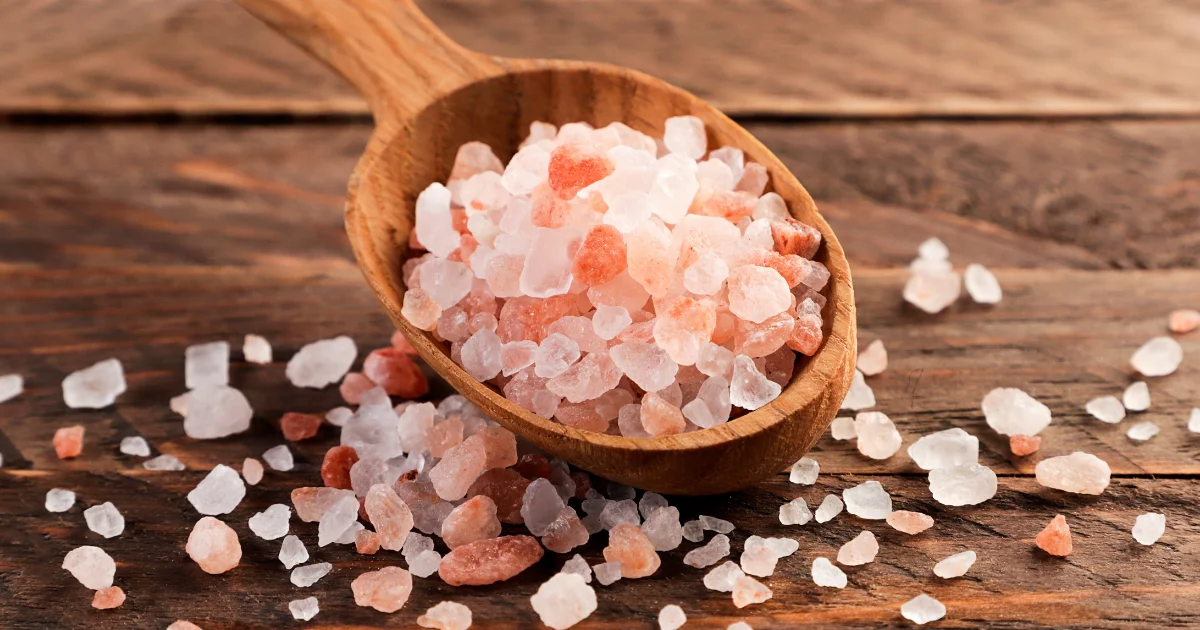
Both pink and standard white table salt are primarily sodium chloride, chemically almost identical. The pink color comes from trace amounts of iron oxide and a small number of other minerals. It is mined from rock salt deposits in Pakistan, which is more of a romantic origin story than something that changes its nutritional profile.
The "80 Trace Minerals" Claim
Flag bearers of pink salt keep saying that it traces mineral content. It does contain small amounts of potassium, magnesium, calcium, and others, but the amounts present are nutritionally insignificant. To get even a modest amount of magnesium from pink salt, you would need to consume far more sodium than is safe. Alternatively, just a small handful of almonds would give you more magnesium and half a banana, more potassium.
The Iodine Gap
Standard table salt in the UK is usually iodised, meaning iodine is added to help prevent deficiency. Pink Himalayan salt is not. If you’ve substituted pink salt with table salt as your primary salt source, and eat a diet low in iodine-rich foods (oily fish, dairy, eggs), your iodine intake may reduce overtime.
And for women with hypothyroidism or anyone taking levothyroxine, iodine intake matters directly for thyroid function.
Read more about thyroid function and why it matters for weight: menopause testing and blood tests explained →
Does the Pink Salt Trick Cause Weight Loss?
What Sodium Actually Does in Your Body
Sodium’s main job is to regulate fluid balance in your body, which it does by drawing water towards it via osmosis. When sodium levels in your blood are high, your body holds onto more water to dilute it. When they drop, your body tends to excrete more fluid.
This is why a salty meal can make you feel puffier the next morning. Same reason why cutting back on salt can make the scale go down within 24 hours. It’s fluid movement, not fat loss.
Why the Scale Drop Is Water Weight, Not Fat
If you weigh your body multiple times a day, you’ll see a fluctuation between 1 to 2kg or sometimes more. It is entirely because of water. The hormonal changes across the menstrual cycle, exercise, hydration, and dietary sodium all shift it. The number on the scale reflects nothing but the water distribution at a given point.
And the pink salt plays a trick directly in that territory.
How Much Body Weight Can Shift From Water Alone
A 1 to 2kg drop in weight after starting any new morning drink routine, especially after you replace a sugary or calorie-heavy drink, tells you nothing about fat loss.
Fat loss of 1kg requires a calorie deficit of roughly 7,700 calories. Keep drinking enough water throughout the day and the lost weight will return within hours. That’s not the number on the scale you want to rely on.
The "Boosts Metabolism" Claim
Pink Himalaya salt does not raise your metabolic rate. There is, at least, no evidence or peer reviewed research proving it.
Drinking warm water first thing in the morning may produce a modest and temporary increase in thermogenesis, but that’s warm water and not the salt. Adding salt doesn’t do anything to amplify it.
The Alkaline and pH Myth
There are some videos on the internet claiming that adding lemon juice to the pink salt warm water makes it an alkaline drink. Meaning that it helps balance your pH levels. Now the things is, your blood pH is tightly regulated between 7.35 and 7.45 by your kidneys and lungs. What you eat or drink does not significantly shift anything.
Moreover, lemon juice is acidic, not alkaline, despite producing alkaline ash after metabolism. Neither the salt nor the lemon can shift your blood pH in any meaningful way. If they could, that would be a medical emergency, not a health benefit.
Is the Pink Salt Trick a 'Natural' Alternative to GLP-1 Medication?
This is the claim or more accurately the myth that we are most interested in busting. It leads many women to spend months on something ineffective when they could be getting real support.
What Semaglutide and Tirzepatide Actually Do
Licensed GLP-1 medicines work by binding to GLP-1 receptors in the brain and gut. GLP-1 is a hormone your gut releases naturally after eating to signal fullness to your brain. Semaglutide (Wegovy’s active ingredient) and tirzepatide (Mounjaro’s active ingredient) are synthetic versions of this hormone that are engineered to last days rather than minutes that the natural version lasts. They slow gastric emptying, reduce appetite, regulate insulin release, and over time shift the biological set point for weight.
Why Salt Water Cannot Replicate Any of This
Pink salt contains no trace of GLP-1 receptor agonist. No ingredient in any of the recipes including sodium, lemon juice, apple cider vinegar, cayenne pepper has any interaction with GLP-1 receptors, appetite-signalling pathways, or the hormonal mechanisms through which semaglutide and tirzepatide produce weight loss. There is no evidence to claim otherwise.
Women Who Should Be Extra Cautious of Falling in the Pink Salt Trap
For most healthy adults, the amount of sodium in a single daily pink salt drink is unlikely to cause acute harm. But if you add it to an already sodium-heavy diet, it can increase cardiovascular and kidney strain over time.
Women with high blood pressure, kidney disease, heart failure, and those who are pregnant should discuss any additional sodium intake with their GP without fail.
Is the Pink Salt Trick Safe?
Drinking a glass of warm water with pink salt is not going to cause you any major harm. But the real harm is the months wasted on hoping for it to work for weight loss when you could’ve spent it on something that has data backed proof.
Having said that…
Who Might Genuinely Benefit from Extra Sodium
There are specific situations where a little extra sodium serves a real physiological purpose.
· Endurance athletes and heavy sweaters replacing sodium lost through exercise.
· People following a strict ketogenic diet, where the body excretes more sodium.
· People managing POTS (postural tachycardia syndrome), a condition affecting blood pressure regulation, where increased sodium intake is sometimes recommended under medical guidance.
Again, none of these are related to weight loss.
So, Does the Pink Salt Trick Work for Weight Loss? The Verdict
No. And we think we’ve made it pretty clear why. So, no point giving you the same logical reasoning again.
If you enjoy drinking warm water with lemon in the morning and it helps you stay hydrated or start your day with a positive habit, that is genuinely fine. Just don’t expect it to move the needle on fat loss. More importantly, do not let it replace your search for options that have actual clinical evidence behind them.
What Actually Helps With Sustainable Weight Loss
Clinically Supported Treatment Options
If your weight is really affecting your health, quality of life or metabolic markers, there are genuinely effective licensed options available in the UK. Oral semaglutide in tablet form (approved by the MHRA in June 2026) is the first needle-free GLP-1 weight loss treatment licensed in the UK, taken once daily with no food restrictions apart from a morning fasting window. Tirzepatide (Mounjaro) and semaglutide (Wegovy) are available as weekly injections. All are prescription-only medicines, require a full clinical assessment including blood testing before prescribing, and are available through SheMed.
Know more about: Wegovy pill at SheMed →
Or see all clinician-led options: SheMed treatment plans →
Diet and Lifestyle Foundations
Diet is another very important factor for your weight loss journey. None of the above medications are magical potions. They require a significant shift in lifestyle including diet changes and workout to achieve a sustainable weight loss.
Protein at every meal, adequate hydration (from plain water, not salted water), resistance training twice a week, consistent sleep, and blood sugar management are non-negotiables. None of these cost anything beyond time and attention, and all of them have decades of data behind them.
Practical guidance: our diet and nutrition blog →

Frequently Asked Questions
What is the pink salt trick?
The pink salt trick is a viral social media trend where warm water is mixed with pink Himalayan salt and lemon juice, sometimes with apple cider vinegar or cayenne pepper added. It is claimed to boost metabolism, reduce bloating, and aid fat loss. However, there is no clinical evidence to support any of these claims.
Does the pink salt trick work for weight loss?
No. There is no published clinical evidence that the pink salt trick causes fat loss. Any weight reduction people report is water weight, which shifts in response to sodium intake and hydration changes, not a reduction in body fat. The results are temporary and not related to actual metabolism change.
Is the pink salt trick safe?
For most healthy adults, occasional use at typical doses is unlikely to cause acute harm. The NHS recommends a maximum of 6g of salt (2.4g sodium) per day for adults, and a single serving adds around 500mg of sodium before eating. Women with high blood pressure, kidney disease, heart failure, or who are pregnant should discuss any extra sodium with their GP first.
Is pink Himalayan salt healthier than table salt?
Not really. Both are primarily sodium chloride. Pink Himalayan salt gets its colour from trace iron oxide and contains very small, nutritionally almost insignificant, amounts, of other minerals. It does not contain iodine, unlike most table salt, which is worth noting if it becomes your main salt source.
How much salt should I have a day in the UK?
The NHS recommends no more than 6g of salt per day for adults, which equates to roughly 2.4g of sodium. The average UK adult currently consumes around 8g daily, already above the recommended maximum. The British Heart Foundation and Action on Salt both endorse this limit.
Is the pink salt trick the same as GLP-1 medication like Mounjaro?
No, not even close. Licensed GLP-1 medicines (semaglutide, tirzepatide) work by binding to GLP-1 receptors in the brain and gut, mimicking a fullness hormone and producing pharmacological changes in appetite, gastric emptying, and insulin regulation. Salt water has no interaction with GLP-1 receptors, appetite pathways, or any of the mechanisms through which these medicines produce weight loss. Calling it a 'natural alternative' has no physiological basis.
Is sole water different from the pink salt trick?
Sole water is another social media trend where salt is fully dissolved in water to create a concentrated brine, which is then diluted before drinking. It delivers a higher dose of sodium per serving than the typical pink salt trick recipe. There is no clinical evidence for fat loss, and the additional sodium raises the same concerns for people with cardiovascular or kidney health considerations.
Sources and Further Reading
1. NHS – Salt in Your Diet (UK Daily Salt Guidance)
2. British Heart Foundation – Salt and Your Heart
3. Action on Salt – Recommendations on Salt
4. TODAY / NBC News – Does the Pink Salt Trick Work? Dietitians React
5. PhillyVoice – The Pink Salt Trick Does Not Cause Weight Loss, Dietitians Say
6. NewsNation – What Is the Pink Salt Trick, and Will It Help You Lose Weight?
7. NICE TA875 – Semaglutide for Weight Management
8. MHRA – GLP-1 Medicines for Weight Loss (GOV.UK)
The content on the SheMed blog is provided for general informational and educational purposes only. While SheMed provides professional weight loss services and strives to ensure the information shared is accurate and up to date, we make no representations or guarantees as to its accuracy, completeness, or timeliness. This content should not be taken as personal medical advice or a substitute for consultation with a qualified healthcare provider. Always speak with your doctor or licensed medical professional about your individual health or medical needs before starting any new treatment or programme. Never disregard or delay seeking professional medical advice because of something you have read on this site. SheMed is not responsible for any actions you may take based on the information provided in this blog.
Related Articles