

In recent years, medications like Wegovy (Semaglutide) and Mounjaro (Tirzepatide) have taken the world by storm, revolutionising the management of Type 2 diabetes and obesity. Their profound impact on blood sugar control and weight loss has generated headlines and offered new hope to millions. But what if this was just the beginning? What if the next generation of metabolic medicine could deliver even more powerful results?
Enter Retatrutide, an investigational medicine that is rapidly becoming one of the most talked-about drugs in development.
Nicknamed the "Triple G" drug, Retatrutide is currently undergoing extensive Phase 3 clinical trials and is not yet available to the public.
Its unique power lies in its ability to target not one, not two, but three key metabolic hormone receptors, a triple-action mechanism that promises to push the boundaries of what's possible in diabetes and weight management.
This article will delve into the ground-breaking science to discover how Retatrutide could revolutionise diabetes and weight loss management with its triple-agonist action.
How Retatrutide Works: The 'Triple G' Advantage
The excitement surrounding Retatrutide stems from its sophisticated and unprecedented mechanism of action. While older drugs target a single hormone pathway, Retatrutide is a triple receptor agonist, engaging with three distinct hormones that play a crucial role in regulating our metabolism, appetite, and blood sugar. This multi-pronged attack is what sets it apart and gives it a potential clinical edge.
To understand its power, we need to break down each component of its "Triple G" action:
- GLP-1 (Glucagon-like peptide-1) Receptor Agonism: This is the same mechanism used by drugs like Ozempic and Wegovy. Activating the GLP-1 receptor tells the brain you are full, significantly reducing appetite. It also slows down the rate at which your stomach empties, prolonging the feeling of satiety after a meal. For individuals with Type 2 diabetes, it stimulates the pancreas to release insulin in response to high blood sugar levels.
- GIP (Glucose-dependent insulinotropic polypeptide) Receptor Agonism: This is the second target, which Retatrutide shares with the dual-agonist drug Mounjaro. GIP also enhances the body's insulin release in response to glucose, working synergistically with GLP-1 to improve blood sugar control. Furthermore, research suggests GIP may play a role in how the body processes and stores fat.
- Glucagon Receptor Agonism: This is Retatrutide's unique and game-changing feature. While it might seem counterintuitive to activate the receptor for glucagon, a hormone that raises blood sugar, the effect in this context is profoundly different. Activating the glucagon receptor in combination with GLP-1 and GIP appears to increase energy expenditure. In simple terms, it helps the body burn more calories and fat, even at rest. This action specifically targets the liver, reducing fat accumulation and improving overall metabolic health.
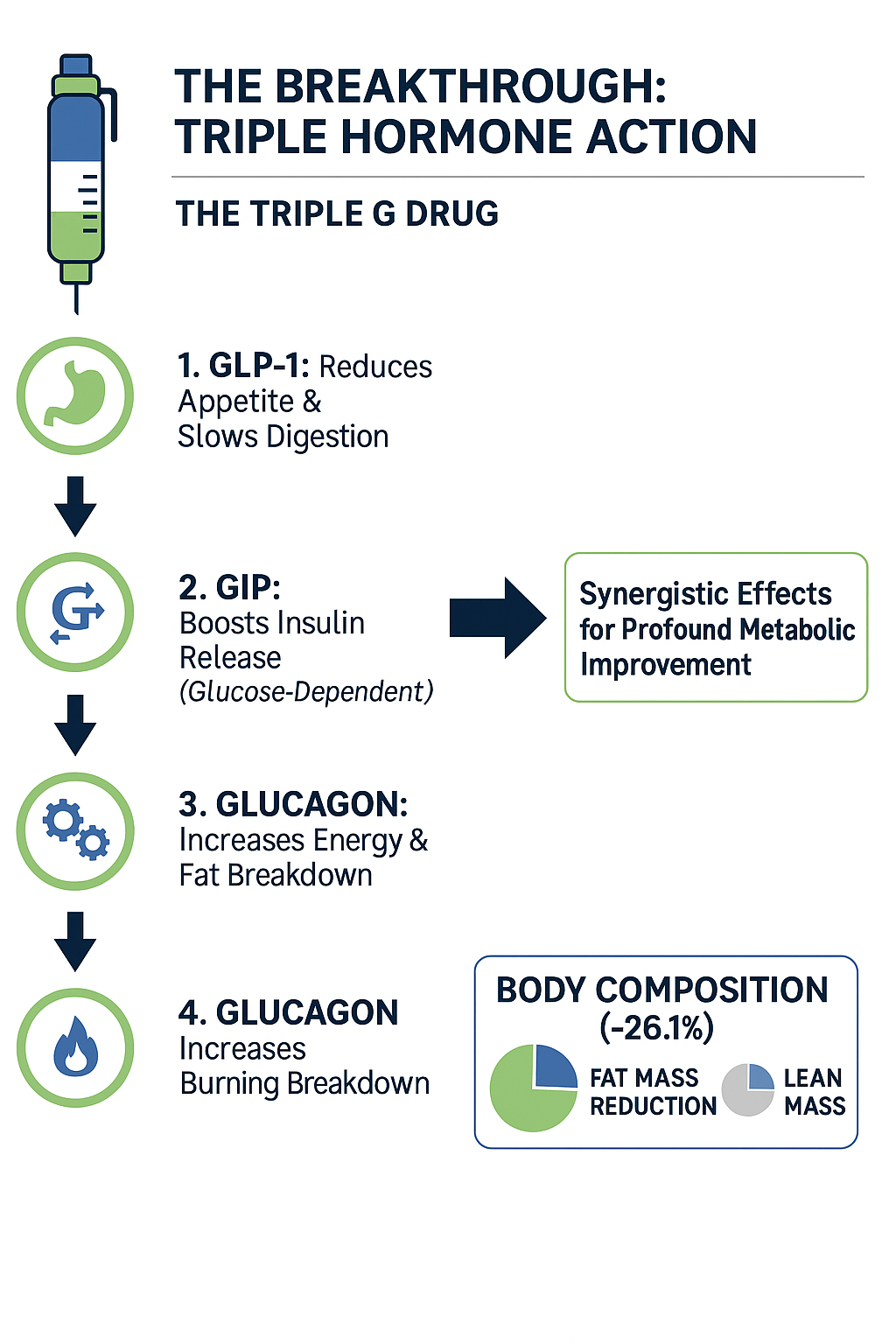
This triple-action mechanism results in a powerful synergy. The GLP-1 and GIP components work together to control blood sugar and suppress appetite, while the glucagon component accelerates fat burning and energy use. For a person with Type 2 diabetes, this combination is revolutionary. It not only addresses high blood sugar (hyperglycaemia) but also tackles one of the primary drivers of the condition: excess body weight, particularly visceral fat. The strong link between weight loss and improved diabetes outcomes is well-established, with bodies like the American Diabetes Association (ADA) highlighting that significant weight reduction can even lead to remission in some cases.
Clinical Breakthroughs in Diabetes Treatment
The theoretical promise of Retatrutide's triple-action mechanism has been powerfully validated by its clinical trial results. The data from the Phase 2 trial, published in The Lancet, has sent waves of excitement through the medical community. The study evaluated the drug's effects on individuals with Type 2 diabetes over 36 weeks, revealing unprecedented efficacy in both blood sugar control and weight loss.
Focus on HbA1c (Glycosylated Haemoglobin) and Glucose Control
A key measure for diabetes management is HbA1c, which reflects average blood glucose levels over the preceding two to three months. According to NICE guidelines in the UK, a target HbA1c for adults with Type 2 diabetes is typically 48 mmol/mol (6.5%) or lower.
In the Phase 2 trial, participants receiving the highest doses of Retatrutide saw their HbA1c levels fall by a staggering average of 2.02% (22.1 mmol/mol). This reduction is significantly greater than that seen with many existing diabetes medications. To put this into perspective, a large number of participants achieved levels that are considered non-diabetic:
- 92% of participants on the 8mg dose achieved an HbA1c of 6.5% or less.
- An incredible 78% of participants on the 12mg dose reached an HbA1c below 5.7%, which is the threshold for normal glucose levels in individuals without diabetes.
These results suggest that Retatrutide has the potential not just to manage Type 2 diabetes, but to normalise blood sugar
The Weight Loss Factor

While glucose control was impressive, the weight-loss results were truly groundbreaking.
Obesity is a major risk factor and complicating factor for Type 2 diabetes, and achieving substantial weight loss is critical for improving insulin sensitivity and overall health.
The trial participants on the highest dose of Retatrutide lost an average of 16.9% of their body weight (around 17.5 kg or 38.6 lbs) in just 36 weeks. A separate Phase 2 trial focusing on obesity, published in The New England Journal of Medicine, showed even more profound results over a longer period, with participants losing up to 24.2% of their body weight at 48 weeks.
This level of weight loss, achieved without intensive surgical intervention, was previously unimaginable for a pharmaceutical drug. Crucially, a substudy using advanced imaging techniques revealed that this weight loss was primarily due to a reduction in fat mass, not muscle.
Participants lost up to 26.1% of their total fat mass while largely preserving lean muscle tissue, which is vital for maintaining metabolic health and physical strength. This targeted fat reduction directly contributes to improved insulin sensitivity and can significantly ease the metabolic burden of Type 2 diabetes.
Retatrutide vs. Mounjaro (Tirzepatide) and Ozempic (Semaglutide)
The Edge: Why Triple Action Matters
The research data strongly suggest that adding glucagon receptor agonism provides a significant clinical advantage. While Mounjaro's dual action demonstrated the benefit of targeting more than one pathway, Retatrutide's third mechanism appears to unlock a new level of efficacy. The glucagon action's ability to increase energy expenditure and burn fat on top of the appetite suppression and insulin regulation from GLP-1 and GIP creates a comprehensive metabolic treatment that tackles the problem from three different angles. This is why experts believe Retatrutide could offer superior and more durable results for both diabetes control and weight reduction.
Crucial Warning: Availability and Safety
While the clinical trial results for Retatrutide are incredibly promising, it is absolutely vital for the public to understand its current status.
Current Investigational Status
Retatrutide is an investigational drug and is NOT approved for public use anywhere in the world yet ( 12 December 2025), including the United Kingdom.
If you see advertisements for Retatrutide or its compounded form on social media like TikTok or Instagram, you should not purchase it, as this substance is currently an investigational drug, has not been approved by the MHRA or other regulatory bodies for prescription or sale, and is only legally available to participants in clinical trials, which are not expected to conclude until 2026 at the earliest; consequently, any website or seller offering it is doing so illegally, and buying unregulated, non-pharmacy grade compounds carries serious health risks, including potential contamination, incorrect dosages, and severe adverse effects.
The Dangers of the Unregulated Trade
The extraordinary public appetite for these groundbreaking new metabolic drugs has, regrettably, given rise to a perilous unregulated trade for unapproved substances. Unscrupulous sellers are frequently peddling these products online, often marketing them dishonestly as "research peptides" in an attempt to sidestep crucial regulations. It is absolutely vital that the public understands the serious risks associated with buying these illicit products:
- Uncertain Dosage and Purity: Products from the unregulated supply chain are subject to no quality control whatsoever. The active substance you receive could be underdosed, overdosed, or, indeed, contain an entirely different active ingredient to what was advertised.
- Absence of Sterility: Injectable medicines must be manufactured in strictly sterile environments. Illicit products are routinely concocted under unsanitary conditions, presenting a significant risk of bacterial contamination and subsequent serious infection.
- Dangerous Contaminants: Vials sourced through these illegal channels may be contaminated with heavy metals, unidentified chemical by-products, or other deeply harmful substances.
- Risk of Severe Side Effects: Taking such a potent, unapproved drug without proper medical supervision could trigger life-threatening adverse reactions, including severe hypoglycaemia (dangerously low blood sugar), pancreatitis, heart complications, and acute allergic reactions.
Regulatory bodies are actively cracking down on this illegal trade. The MHRA recently announced a raid on an illegal manufacturing facility, seizing thousands of doses of unapproved products. This highlights the very real and present danger of the unregulated market.
Conclusion
Retatrutide represents a potential paradigm shift in the treatment of Type 2 diabetes and obesity. Its unique triple-action mechanism has delivered unprecedented results in clinical trials, offering the possibility of not just managing these chronic conditions, but of normalising key metabolic markers to a degree previously thought impossible with medication alone.
The significant reductions in HbA1c and body weight point to a future where medicine moves beyond simple glucose control and towards a more comprehensive and holistic approach to metabolic health. However, excitement must be tempered with patience and caution.
The global medical community now awaits the results of the large-scale Phase 3 trials to confirm these promising findings and, most importantly, to establish a long-term safety profile. Retatrutide is a beacon of hope and a testament to the incredible pace of medical innovation. While it is not a solution for today, it provides a tantalising glimpse into the future of metabolic medicine, a future that looks brighter and more hopeful than ever before.
Don't Wait for Tomorrow
You do not have to wait for Retatrutide to be approved.
You can start transforming your life and health today with currently approved, effective treatments like Wegovy or Mounjaro (where clinically appropriate).
Looking for effective and weight management solutions? Discover our evidence-based weight loss programme at SheMed, designed for lasting results and delivered with clinical excellence.
Key Takeaways from SheMed
- It's a "Triple Threat" Drug: Retatrutide uniquely targets three metabolic hormone receptors (GLP-1, GIP, and glucagon), making it potentially more powerful for blood sugar and weight loss than current single or dual-action drugs.
- Promising But Preliminary: Clinical trial results show unprecedented efficacy (e.g., ~24% weight loss), but it remains an investigational drug. It is NOT approved for use by any regulatory authority worldwide.
- Zero Legal Availability: It will not be available for prescription until at least 2026-2027. Any product being sold now is illegal, counterfeit, and dangerous.
- Severe Safety Warning: Obtaining it outside of clinical trials poses extreme risks, including contamination, incorrect dosing, infection, and severe side effects. Only use MHRA/TGA/FDA-approved medications prescribed by your doctor.
Frequently Asked Questions (FAQs)
- What is Retatrutide?
A "Triple G" investigational drug that targets three hormone receptors for potentially superior blood sugar and weight control. It is not approved anywhere yet. - How does Retatrutide compare to Wegovy or Mounjaro?
It is a triple-hormone agonist (GLP-1, GIP, glucagon), while Wegovy is single and Mounjaro is dual, which may lead to stronger effects. However, it is not yet approved, unlike the others.
References
- Jastreboff, A. M., et al. (2023). Triple–Hormone-Receptor Agonist Retatrutide for Obesity — A Phase 2 Trial. The New England Journal of Medicine, 389(6), 514-526. DOI: 10.1056/NEJMoa2301972.
- Rosenstock, J., et al. (2023). Efficacy and safety of a novel triple hormone receptor agonist retatrutide in people with type 2 diabetes: A randomised, double-blind, placebo and active-controlled, parallel-group, phase 2 trial in the USA. The Lancet. DOI: 10.1016/S0140-6736(23)01727-4.
- American Diabetes Association (2022). Weight Loss is Key to Remission of Type 2 Diabetes. Press Release. Available at: https://diabetes.org/newsroom/press-releases/2022/weight-loss-key-remission-type-2-diabetes.
- National Institute for Health and Care Excellence (NICE). (2022). Type 2 diabetes in adults: management. NG28. Available at: https://www.nice.org.uk/guidance/ng28.
- Medicines and Healthcare products Regulatory Agency (MHRA). (2023). MHRA and partners shut down illegal manufacturing of weight loss products. Press Release. Available at: https://www.gov.uk/government/news/mhra-and-partners-shut-down-illegal-manufacturing-of-weight-loss-products.
Take charge of how you look and feel.
Backed by science. Guided by experts.
SheMed’s medical weight loss programme combines expert care and science-backed treatment to help you feel and look your best — for life.
SheMed’s medical weight loss programme combines expert care and science-backed treatment to help you feel and look your best — for life.
The content on the SheMed blog is provided for general informational and educational purposes only. While SheMed provides professional weight loss services and strives to ensure the information shared is accurate and up to date, we make no representations or guarantees as to its accuracy, completeness, or timeliness. This content should not be taken as personal medical advice or a substitute for consultation with a qualified healthcare provider. Always speak with your doctor or licensed medical professional about your individual health or medical needs before starting any new treatment or programme. Never disregard or delay seeking professional medical advice because of something you have read on this site. SheMed is not responsible for any actions you may take based on the information provided in this blog.

If you have been using Wegovy® as part of your weight-loss journey, you may have heard some exciting news: a new 7.2mg dose is now available in the UK.
At SheMed, we know that many of our patients make incredible progress but eventually hit a "plateau" - that frustrating point where weight loss slows down or stops. In the past, some patients felt they had to switch to other medications like Mounjaro® to keep seeing results.
That has now changed. With the arrival of the 7.2mg dose, you can achieve powerful weight loss results while staying on the Wegovy medication you already know and trust.
What is the 7.2mg dose?
In the past, the highest dose of Wegovy® was 2.4mg per week. For many people, this works perfectly. However, new research shows that some people benefit from a higher dose to help them feel full for longer and improve their metabolism.
The 7.2mg dose is a "step up" for patients who are already doing well on the 2.4mg dose but need a little extra help to see further results.
Why this is a "Game Changer" for Weight Loss
- No Need to Switch: You no longer have to worry about the hassle of switching brands or starting over with a different medication to get a stronger effect.
- Match the Competition: This higher dose allows Wegovy to offer the same high-level weight loss power that was previously only seen with other leading treatments.
- Beat the Plateau: If your weight loss has stalled at the 2.4mg dose, this "step up" helps restart your progress and keeps you moving toward your goal.
Important Safety Information
It is important to remember that 7.2mg is not for beginners. * Follow the Steps: Everyone must still start at the lowest dose (0.25mg) and slowly work their way up.
- Build Tolerance: You can only move to 7.2mg if you have been on the 2.4mg dose for a while and your body is handling it well.
- Side Effects: Just like with your current dose, moving up can sometimes cause a bit of nausea or an upset stomach. Our team at SheMed will be here to support you and give you tips on how to manage this.
Wegovy® 7.2mg: Stronger Results Without Switching Medications
If you have been using Wegovy® as part of your weight-loss journey, we have some exciting news: a new 7.2mg dose has officially arrived in the UK.
At SheMed, we know many of our patients make incredible progress but eventually hit a "plateau"—that frustrating point where weight loss slows down or stops. In the past, some people felt they had to switch to different medications like Mounjaro® to keep seeing results.
That has now changed. With the 7.2mg dose, Wegovy now offers powerful results that match the top doses of other medications. This means you can reach your goals while staying on the medication you already know and trust.
Why this is a "Game Changer" for You
- No Need to Switch: You can get stronger results without the hassle of changing brands or learning a different injection system.
- Top-Tier Weight Loss: Clinical trials showed that people on the 7.2mg dose lost an average of 21% of their body weight. This puts Wegovy’s power right alongside the strongest weight-loss treatments available today.
- Beat the Plateau: If you’ve been on the 2.4mg dose for a while and your weight has stopped moving, this "extra push" can help restart your journey.
How much does Wegovy 7.2mg cost?
Because the 7.2mg dose contains more of the active ingredient (semaglutide) to provide that extra strength, the price is higher than the lower doses.
- Current estimated price: The Wegovy prices start from £79 at SheMed as new year offer.
More Than Just a Weekly Jab
At SheMed, we believe that Wegovy® is a powerful tool, but it works best when combined with healthy habits. The 7.2mg dose is here to support the hard work you are already doing with your food choices and daily activity.
Our goal is to help you achieve lasting change, not just a quick fix.
Is the 7.2mg dose right for you?
Because this is a much stronger dose, it is handled carefully by our clinical team:
- For Existing Users: You must have already reached the 2.4mg dose and be tolerating it well before moving up.
- Medical Supervision: As always, our SheMed clinical team will oversee your transition to ensure you stay hydrated and manage any temporary side effects like nausea.
- Maximum Support: This dose is designed for those who need that extra "metabolic push" to reach their final target weight.
Ready to reach the next level?
If you feel your current dose isn't giving you the results you need, or if you were considering switching medications to get a stronger effect, let’s talk.
Contact the SheMed Support Team today to discuss if moving to the 7.2mg Wegovy dose is the right next step for your health journey.

Feeling constantly hungry, battling random cravings, or feeling like your body is “working against you” is not a personal failing. GLP-1, a key hormone that regulates appetite, fullness, and blood sugar, plays an important role in these experiences.
It is released from intestinal L-cells after eating and helps stimulate insulin, reduce glucagon, slow stomach emptying, and promote satiety, making it central to metabolic health and a major target in obesity and type 2 diabetes care.
Medications like semaglutide and tirzepatide are designed to mimic or enhance GLP-1 activity, but everyday dietary choices can also help support your body’s own GLP-1 response.
Research suggests that people with higher natural GLP-1 responses may eat around 20–30% fewer calories after a meal, highlighting how powerful this hormone can be in shaping appetite. The following article focuses on six food categories rich in specific nutrients that may naturally stimulate GLP-1 release and help you feel more satisfied throughout the day.
Six Everyday Foods That May Naturally Boost GLP-1 Levels
Supporting your body’s natural GLP-1 response may be simpler than many people expect. Below are six food categories that research has linked with GLP-1 activity, along with practical ways they are commonly included in everyday diets.
Eggs
Starting the day with eggs is a common dietary choice in many balanced eating patterns. Eggs provide a source of high-quality protein and fats, nutrients that have been studied for their potential role in supporting feelings of fullness after meals.
Some research suggests that meals higher in protein, including those containing eggs, may be associated with improved post-meal blood sugar responses and increased satiety when compared with higher-carbohydrate breakfasts. These effects are thought to involve appetite-regulating hormones such as GLP-1 and peptide YY (PYY), which play a role in signalling fullness.
Including eggs as part of breakfast may help some people feel more satisfied for longer and support overall dietary balance. As with all foods, individual responses can vary, and eggs are best consumed as part of a varied, nutritious diet.
Certain Types of Nuts
Nuts such as almonds, pistachios, and peanuts provide a combination of protein, unsaturated fats, and dietary fibre that slows gastric emptying, supports insulin sensitivity, and is associated with increased GLP-1 release and satiety.
Regular nut intake has been linked with improved glycaemic control, greater fullness, and reduced risk markers for type 2 diabetes and cardiovascular disease in clinical and epidemiological studies.
Fermentation of nut fibre by gut bacteria produces short-chain fatty acids, which can stimulate GLP-1 secretion from intestinal L-cells through dedicated receptors and related metabolic pathways.
If you are not allergic to nuts, include a small handful of nuts as a snack or add them to meals like yoghurt, salads, or porridge as a practical way to support natural GLP-1 activity and promote fullness. Evidence suggests that nut-based snacks can enhance satiety and modulate appetite-regulating hormones, including GLP-1, compared with refined-carbohydrate options.
High Fibre Grains
Whole grains such as oats, barley, and whole wheat are rich in soluble fibre, which helps smooth out post-meal rises in blood glucose and is associated with increased GLP-1 secretion and improved satiety. Soluble fibre forms a gel-like texture in the gut that slows digestion and glucose absorption, providing a more gradual stimulus for appetite-regulating hormones like GLP-1 and PYY.
A key part of this effect comes from fermentation of fibre by gut bacteria into short-chain fatty acids (SCFAs) such as acetate, propionate, and butyrate, which can activate receptors on intestinal L-cells and promote GLP-1 release. Randomised controlled trials have shown that high-fibre, oat-based meals can increase GLP-1 and PYY levels, enhance fullness, and reduce subsequent energy intake compared with low-fibre cereals.
Choosing high-fibre grains like oats and barley in place of refined grains (for example, white bread or sugary cereals) is a practical, research-supported way to support natural GLP-1 activity and appetite regulation. People with coeliac disease or gluten intolerance should select certified gluten-free whole-grain options and seek personalised dietary advice where needed.
Avocado
Avocado is a source of monounsaturated fats and soluble fibre, nutrients that are commonly associated with supporting satiety and digestive comfort. Soluble fibre can contribute to slower digestion and more gradual nutrient absorption, while unsaturated fats are often included in dietary patterns linked with metabolic health.
Some research has explored the relationship between avocado consumption and post-meal hormonal responses, including appetite-regulating hormones such as GLP-1 and peptide YY (PYY). These studies suggest that meals containing avocado may be associated with greater feelings of fullness and more stable post-meal insulin responses in some individuals.
Including avocado in meals such as salads or sandwiches may help support satiety as part of a balanced diet. Individual responses can vary, and avocado is best consumed alongside a variety of other nutrient-rich foods.
Olive Oil
Olive oil is a key component of Mediterranean-style eating patterns and is a source of monounsaturated and polyunsaturated fats. Diets that include higher proportions of unsaturated fats are commonly associated with cardiometabolic health and may influence post-meal satiety responses.
Research examining Mediterranean dietary patterns has explored their relationship with appetite-regulating hormones, including GLP-1. Some studies suggest that meals rich in unsaturated fats, such as those containing olive oil, may be associated with differences in post-meal hormonal responses and markers of glycaemic control when compared with lower-fat dietary approaches. These effects are thought to involve interactions between dietary fats and gut-derived hormones, although the exact mechanisms are still being studied.
Using olive oil in cooking or as a salad dressing can be a practical way to include unsaturated fats as part of a balanced diet. As with all dietary choices, individual responses may vary, and olive oil is best consumed in moderation alongside a variety of nutrient-rich foods.
Vegetables
Non-starchy vegetables such as Brussels sprouts, broccoli, and carrots provide dietary fibre, vitamins, and a range of plant compounds that support overall nutritional quality. Fibre-rich foods are commonly associated with digestive health and may influence feelings of fullness after meals.
Some research has examined how the order in which foods are consumed -such as eating vegetables before carbohydrate-rich foods-may affect post-meal glucose responses and appetite-related hormones, including GLP-1. These studies suggest that prioritising vegetables earlier in a meal may be associated with more gradual rises in blood glucose and differences in satiety signals, particularly in certain populations. The underlying mechanisms are still being explored and may involve interactions between dietary fibre, digestion, and gut-derived signals.
Including non-starchy vegetables as part of the first course of a meal can be a practical way to increase fibre intake and support balanced blood sugar responses as part of an overall healthy eating pattern. Individual responses may vary.
How Food May Actually Trigger GLP-1?
The secretion of GLP-1 is closely linked to nutrient sensing by L-cells in the distal small intestine and colon. Specific nutrients, including proteins, peptides, fatty acids, and monosaccharides, interact with G-protein coupled receptors and transporters on L-cells, triggering intracellular signalling cascades that culminate in GLP-1 exocytosis.
Protein ingestion, for example, leads to the generation of peptides and amino acids that bind to calcium-sensing receptors and other nutrient sensors on L-cells, directly stimulating GLP-1 release. Similarly, mono- and polyunsaturated fats activate free fatty acid receptors (FFAR1 and FFAR4), while fibre-derived SCFAs interact with FFAR2 and FFAR3 to promote GLP-1 secretion.
Overall, protein, healthy fats, and dietary fibre represent the three main dietary triggers for endogenous GLP-1 release. Their combined presence in whole, minimally processed foods accounts for the satiety-enhancing and glucose-lowering effects observed in dietary intervention studies.
Fibre and Gut Health Synergy
The interplay between dietary fibre, gut microbiota, and GLP-1 secretion exemplifies the complex synergy underlying metabolic health. Fibre that escapes digestion in the upper gastrointestinal tract is fermented by colonic bacteria, resulting in the production of SCFAs such as acetate, propionate, and butyrate. These SCFAs serve as signalling molecules that activate FFAR2 and FFAR3 on L-cells, directly inducing GLP-1 release.
This gut microbiota-mediated mechanism not only enhances GLP-1 secretion but also confers additional metabolic benefits, including improved insulin sensitivity, reduced inflammation, and maintenance of gut barrier integrity. The inclusion of high-fibre foods such as whole grains, nuts, vegetables, and legumes thus represents a cornerstone of dietary strategies aimed at boosting GLP-1 and supporting overall metabolic health.
Conclusion
Dietary patterns that include adequate protein, fibre, and unsaturated fats are commonly associated with satiety, balanced blood sugar responses, and overall metabolic health. Foods such as eggs, nuts, high-fibre grains, avocado, olive oil, and non-starchy vegetables provide a range of nutrients that have been studied for their potential association with appetite-regulating hormones, including GLP-1. These foods contribute to feelings of fullness and may support steadier post-meal glucose responses as part of a balanced diet.
Research exploring GLP-1 has primarily focused on its role in appetite regulation and glucose metabolism. While diet alone is not a treatment for metabolic conditions, nutritional approaches that prioritise whole, fibre-rich, and protein-containing foods are widely recommended to support long-term health. Individual responses can vary, and dietary strategies are most effective when tailored to personal needs, preferences, and medical guidance.
For those exploring structured weight-management support, clinically supervised programmes can help integrate nutrition, lifestyle, and medical considerations in a safe and evidence-informed way.
If you would like to learn more about medically supported weight-management options, SheMed offers personalised programmes designed to align with individual health goals. Eligibility assessment is available online to help determine whether a programme may be suitable.
References
- Holst, J. J. (2007). The physiology of glucagon-like peptide 1. Physiological Reviews, 87(4), 1409-1439. https://doi.org/10.1152/physrev.00034.2006
- Ratliff J, Leite JO, de Ogburn R, Puglisi MJ, VanHeest J, Fernandez ML. Consuming eggs for breakfast influences plasma glucose and ghrelin, while reducing energy intake during the next 24 hours in adult men. Nutrition Research. 2010 Feb 1;30(2):96-103.https://www.sciencedirect.com/science/article/abs/pii/S0271531710000035
- Li TY, Brennan AM, Wedick NM, Mantzoros C, Rifai N, Hu FB. Regular consumption of nuts is associated with a lower risk of cardiovascular disease in women with type 2 diabetes. The Journal of Nutrition. 2009 Jul 1;139(7):1333-8.https://www.sciencedirect.com/science/article/pii/S00223166
- Esposito K, Maiorino MI, Ciotola M, et al. Effects of a Mediterranean-style diet on the need for antihyperglycemic drug therapy in patients with newly diagnosed type 2 diabetes: a randomised trial. Ann Intern Med. 2009;151(5):306-314. doi:10.7326/0003-4819-151-5-200909010-00004.
- Indarto D, Rochmah DN, Wiboworini B, Pratama YM, Wibowo YC. Effects of Vegetables Consumption Before Carbohydrates on Blood Glucose and GLP-1 Levels Among Diabetic Patients in Indonesia. Int J Prev Med. 2022;13:144. Published 2022 Nov 23. doi:10.4103/ijpvm.IJPVM_704_20
Subscribe to our Newsletter
Thank you! Your submission has been received!
Oops! Something went wrong while submitting the form.