

Wegovy Pen Side Effects: What to Expect Week by Week

Medically reviewed by Puja Vyas, Lead Clinical Pharmacist.
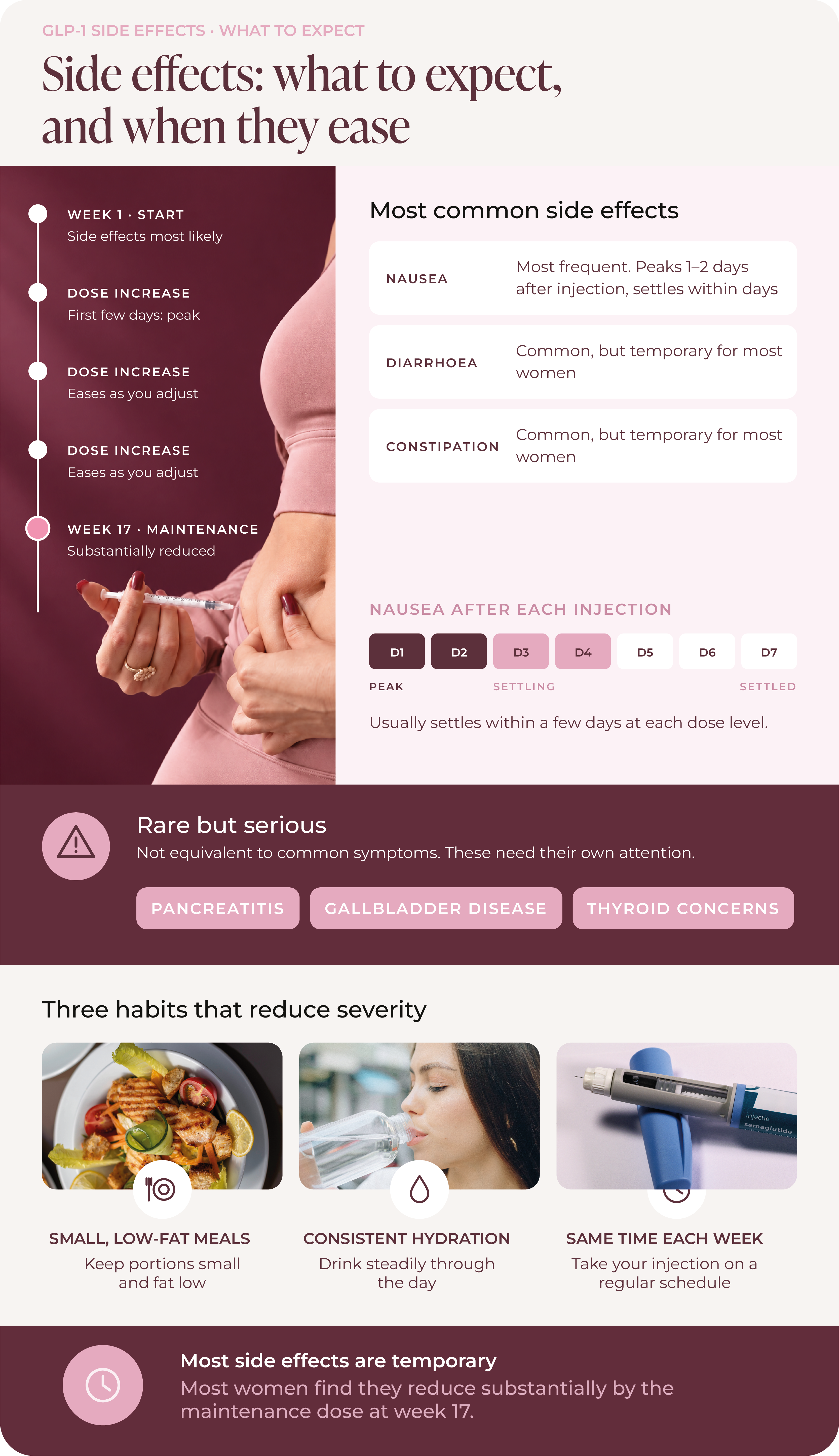
Most Wegovy side effects are gastrointestinal, and the first few weeks see the most. They usually ease a lot as the dose settles.
Nausea is what almost everyone experiences. Some people also see diarrhoea, constipation, headache, and fatigue. Then there are a tiny number of people who experience a bit more serious reactions that warrant medical attention.
In this article, we’ve covered what you can expect at each dose step, how long symptoms typically last, what genuinely helps, and which signs mean that you should be seeking medical help.
How Wegovy’s Side Effects Change as the Dose Increases
Wegovy follows a five-step escalation dose over 16 weeks. It starts at 0.25mg and goes up to a maintenance dose of 2.4mg. This graduation is for a reason. It gives your body time to adjust and significantly reduces how severe the side effects are compared to starting at a higher dose.
Why Symptoms Often Return Briefly at Each Dose Step
You’ll get through the first few weeks, start feeling more settled, and then once the dose goes up, the nausea may return. That is completely normal. Your body will need some time to adjust to each new dose. 3-5 days and you’ll start feeling better.
By the time you have been at any given dose for two to three weeks, most women feel significantly better than they did in the first few days at that level.
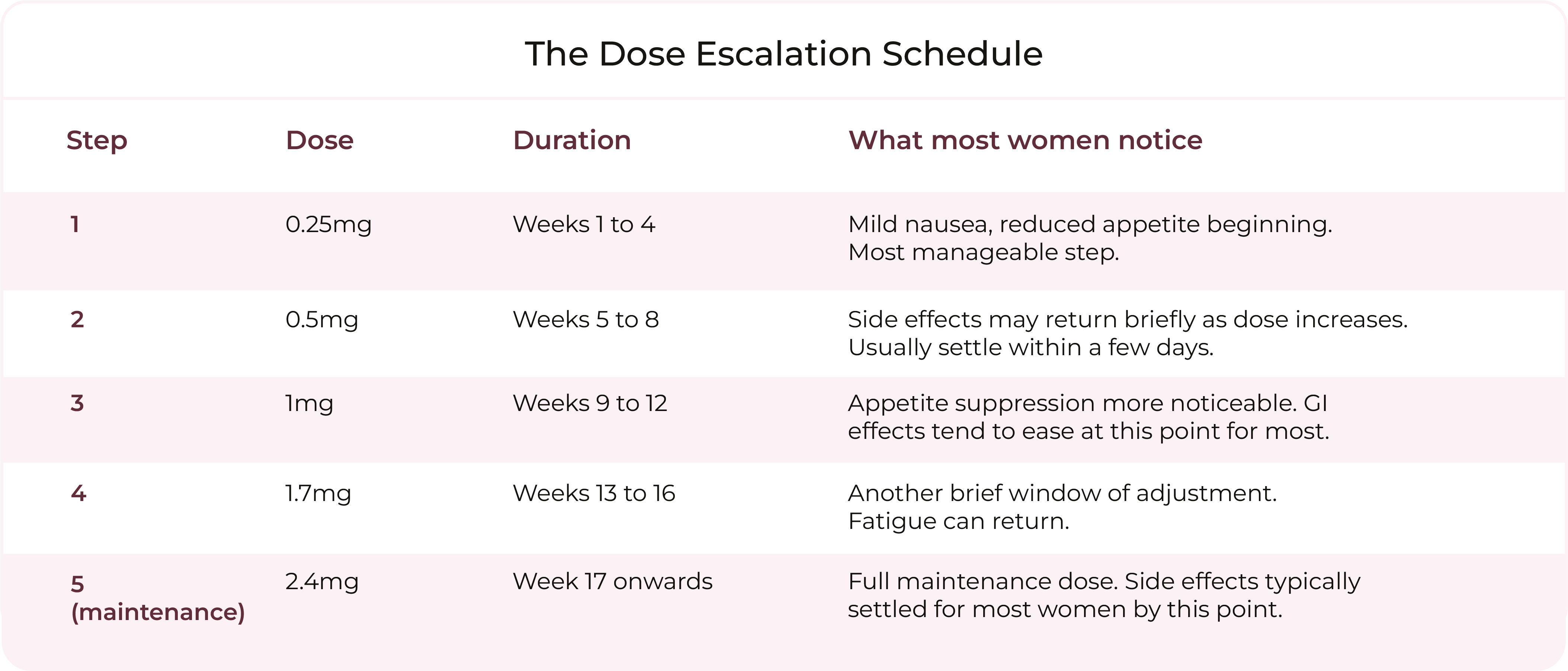
Note - You can stay on each dose as long as you want and it may be more advisable to stay longer on one with less side effects.
What the Common Side Effects Actually Feel Like
Nausea: The One Almost Everyone Mentions
Nausea is the most commonly reported Wegovy side effect. 40% of participants in the STEP trial said that they experienced it at some point. Most women describe it as something that is not like food poisoning or stomach flu, but a persistent low-grade queasiness, often worse in the morning or after eating too much too quickly.
We’ve seen the nausea being the most prominent in the first two days after each injection, which typically eases by day three or four. By the time most women reach the 1mg dose, they say that it has become much more manageable than what it was in week one.
Diarrhoea, Constipation and Other GI Symptoms
Wegovy slows the rate at which food moves through your digestive system. Now this can lead to different things in different women. For some, it’s constipation, especially at higher doses when gastric emptying is slower. For others, it’s diarrhoea, more commonly seen in the early weeks. For a few, it’s both at different points.
Constipation is more common at higher doses. Proper hydration, eating adequate fibre, and staying active can make a real difference. Diarrhoea is seen shortly after injection and settles within a day or two.
We’ve seen women also report vomiting, abdominal discomfort, and reflux. But again, they are seen 1-2 days after the injection and settle soon.
Headache and Fatigue in the Early Weeks
Headache and fatigue are less reported by women, but we feel they are underestimated. Nausea and constipation take the limelight, and most women fail to attribute the fatigue to the medication.
The reduced calorie intake because you are eating less, and your body adjusting to slower digestion and changes in blood sugar patterns, is most likely the reason for the fatigue. Hydration and not skipping meals entirely, even if you feel less hungry, can help with both.
How Long Do Wegovy Side Effects Last?
What Typically Happens in Week One
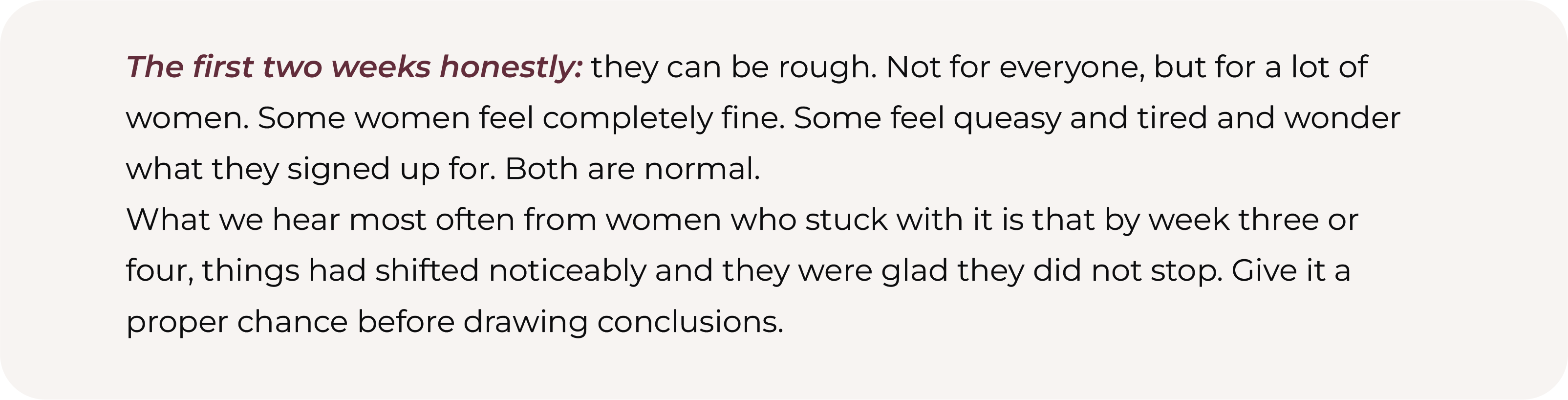
Week one is usually the easiest as you’ll be starting with the lowest, 0.25mg dose. Some women notice nothing at all, while others feel mild queasiness, reduced appetite, and possibly some fatigue. Even if some women feel nausea, it’s just on days one and two after the first injection and then it eases.
When Symptoms Usually Settle
Most women see significant improvement in side effects within 2 to 4 weeks at each dose level. Once you’ve been on Wegovy for 8 to 12 weeks, the overall experience improves much more as compared to the earlier ones.
By week 16 to 17, you’ll reach your maintenance dose of 2.4mg. Here, many women report forgetting the nausea that they experienced in the beginning.
There may yet be some women who continue to experience some side effects at the maintenance dose. Those cases demand a clinical conversation, and not just a reassurance to keep going.
We advise all our women that if the symptoms are affecting your daily life significantly after 4 weeks, you must have a chat with your clinician.
Here’s a comparison article we’ve written on the side effects of Wegovy vs Mounjaro if you’d like to read: which GLP-1 has the least side effects →
The Rare but Serious Risks
Most people on Wegovy do not experience any of the risks we’ve mentioned below, but they do need addressing so you know everything before you commit to something.
Pancreatitis, Gallbladder Disease and Kidney Issues
There’s a small risk of acute pancreatitis (inflammation of the pancreas) and gallbladder-related problems, including gallstones that are associated with rapid weight loss. Symptoms of pancreatitis include severe and persistent pain in the upper abdomen, often spreading to the back, accompanied by vomiting. If you see any of these, you should contact your clinician or A&E immediately.
Severe vomiting or diarrhoea that leads to significant dehydration can also affect kidney function. However, staying hydrated reduces the risk.
Thyroid Contraindications
Wegovy carries a contraindication for anyone with a personal or family history of medullary thyroid carcinoma (MTC) or Multiple Endocrine Neoplasia syndrome type 2 (MEN2). If you are one of them, it’s important to disclose it to your clinician before starting any treatment. If you’ve not been asked about your family thyroid history, make it a point that you mention it proactively.
How to Manage the Common Side Effects Day to Day
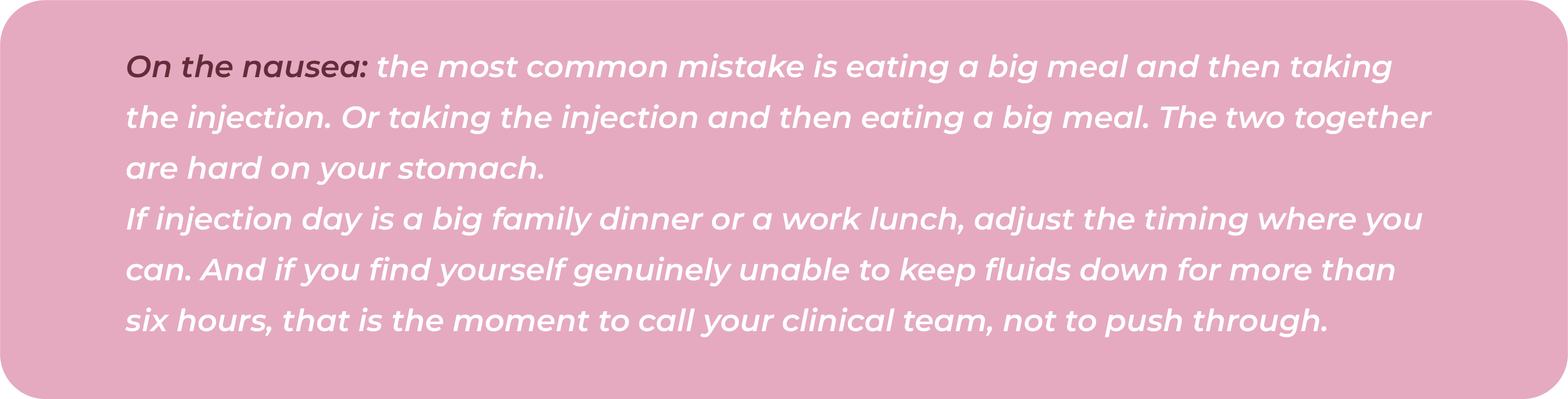
- Eat smaller portions more slowly: Wegovy slows how quickly your stomach empties. So you can’t be eating the same amount of food at the same speed. Smaller meals, eaten slowly, is the way to go.
- Avoid fatty, greasy or very rich foods: these are the most common nausea triggers on Wegovy. You don’t need to avoid them permanently. Your body will adjust, and your tolerance will improve gradually.
- Stay hydrated: sipping water consistently throughout the day rather than drinking large amounts at once supports both nausea and the kidney considerations above
- Injection timing: Some women prefer evening so that nausea hits overnight when they are asleep rather than during the day, while others prefer morning. There’s no right or wrong. Stick to what works for you the best.
How SheMed Supports You Through Dose Escalation
Most women end up giving up on their treatment in the first 8 weeks due to the side effects. But that’s also the window before most of the benefits are fully established, making it such a wrong time to stop. This often happens when they feel like they are managing symptoms alone.
At SheMed, your free at-home blood test before starting gives our clinical team your full baseline, including thyroid, HbA1c, liver enzymes, and cholesterol. This helps them when they check in on you at every dose escalation point, so you don’t need to navigate the adjustments alone.
The SheMed app allows side effect tracking between appointments so patterns can be spotted rather than reported from memory weeks later.
When to Contact Your Clinician
Every symptom may not need a call, but these surely do:
- Severe or persistent vomiting that prevents you from keeping fluids down for 6 hours or more
- Severe upper abdominal pain, particularly if it spreads to your back
- Signs of significant dehydration: dark urine, dizziness, confusion
- Any symptom that feels severe, sudden, or significantly different from the expected side effect profile
- Side effects that are not improving after 3 to 4 weeks at a given dose level and are significantly affecting daily life
You can read more about: what to do if you miss a Wegovy dose or experience severe symptoms →

Frequently Asked Questions
Do the side effects of Wegovy go away?
Yes, for most women. Side effects are most pronounced in the first few weeks of treatment and during each dose increase. By the time you reach the maintenance dose at week 17, you’ll see them reduce significantly. Few women continue to experience symptoms at the maintenance dose, and that warrants a clinical conversation.
What are the worst side effects of Wegovy?
The most commonly reported difficult side effect is nausea, followed by diarrhoea, constipation, and vomiting. For most women, these are unpleasant rather than dangerous and improve with time. Pancreatitis, gallbladder disease, and thyroid concerns are less common but can be serious and should be clearly distinguished from the common GI symptoms.
When do Wegovy side effects start?
For most women, side effects begin within 24 to 48 hours of the first injection. They usually settle in a few days and then briefly return each time the dose increases, peaking in the first 1 to 2 days and then easing over the following few days.
How do you stop feeling sick on Wegovy?
Smaller meals eaten slowly, avoiding greasy or very rich foods, staying well hydrated, and experimenting with injection timing to find the one that suits best all reduce nausea meaningfully. If nausea is severe or prevents you from keeping fluids down for 6 or more hours, contact your clinical team rather than waiting it out.
Sources and Further Reading
1. Novo Nordisk – Wegovy (Semaglutide 2.4mg) UK Summary of Product Characteristics
2. MHRA – Wegovy (Semaglutide) Product Information
3. NICE – Semaglutide for Weight Management (TA875)
5. SheMed – Wegovy Pill vs Injection: Which Is Right for Women?
6. SheMed – STEP UP Trial Results: What Women Need to Know
The content on the SheMed blog is provided for general informational and educational purposes only. While SheMed provides professional weight loss services and strives to ensure the information shared is accurate and up to date, we make no representations or guarantees as to its accuracy, completeness, or timeliness. This content should not be taken as personal medical advice or a substitute for consultation with a qualified healthcare provider. Always speak with your doctor or licensed medical professional about your individual health or medical needs before starting any new treatment or programme. Never disregard or delay seeking professional medical advice because of something you have read on this site. SheMed is not responsible for any actions you may take based on the information provided in this blog.
Related Articles