PCOS vs PMS/PMDD: What’s the Difference?

Medically reviewed by Puja Vyas, Lead Clinical Pharmacist.
If you suffer from PCOS and notice that your mood, energy, or physical symptoms seem to get worse in the days before your period, it could be because of Premenstrual Syndrome (PMS), Premenstrual Dysphoric Disorder (PMDD), or the way PCOS interacts with your hormonal cycle.
These are not the same thing; they do not have the same treatment, and confusing them delays getting the right help. In this article, we’ve explained the difference, what the research says about the link, and what actually helps.
Side note: PCOS is now also referred to clinically as PMOS (polyendocrine metabolic ovarian syndrome) following a May 2026 Lancet rename. We’ve used PCOS throughout the article as you would be more familiar with it.
Key Takeaways
- PCOS, PMS and PMDD are three distinct conditions that can overlap in symptoms but are driven by different mechanisms
- PCOS is a hormonal and metabolic condition. PMS is a common cyclical symptom pattern. PMDD is a recognised clinical diagnosis characterised by severe mood changes in the days before a period
- Research shows women with PCOS are approximately 1.5 times more likely to be diagnosed with premenstrual disorders than women without PCOS, but the relationship is correlational, not causal
- You can have both PCOS and PMDD at the same time. Each requires its own assessment and treatment
- PMDD is diagnosed by cycle tracking over at least two cycles, not by a single blood test
- Treating PCOS does not automatically resolve PMDD. If PMDD symptoms are present, they need their own clinical attention
PCOS, PMS and PMDD: Difference Explained
PCOS: a Hormonal and Metabolic Condition
PCOS is a long-term hormonal and metabolic condition caused by a combination of insulin resistance, elevated androgens (male-type hormones), and disrupted ovulation. It affects periods, weight, skin, hair, mood and fertility. You may see its symptoms present throughout the cycle, though some may fluctuate.
For it to be diagnosed, something called the Rotterdam criteria is used. In this, two of the three criteria, including irregular periods, androgen excess, and polycystic ovarian morphology or elevated AMH, are to be met. You’d need a blood test for the same. Cycle tracking is not enough.
We’ve written a dedicated article on diagnosis if you’d like to read: PCOS diagnosis: tests, criteria and what to expect →
PMS: Common, Cyclical and Usually Manageable
PMS, or premenstrual syndrome, is a combination of physical and emotional symptoms that many women experience in the days or sometimes even weeks before a period. It is very common (a reason why many young girls mention “I’m PMSing” often). Studies show that about 75% of women who menstruate experience some kind of PMS at some point.
Typical PMS symptoms include bloating, breast tenderness, tiredness, mild irritability, and low mood. They are very real and can be severe for some women. However, they are generally manageable with lifestyle changes.
PMDD: a Recognised Clinical Diagnosis, Not Just Bad PMS
PMDD, or premenstrual dysphoric disorder, is a distinct clinical condition. It is not a more intense version of PMS (as many on the internet claim it to be). It is recognised by the DSM-5 (the international diagnostic manual for mental health conditions) and ICD-11.
It is characterised by severe mood symptoms that arrive in the days before a period and resolve within a few days of it starting. This may sound similar to PMS, but the main difference here is the severity and the timing.
In the case of PMDD, the mood or emotional symptoms are central, as compared to the physical ones. They include marked depression, hopelessness, intense anxiety, sudden mood shifts, and significant irritability or anger. Some women also tend to get suicidal thoughts during the luteal phase (the days before a period).
If you are experiencing thoughts of self-harm or suicide, please reach out now. You can call or text Samaritans on 116 123 at any time, day or night, for free. You can also call NHS 111 or go to your nearest A&E. You do not have to be in immediate danger to reach out. If these thoughts are linked to a specific point in your cycle, that pattern is important clinical information, not something to manage alone.
An estimated 3 to 8% of women of reproductive age experience PMDD. It has a significant impact on daily life, relationships and work, especially in the days before a period.
Where the Symptoms Overlap
Mood Changes
This is where things get confusing for most of you. Mood changes are seen in all three - PCOS, PMS and PMDD. However, with PCOS you may also experience significantly higher rates of anxiety and depression throughout the cycle. PMS involves mild pre-period mood dips. PMDD involves severe, cycle-linked mood episodes.
The main difference is timing. Mood changes in PCOS tend to be present more broadly, while in PMDD, they usually appear 7 to 14 days before a period and resolve once the period starts.
Bloating and Physical Discomfort
Both PCOS and PMS come with bloating, abdominal discomfort, and breast tenderness. The reason is the distinction between the two.
PCOS-related bloating can be driven by hormonal water retention and gut microbiome disruption. PMS bloating is also hormonally driven but follows a more predictable cyclical pattern.
If you experience bloating, we’ve written a dedicated article on it if you’d like to know more - PCOS belly fat and bloating: why it happens →
Why Overlap Makes It Easy to Misattribute One for the Other
The overlaps in symptoms mean that women with PCOS often go undiagnosed for PMDD as the mood symptoms get attributed to PCOS. The other way around is also seen. Sometimes women with PMDD have PCOS symptoms missed because the cycle irregularity and physical symptoms are attributed entirely to PMDD.
Both mistakes can cost you inappropriate treatment. This is why these conditions require separate assessment, not either/or attribution.
Something worth tracking: if you have PCOS and your mood, energy, or physical symptoms feel significantly worse at a specific point in the month, start noting the day of your cycle alongside the symptom. Even with irregular PCOS cycles, a pattern around the pre-period phase can emerge over two to three months. That record is far more useful in a clinical appointment than trying to describe how you feel in general.
Can You Have PCOS and PMDD at the Same Time?
What the Research Suggests
Yes, and it is more common than you’d think. A 2024 Swedish nationwide register-based study that followed thousands of women found that those with a PCOS diagnosis were approximately 1.55 times more likely to develop a premenstrual disorder diagnosis compared to women without PCOS.
Another study found that around 30% of women with PCOS experience premenstrual disorders, compared to around 15% in the general female population.
But before you jump to any conclusions, here’s what you need to know –
This is a correlational finding and not a causal one. This means that both conditions are related to each other and that there may be shared biological mechanisms, but having PCOS does not cause PMDD or vice versa.
What Might Explain the Link
We found some research that suggests shared hormonal sensitivity, particularly around progesterone and the way it causes chronic low-grade inflammation, as a reason for both conditions to co-occur. Apart from that, disruptions to a brain signalling pathway involving a compound called allopregnanolone, which influences mood regulation and appears to be affected by the hormonal changes associated with PCOS.
These are not conclusive studies. What we can say for now is that if you have PCOS and experience severe premenstrual mood symptoms, you need to get both assessed without assuming anything.
Does PCOS Make PMS or PMDD Worse?
Yes, it may for some women.
Women with PCOS who ovulate infrequently have less regular progesterone production. Progesterone normally rises in the second half of the cycle after ovulation and then falls before a period. When ovulation is absent or irregular, these hormonal fluctuations become unpredictable. And for women whose mood is sensitive to those hormonal shifts, irregular or amplified fluctuations could worsen the pre-period symptom pattern.
Here’s an article we’ve written if you’d like to understand how PCOS affects periods and cycles: PCOS, periods and pain: what’s normal and what isn’t →
Diagnosing PMDD vs PCOS
Cycle Tracking is the Primary Diagnostic Tool
To diagnose PMDD, you need to track your symptoms as they happen over at least two complete cycles, and not by recalling how you felt in general. What confirms PMDD is the symptoms appearing after ovulation and before the period, and then improving clearly once the period starts or within a few days of it.
Timing is the key here. If the mood symptoms are present continuously throughout the cycle and do not clearly improve with the period, it may not be PMDD, though PCOS-related mood effects or another condition may still be contributing.
How PCOS is diagnosed (different criteria, different process): PCOS diagnosis: blood tests, criteria and what to expect →
When Mood Symptoms Need a Conversation With a Doctor
PMS symptoms can be very frustrating. But they usually do not stop you from going to work, maintaining relationships, or functioning in daily life. When they do get in the middle of those things, it may be a clinical matter that needs to be assessed.
- Mood episodes that significantly affect your relationships, work, or ability to carry out daily activities in the week or two before your period
- A clear and repeating pattern where you feel markedly worse in the days before your period and noticeably better once it starts
- Feelings of hopelessness, worthlessness, or being overwhelmed that arrive cyclically and feel disproportionate to your circumstances
- Anxiety, panic, or irritability that feels out of character and significantly worse than usual at certain points in the month
- Thoughts of self-harm or not wanting to be alive, even if fleeting
What Can Help
Some approaches work for both PCOS and PMDD. These include -
- Cycle tracking: For PCOS, it documents the pattern of irregularity. For PMDD, it is the primary diagnostic tool and helps identify what is happening and when
- Sleep: poor sleep worsens both insulin resistance (central to PCOS) and mood regulation (central to PMS and PMDD). Consistent sleep timing and quality matter more than total hours for many women with hormonal conditions
- Stress management: chronic stress elevates cortisol, which worsens insulin resistance and can amplify hormonal mood sensitivity. This doesn’t mean that you should simply relax. But try to stay away from stress as much as possible.
- Low-GI eating and blood sugar stability: blood sugar crashes worsen mood for most people. For women with PCOS and possible PMDD, stable blood sugar across the day supports both insulin sensitivity and mood consistency
These work not because they treat both simultaneously but because they address shared underlying factors.
You can read more about PCOS diet and lifestyle here: PCOS diet: what to eat and why → and PCOS exercise: what actually helps →
Where Medical Treatment for PCOS Fits, and Where It Does Not Address PMDD
Metformin, GLP-1 medications and contraceptive pills can help manage the hormonal and metabolic picture of PCOS. They cannot treat PMDD. It has its own treatments that include SSRIs taken either continuously or specifically in the luteal phase, certain formulations of the contraceptive pill, and, for severe cases, interventions that suppress ovarian cycling.
These are separate clinical decisions that should be discussed with your GP or a specialist.
You can read more about PCOS treatment here: PCOS and insulin resistance: metformin and what helps →
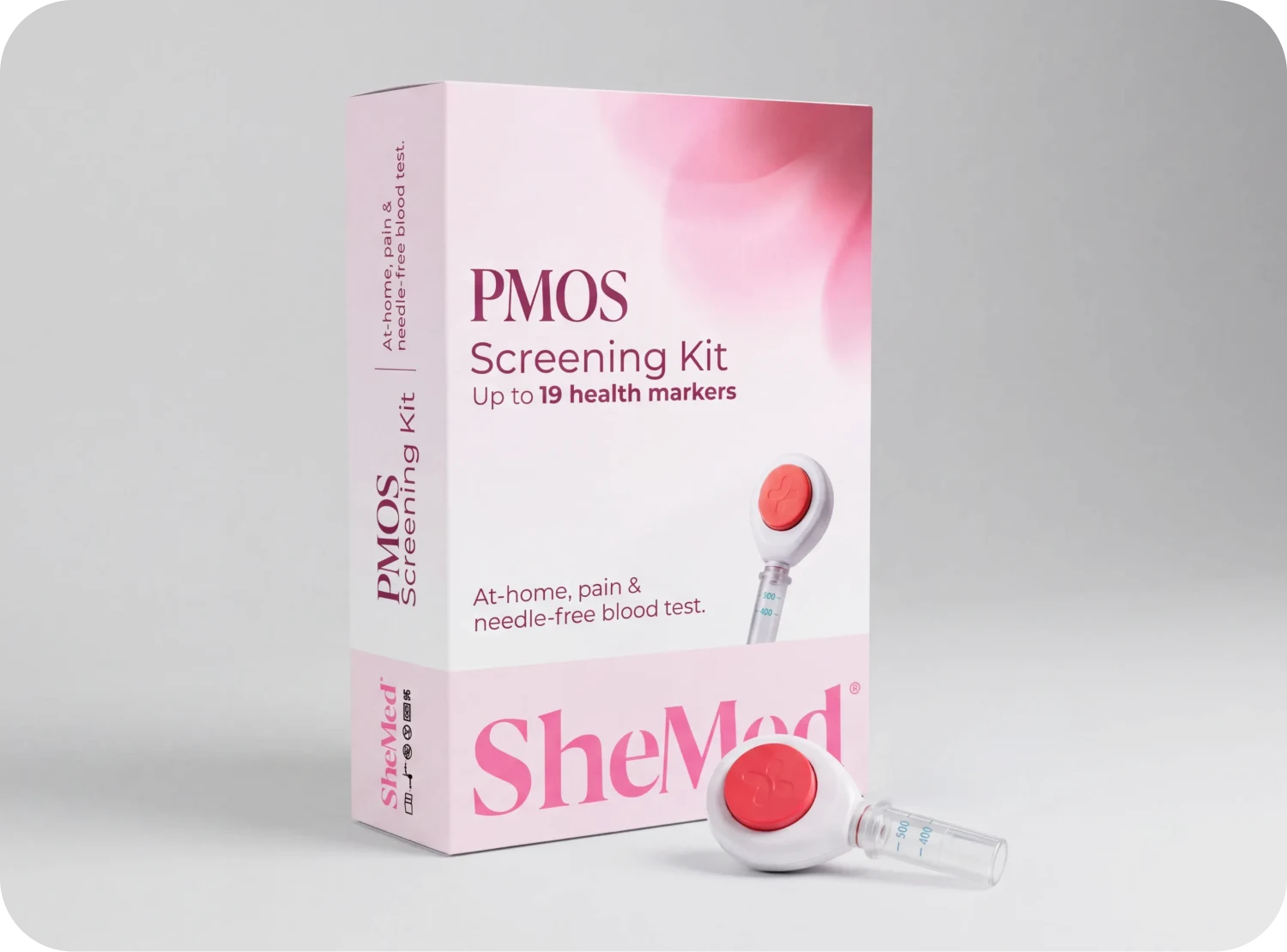
Think you might have PCOS (now PMOS)? Screen 19 health markers at home, reviewed by a clinician.
Frequently Asked Questions
Is PMDD a symptom of PCOS?
No. PMDD and PCOS are separate conditions with different diagnostic criteria and different causes. Research shows they co-occur commonly, but having PCOS does not mean you have PMDD, and having PMDD does not mean you have PCOS. Both require their own assessment.
Can PCOS cause worse PMS?
For some women, it may. PCOS-related hormonal disruption, particularly irregular ovulation and the resulting unpredictable progesterone levels, may amplify premenstrual symptoms for women who are sensitive to those shifts. Chronic inflammation and insulin resistance may also lower mood sensitivity thresholds.
How do you know if it’s PMS, PMDD, or PCOS?
The most useful starting point is timing. PMS and PMDD symptoms are tied to the pre-period phase and lift once the period starts. PCOS symptoms, including mood changes, tend to be present more broadly across the cycle. PMDD is distinguished from PMS by the severity of mood symptoms and the degree to which they impair daily functioning. A PCOS diagnosis requires blood tests and clinical assessment using the Rotterdam criteria. PMDD is diagnosed through prospective symptom tracking across at least two cycles.
Is there a link between ADHD, PMDD and PCOS?
Emerging research does suggest that ADHD, PMDD and PCOS may be seen together in some individuals more than would be expected by chance. The proposed mechanisms include shared sensitivities to hormonal fluctuations, particularly around dopamine and other neurotransmitter pathways. The evidence is still in early stages and the relationship is not fully understood.
Can treating PCOS improve PMDD symptoms?
Possibly, but indirectly and partially. If PCOS treatment improves ovulation frequency and reduces the hormonal fluctuations that may worsen premenstrual symptoms, some women notice an improvement. But PCOS treatment does not address the core mechanism of PMDD, which involves the brain’s sensitivity to specific hormonal changes rather than the changes themselves. For women with both conditions, separate treatment for PMDD is likely to be needed alongside PCOS management.
Sources and Further Reading
1. NHS – Premenstrual Syndrome (PMS)
2. NHS – Polyendocrine Metabolic Ovarian Syndrome (PMOS / PCOS)
3. RCOG – Management of Premenstrual Syndrome Green-top Guideline No. 48
4. NICE CKS – Polycystic Ovary Syndrome
6. IAPMD – International Association for Premenstrual Disorders: About PMDD
The content on the SheMed blog is provided for general informational and educational purposes only. While SheMed provides professional weight loss services and strives to ensure the information shared is accurate and up to date, we make no representations or guarantees as to its accuracy, completeness, or timeliness. This content should not be taken as personal medical advice or a substitute for consultation with a qualified healthcare provider. Always speak with your doctor or licensed medical professional about your individual health or medical needs before starting any new treatment or programme. Never disregard or delay seeking professional medical advice because of something you have read on this site. SheMed is not responsible for any actions you may take based on the information provided in this blog.
Related Articles