PCOS and Birth Control: How It Helps, and What It Doesn’t Do
Medically reviewed by Puja Vyas, Lead Clinical Pharmacist.
If you suffer from PCOS, there’s a chance your GP would have mentioned contraceptive pills after diagnosis.
Contraceptive or birth control pills are one of the most prescribed treatments for PCOS symptoms for irregular periods,and they do help in many cases. But it is important for you to know what they do and what they don’t, because the two are very different things.
On a side note: PCOS is now clinically referred to as PMOS (polyendocrine metabolic ovarian syndrome) following a May 2026 Lancet rename. We’ve used the more common one, PCOS, in this article for ease of readers.
Please note: this article is purely educational. SheMed does not prescribe contraception, so if contraception is something you want to explore, your GP is the right person to speak to.
Before you dive into PCOS and birth control, we’ve written an article that will give you a basic understanding of what the condition is in case you’re interested to know -
PCOS symptoms, causes and treatment →
Key Takeaways
- The combined oral contraceptive pill is one of the most commonly prescribed first-line treatments for PCOS symptoms in the UK
- It works by overriding the hormonal cycle with external hormones, which regulates periods and reduces the androgens driving acne, excess hair, and scalp thinning
- The pill does not treat the underlying insulin resistance that is central to most PCOS cases: it manages the downstream effects, not the cause
- Evidence on whether the pill causes weight gain in PCOS is genuinely mixed. The best current evidence suggests most women do not gain clinically significant weight on hormonal contraception
- When you stop the pill, PCOS symptoms typically return, because the underlying hormonal imbalance has not changed
- The pill is not the only option. Metformin, lifestyle changes, and, where eligible, GLP-1 medications address insulin resistance more directly
Why the Contraceptive Pill Is Commonly Prescribed for PCOS
PCOS disrupts the hormonal cycle that leads to irregular or absent periods and elevated androgens (male-type hormones). The combined oral contraceptive pill addresses both of these things by basically overriding your body’s existing hormonal system with a predictable external one.
Each pill cycle ends with a withdrawal bleed, the “period” you get on the pill. It’s not the real one caused by ovulation, but it does a very important thing: it clears the womb lining regularly.
This is crucial for women with PCOS because when periods are irregular or absent, the womb lining can build up month after month without shedding. With time, this buildup raises alarms and warrants monitoring. The pill prevents it from happening.
How the Pill Regulates Cycles
The pill contains synthetic versions of oestrogen and progesterone. When taken consistently, these hormones tell your brain to stop sending the usual monthly signals to your ovaries. And no signals mean no erratic PCOS pattern that was caused by the hormones your ovaries were producing. Result? A predictable, pill-controlled cycle instead of an unpredictable one.
How the Pill Reduces Androgen-Related Symptoms
The combined pill does two things: first, it increases the production of a protein called sex hormone-binding globulin (SHBG) in the liver. This hormone is like a sponge for testosterone. It binds to it in your bloodstream and makes it inactive. Less active testosterone means less of it causing acne, excess hair, and scalp thinning.
Second, it quietens one of the main hormonal signals the ovaries use to produce androgens in the first place. And less signal means less production at the source itself.
Both of these build over time. This is why it takes a few months before you can notice a significant difference in skin or hair.
If you are facing hair loss, we’ve written a dedicated article for you if you’d like to read: PCOS and hair loss: causes and treatment options →
Does Birth Control Help With PCOS Weight Gain?
We know that many of you have the same question (Google keyword research shows clearly).
The honest answer is that there is no clear evidence that the pill supports weight loss for women with PCOS.
What the Evidence Actually Shows
A systematic review in the 2023 International Evidence-Based PCOS Guidelines found that the combined pill showed no significant difference in BMI improvement compared with placebo or lifestyle changes. The same study even found almost no evidence for any other outcomes apart from cycle regulation.
Having said that, the pill doesn’t cause weight gain either. Some women experience fluid retention or changes in appetite and body composition, but these cannot be generalised.
The underlying insulin resistance that promotes weight gain in PCOS is not affected by the pill, which brings us to the most important thing to understand.
What the Pill Does Not Do for PCOS
It Doesn’t Treat Insulin Resistance
70 to 80% of women with PCOS experience insulin resistance. It is the primary metabolic driver behind most of the symptoms. It promotes androgen overproduction, makes weight management harder, and increases long-term risks of type 2 diabetes and cardiovascular disease. Birth control pills do not work on insulin resistance.
You can read more about the connection between insulin resistance and PCOS: PCOS and insulin resistance: what’s the connection and what helps →
It Doesn’t Treat the Underlying Hormonal Imbalance
The pill works on the after effects of PCOS by suppressing the cycle, reducing available androgens and clearing the womb lining. But it does not correct the hormonal predisposition that causes PCOS in the first place.
Once you stop the pill, the underlying condition remains unchanged. The ovaries return to their PCOS pattern, periods become irregular, and androgens rise again. This doesn’t mean that the pill failed to work. It means that the pill was always a management tool for symptoms, not a treatment for the cause.
Here’s another article if you want to know how and if PCOS can be cured: Can PCOS be cured? What treatment can and can’t do →
Worth knowing before you start: a lot of women go on the pill in their teens or early twenties for PCOS symptoms, spend years on it, and then come off it in their late twenties when they want to think about fertility, and feel completely blindsided by what happens. All the original symptoms come back. It can feel like the PCOS has suddenly got worse, but what has actually happened is that the pill was managing it all along, and now it isn’t.
This is not a surprise if you know about it in advance. It does not mean the pill was wrong to take. It just means that coming off is worth planning for, not just stopping on a Tuesday.
Types of Contraception Used for PCOS
The Combined Oral Contraceptive Pill
The combined pill, containing both oestrogen and a progestogen, is the most commonly prescribed option for managing PCOS symptoms in the UK. It is available in many different formulations. Your GP may prescribe one based on your health history, any cardiovascular or clotting risk factors, and which androgen-related symptoms are most significant for you.
Other Hormonal Options
There are some other hormonal methods that can be used depending on your clinical picture:
- Progestogen-only approaches: for women who cannot take oestrogen (for example, due to migraine with aura, certain clotting conditions, or other contraindications), progestogen-only methods may be used to protect the womb lining and regulate withdrawal bleeds. But they may have a different effect on androgen levels than the combined pill.
- The hormonal coil (intrauterine system): It releases progestogen locally into the womb lining, providing endometrial protection with very low systemic hormone levels. It does not address the androgenic symptoms of PCOS in the way the combined pill does, since the systemic hormone exposure is minimal
These are neither your only options, nor prescribing guidance. It’s best to talk to your GP or specialist before considering any options as they need to check your circumstances, symptoms, and preferences when discussing options with you.
Coming Off Birth Control With PCOS
Why Symptoms Often Return
This is an important topic that many blogs often miss.
Because the pill has been managing your androgen levels and cycle regularity, stopping it removes those effects. After a few weeks and months of stopping the pill, you may notice your periods becoming irregular again, and the symptoms that androgen was driving like acne and excess hair, return.
Some women may even experience a temporary worsening of symptoms before things go back to the previous PCOS pattern. This is because the post-pill period is also a time of hormonal fluctuation as the body's own hormonal system re-establishes itself.
What to Expect and Plan For
If you have been on the pill for years and have not had your blood tested for your fasting glucose, HbA1c, cholesterol, or thyroid function, this is a good time to request them. It is important for your GP to understand your metabolic baseline before they advise you to stop them or make any changes.
- Tell your GP you are planning to stop, particularly if it is connected to fertility plans, so they can advise on what to expect and any specific monitoring that might be appropriate
- Give yourself time: it can take several months for cycles to settle into their post-pill PCOS pattern. Use that period to establish dietary and lifestyle habits that support insulin sensitivity
- If you are stopping because you want to get pregnant, read our fertility guide. We’ve written about timing, ovulation monitoring, and when to seek fertility support in detail
Questions Worth Asking Your GP
If you are discussing the pill for PCOS, or thinking about starting, stopping, or switching, these are the questions worth raising:
- Which formulation are you recommending and why, given my specific symptoms?
- Are there any contraindications I should know about based on my health history?
- Will this help with my acne or excess hair, and over what timeframe?
- Should I also be checking my blood sugar and cholesterol, given that the pill doesn't address insulin resistance?
- What should I expect if I stop the pill, and how do I plan for that transition?
- Are there other options I should know about alongside or instead of the pill, such as metformin?
Here’s another article we’ve written on PCOS and its diagnosis that can help you understand more if you’re interested: PCOS diagnosis: blood tests, criteria and what to expect →
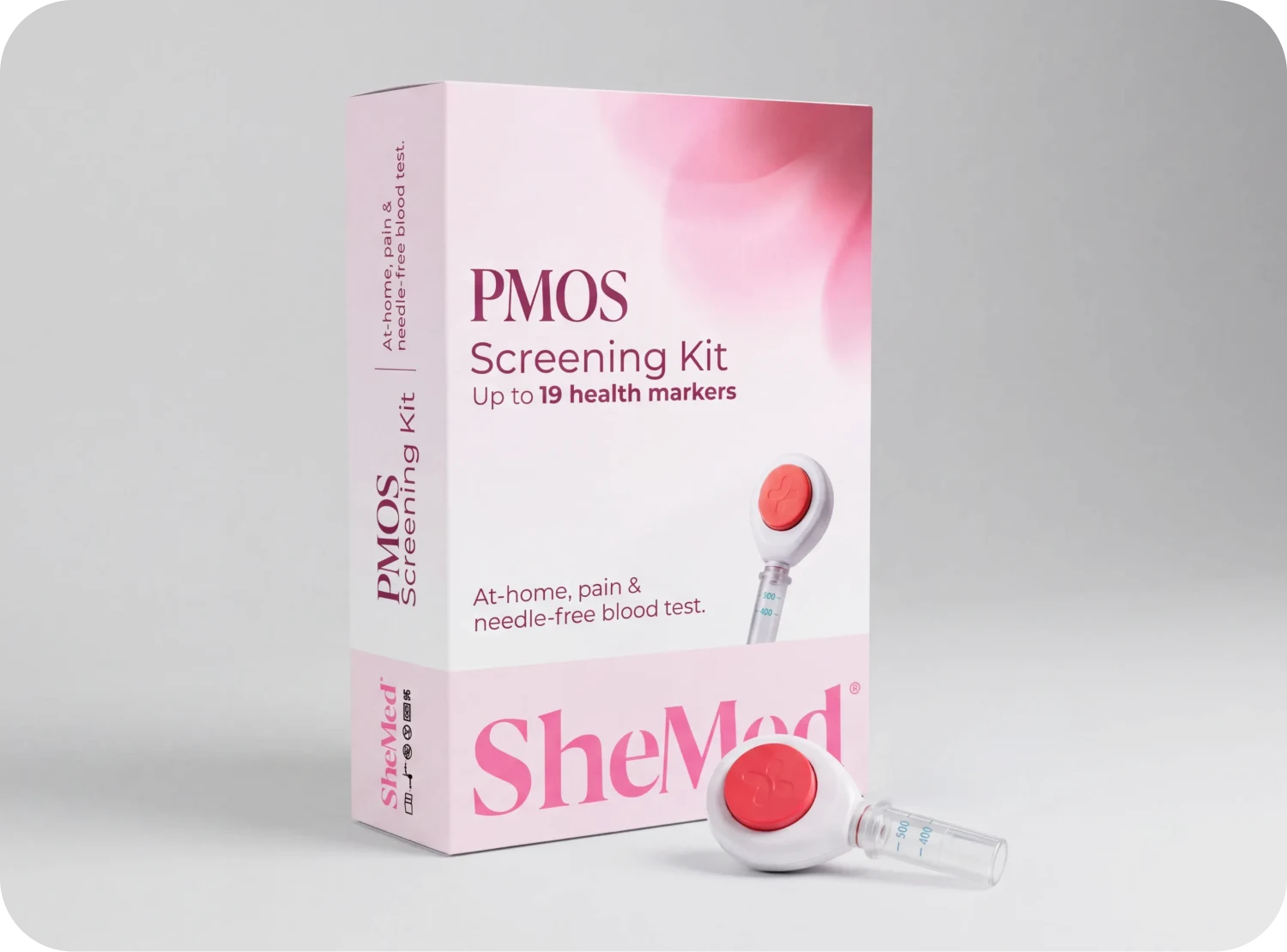
Think you might have PCOS (now PMOS)? Screen 19 health markers at home, reviewed by a clinician.
Frequently Asked Questions
Does birth control help with PCOS symptoms?
Yes, for specific symptoms. The combined oral contraceptive pill reliably regulates cycles and reduces the androgen activity that drives acne, excess facial or body hair, and scalp thinning. It is one of the most commonly used treatments for these symptoms in PCOS. However, it does not improve insulin resistance, does not address the metabolic features of the condition, and symptoms return when you stop taking it.
Can birth control help you lose weight with PCOS?
There is no evidence for birth control pills to support weight loss for women with PCOS. A review conducted as part of the 2023 International PCOS Guidelines found no significant difference in BMI improvement between the combined pill and placebo or lifestyle changes.
Does birth control treat the cause of PCOS?
No. The pill manages the hormonal symptoms of PCOS while you take it, but it does not work on the underlying hormonal imbalance or insulin resistance that causes those symptoms. This is why symptoms return when you stop taking it.
What happens to PCOS symptoms after stopping the pill?
For most women with PCOS, symptoms return after stopping the pill. Periods become irregular again, and androgen-driven symptoms like acne or excess hair re-emerge. There may also be a temporary period of hormonal fluctuation as the body's own system re-establishes itself.
Is birth control the only option for managing PCOS symptoms?
No. The combined pill is commonly prescribed for cycle regulation and androgen symptoms. Metformin addresses insulin resistance directly and can restore more regular ovulation. Anti-androgen medications can be used for hirsutism and acne where the pill is not suitable or has not worked. GLP-1 medications are used for weight management and insulin sensitivity in eligible women. Lifestyle changes including diet and exercise are recommended alongside any medical treatment. Your GP can advise which combination is appropriate for your picture.
Sources and Further Reading
1. NHS – Polyendocrine Metabolic Ovarian Syndrome (PMOS / PCOS)
2. NICE CKS – Polycystic Ovary Syndrome: Management
4. NHS – Polycystic Ovary Syndrome (PCOS): Treatment
5. NHS – Combined Oral Contraceptive Pill
6. Cleveland Clinic – Polycystic Ovary Syndrome (PCOS)
7. Johns Hopkins Medicine – Polycystic Ovary Syndrome (PCOS)
The content on the SheMed blog is provided for general informational and educational purposes only. While SheMed provides professional weight loss services and strives to ensure the information shared is accurate and up to date, we make no representations or guarantees as to its accuracy, completeness, or timeliness. This content should not be taken as personal medical advice or a substitute for consultation with a qualified healthcare provider. Always speak with your doctor or licensed medical professional about your individual health or medical needs before starting any new treatment or programme. Never disregard or delay seeking professional medical advice because of something you have read on this site. SheMed is not responsible for any actions you may take based on the information provided in this blog.
Related Articles