Can PCOS Be Cured? What Treatment Can and Can’t Do

Medically reviewed by Puja Vyas, Lead Clinical Pharmacist.
PCOS is one of the most manageable long-term hormonal conditions, and with the right approach, most women see real improvement in their symptoms and long-term health outlook. It's true that PCOS is a lifelong hormonal and metabolic condition that doesn't resolve on its own or have a cure. But that's not the full picture. Effective management can significantly reduce symptoms, restore more regular cycles, and lower long-term health risks like type 2 diabetes and cardiovascular disease.
Side note: PCOS is now also clinically referred to as PMOS (polyendocrine metabolic ovarian syndrome), following a May 2026 Lancet consensus rename. We’ve used PCOS throughout this article as most of you are more familiar with it.
Here are two in-depth articles on PCOS if you want to understand the condition properly before learning about curing it –
What is PCOS (PMOS)? → (Link to be revised once the article is live)
PCOS symptoms, causes and treatment →
Key Takeaways
- PCOS cannot be cured. It is a lifelong condition that is managed, not resolved
- "Managed" is not a consolation prize: for most women, effective management means symptoms reduce substantially and long-term health risks are significantly lowered
- PCOS does not go away with age, pregnancy, or menopause, though its presentation changes across life stages
- No supplement, detox, or dietary protocol has been shown to cure PCOS. Claims suggesting otherwise are not supported by clinical evidence
- The most effective long-term management combines lifestyle changes (low-GI diet, resistance training) with medical treatment where indicated (metformin, GLP-1 medications, the contraceptive pill)
- Consistency over time produces better outcomes than any short-term intervention
Is There a Cure for PCOS?
Why PCOS Is Managed, Not Cured
A combination of hormonal imbalance, insulin resistance, and genetics causes PCOS. As of September 2026, there are no medications or procedures that can permanently correct the underlying genetic and hormonal predisposition that makes a woman’s ovaries act differently to the hormonal signals they receive. Even lifestyle changes do not help.
It’s not just PCOS; many common long-term conditions like type 2 diabetes, hypertension, and hypothyroidism are not cured but managed. This does not mean that people suffering from these conditions are in a worse state than the ones suffering from curable ones. They are just in a different category, one where consistent care and the right approach produce a good outcome.
What ‘Treatable’ Actually Means in Practice
Some clinicians do use the term ‘treatable’ when addressing PCOS. They mean that the symptoms can be reduced significantly, hormonal imbalance can be improved, metabolic risks can be lowered, and day-to-day life can be improved meaningfully.
Here’s what effective management can achieve for women with PCOS -
- More regular periods, or at least predictable cycle management
- Reduced acne, excess hair growth, and scalp thinning
- Improved insulin sensitivity and better blood sugar control
- More manageable weight, particularly around the abdomen
- Lower long-term risk of type 2 diabetes and cardiovascular disease
- In women trying to conceive, improved ovulation frequency and better fertility outcomes
The reframe that actually helps: the question ‘can PCOS be cured’ is worth asking, and worth getting an honest answer to. But for most women living with it, the more useful question turns out to be ‘what does my life look like when this is properly managed?’ For a lot of women, the answer to that question is: pretty good. Regular periods, cleared-up skin, better energy, weight that responds to effort, and long-term risks that are being actively monitored. That is not a consolation. That is a genuinely decent outcome from a genuinely manageable condition.
Does PCOS Go Away on Its Own?
Does It Change With Age?
PCOS does not resolve with age, but the way it shows up changes. Perimenopause is when you’ll see the most obvious changes, as the natural hormonal shifts alter the cycle anyway. The irregular periods become less relevant as your periods tend to stop for menopause related reasons. Some women also find symptoms like acne that are androgen-access driven ease in their 40s.
But what doesn’t change with age is the underlying metabolic picture. The insulin resistance still stays. In fact, because your oestrogen levels keep decreasing during menopause, the protective layer against insulin keeps shrinking, increasing the cardiovascular risks along with it. This is why women with PCOS who reach menopause need ongoing metabolic monitoring, not less.
If you’re approaching menopause, here’s an article that will help you understand the full picture better - PCOS and menopause: what changes and what doesn’t →
Does Pregnancy Cure PCOS?
No. Pregnancy causes hormonal changes that can alter the way PCOS shows up temporarily. You may notice that some symptoms ease during or after pregnancy. But the underlying condition, the genetic predisposition, the insulin resistance tendency, and the hormonal pattern, usually returns as pregnancy hormones normalise.
Here’s a full article we’ve written if you feel like knowing more about PCOS and getting pregnant: PCOS and fertility: what to expect → (Link to be revised once the article is live)
What Actually Helps Manage PCOS Long-Term
Medical Treatment Options
There are many medical approaches that have strong evidence for managing PCOS effectively. They do not cure it, but they do work on the hormonal and metabolic factors enough for the symptoms to improve. They include -
- Metformin: an insulin-sensitising medication widely used for PCOS in the UK. It improves insulin resistance, reduces androgen production, and often restores more regular cycles
- GLP-1 medications (semaglutide, tirzepatide): for women with PCOS who are overweight or have significant insulin resistance. GLP-1 medications address the metabolic core of the condition with meaningful improvements in weight, insulin sensitivity, androgen levels, and cycle regularity
- Combined oral contraceptive pill: regulates cycles, reduces androgen levels and their visible effects (acne, excess hair). It also protects the womb lining from prolonged unopposed oestrogen
- Anti-androgen medications (e.g. spironolactone): for significant acne or hirsutism where other approaches have not been sufficient
Here are some in-depth articles we’ve written on medications and PCOS -
PCOS and insulin resistance: what’s the connection and what helps →
Mounjaro and PCOS: what the evidence says →
Diet and Lifestyle
These are not alternatives to medical treatment, but supplements that work alongside medication to make them more effective.
· Low-GI eating: avoiding refined sugar reduces insulin spikes, which directly lowers the signal driving androgen overproduction in the ovaries. This is the most direct dietary lever for PCOS
- Resistance training: A decent 3-4 days a week workout builds muscle, which is the body’s primary site of glucose uptake. More muscle means better insulin sensitivity even before significant weight loss occurs
- Consistent sleep: poor sleep raises cortisol, which worsens insulin resistance. Seven to nine hours of quality sleep is non-negotiable, not a nice-to-have luxury
- Modest weight loss: even 5% of body weight consistently improves insulin sensitivity, androgen levels, and ovulation frequency in women with PCOS who are overweight
Two more articles for you if you are more interested in knowing about lifestyle approaches to managing PCOS –
PCOS diet in detail: what to eat and why: PCOS diet guide →
Why weight loss with PCOS works differently: PCOS and weight loss: what actually helps →
Why Consistency Matters More Than Chasing a Cure
What we’ve seen often with managing PCOS is women start strong, see improvement, and reduce the effort once things feel better; just to see the symptoms return in no-time after. We don’t blame them. We understand. It shows the nature of the condition that the hormonal environment in the body doesn’t change permanently.
The women who do best with PCOS long-term are the ones who found a sustainable dietary pattern, a form of exercise they would actually do, and where appropriate a medical treatment they could continue without significant disruption to daily life, and maintained those consistently over years.
Common Myths About Curing PCOS
Supplements and Detoxes
You may have seen many products in the market being sold as “PCOS cures”, including detox teas, hormone-balancing supplement packs, berberine at high doses, herbal combinations, and even some elimination diets promoted as reversing the condition entirely. None of these come with actual clinical evidence.
There are some supplements though, particularly myo-inositol, that have real evidence for improving certain PCOS markers. But improving a marker is not the same as curing the condition. Improvement requires ongoing and sustained supplementation.
Why ‘Get Rid of PCOS Permanently’ Is Not Realistic
Such keywords can bring a lot of traction to a website or a social media account because there are many women out there facing challenges in their day-to-day life, and are looking for a genuine solution. But ‘get rid of PCOS permanently’ is not a goal that clinical evidence supports. The underlying genetic and hormonal predisposition cannot currently be removed.
What can be achieved with right management is gaining control over symptoms so that they have little impact on day-to-day life. We call this ‘symptom remission’ in clinical terms. Remission is not a cure, as symptoms can return once management is stopped. But it’s not a failure. It’s how PCOS works.
Bestie tip: if you have spent money on something that promised to cure your PCOS and it didn’t, you are not alone. The gap between what the evidence supports and what is marketed to women with PCOS is wide and has been for years. Myo-inositol is worth trying. Cutting refined carbohydrates is absolutely worth trying. Drinking a £50 herbal blend promising hormonal reset is not. And if it did seem to help, the most likely explanation is that buying it coincided with other changes you made at the same time. Be appropriately sceptical.
Living Well With PCOS Long-Term
What Ongoing Clinician-Led Care Can Look Like
PCOS requires a timely check of the things that matter metabolically: blood sugar, cholesterol, blood pressure, thyroid function, and where relevant androgen levels are. The NHS recommends regular monitoring for women with PCOS, and the frequency depends on individual risk factors.
For women managing PCOS privately, this monitoring sits within their clinical programme. For women on the NHS, it means proactively booking the relevant blood tests rather than waiting for a GP to initiate them, as they may miss it in the routine care.
When to Review Your Treatment Plan
Here are some scenarios that ask for a review of your treatment plan -
- You want to try to get pregnant: several PCOS treatments, including GLP-1 medications and the contraceptive pill, need to stop before conception
- Your symptoms have worsened significantly despite existing management
- You have reached perimenopause and the hormonal picture is shifting
- You have developed or been told you are at risk of type 2 diabetes or cardiovascular complications
- You have not had a metabolic blood screen in more than 12 to 18 months
You can understand PCOS diagnosis better in this article - PCOS diagnosis: tests, criteria and what to expect →
And here’s another article in case you’re facing hair loss as a PCOS symptom - PCOS and hair loss: causes and treatment options →
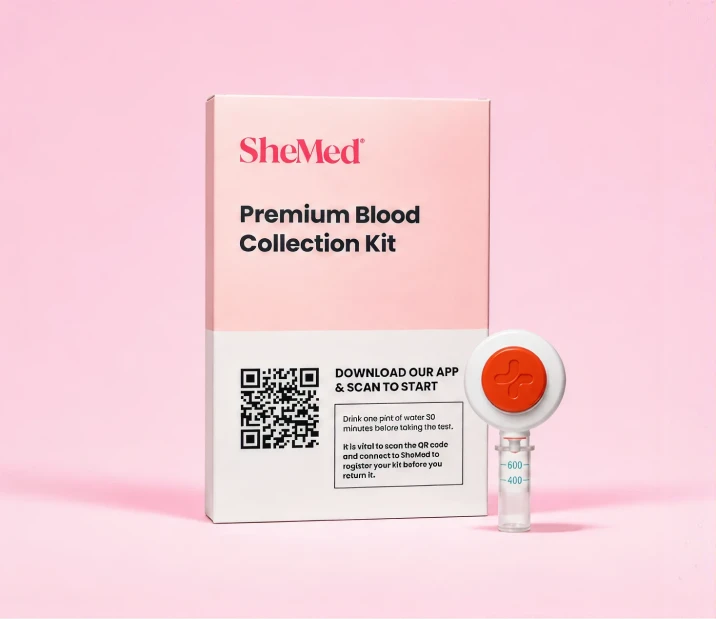
Long-term PCOS management starts with knowing your metabolic picture. SheMed’s free at-home blood test covers fasting glucose, HbA1c, thyroid function, cholesterol, and liver enzymes, reviewed by a clinician before anything is prescribed. Not a cure. A proper, clinician-led plan for a condition that deserves one.
You can start only from £59 for your first month.
Frequently Asked Questions
Is PCOS treatable?
Not entirely. PCOS is treatable in that its symptoms can be significantly reduced and its long-term health risks meaningfully lowered with the right management. The underlying genetic and hormonal predisposition cannot be permanently removed. Symptoms typically return if management is stopped, which is why ongoing care rather than a one-time fix is the approach that works.
Can losing weight cure PCOS?
No, but it can dramatically improve it. Weight loss, even 5% of body weight, consistently improves insulin sensitivity, reduces androgen levels, and restores more regular ovulation in women with PCOS who are overweight. Many women find that with meaningful weight loss, symptoms reduce to the point where they have very little day-to-day impact.
Does PCOS come back after treatment stops?
The symptoms typically return when treatment stops, because the underlying hormonal and metabolic predisposition has not changed. Women who stop the contraceptive pill will usually see their PCOS cycle pattern return. Women who regain weight after improving PCOS through weight loss will typically see metabolic markers and androgen levels worsen again.
Can PCOS go away after menopause?
PCOS does not go away at menopause, its presentation shifts. Irregular periods become less relevant once menopause is underway, and some androgen-driven symptoms ease. But insulin resistance does not resolve. Cardiovascular risk does not resolve. Metabolic monitoring remains important throughout postmenopause for women with PCOS, and the underlying hormonal predisposition remains.
What is the most effective long-term treatment for PCOS?
There is no single best treatment, because PCOS is not a single-presentation condition. The most effective long-term approach for most women combines low-GI eating and regular resistance training with appropriate medical treatment: metformin for insulin resistance, a GLP-1 medication where weight management and insulin sensitivity are the priority, and the contraceptive pill where cycle regulation and androgen reduction are the main goals. Regular metabolic monitoring runs alongside this across the years. Consistency over time is what produces lasting results.
Sources and Further Reading
1. NHS – Polycystic Ovary Syndrome (PCOS): Treatment
2. NICE CKS – Polycystic Ovary Syndrome: Management
3. WHO – Polycystic Ovary Syndrome Fact Sheet
4. Teede HJ et al. – Polyendocrine Metabolic Ovarian Syndrome, the new name for PCOS. The Lancet. 2026.
5. Cleveland Clinic – Polycystic Ovary Syndrome (PCOS)
6. Johns Hopkins Medicine – Polycystic Ovary Syndrome (PCOS)
7. BMC Medicine – PCOS: A Complex Condition (Teede, Deeks, Moran, 2010. PMID: 20591140)
The content on the SheMed blog is provided for general informational and educational purposes only. While SheMed provides professional weight loss services and strives to ensure the information shared is accurate and up to date, we make no representations or guarantees as to its accuracy, completeness, or timeliness. This content should not be taken as personal medical advice or a substitute for consultation with a qualified healthcare provider. Always speak with your doctor or licensed medical professional about your individual health or medical needs before starting any new treatment or programme. Never disregard or delay seeking professional medical advice because of something you have read on this site. SheMed is not responsible for any actions you may take based on the information provided in this blog.
Related Articles