PCOS and Fertility: Getting Pregnant, Ovulation and What to Expect

Medically reviewed by Puja Vyas, Lead Clinical Pharmacist.
PCOS is the most common hormonal cause of fertility problems in women, but it doesn’t mean you cannot get pregnant.
For women with PCOS, the challenge is not egg quality or permanent infertility; it’s irregular or absent ovulation. Many do get pregnant naturally, while others may need lifestyle changes, medication or fertility treatment. What matters here is understanding the picture early and getting the right support.
Side note: PCOS is now also referred to clinically as PMOS (polyendocrine metabolic ovarian syndrome), following a May 2026 Lancet rename. This article uses PCOS throughout. Here’s an article for you: What is PCOS (PMOS)? →
Key Takeaways
- PCOS is the most common cause of ovulation-related fertility problems in women, but most women with PCOS can and do get pregnant
- The main fertility challenge is irregular or absent ovulation, not egg quality
- Standard ovulation test kits can be unreliable for women with PCOS because elevated LH levels can produce false positives
- Even 5% body weight loss can restore more regular ovulation in many women with PCOS
- Letrozole is now first-line for ovulation induction in PCOS in the UK, replacing clomiphene
- A 2024 Nature Communications meta-analysis of 106,690 pregnancies confirmed higher odds of gestational diabetes, miscarriage, pre-eclampsia, and preterm birth in PCOS, but early monitoring significantly reduces complications
Does PCOS Affect Fertility?
Why Ovulation Can Be Irregular or Absent With PCOS
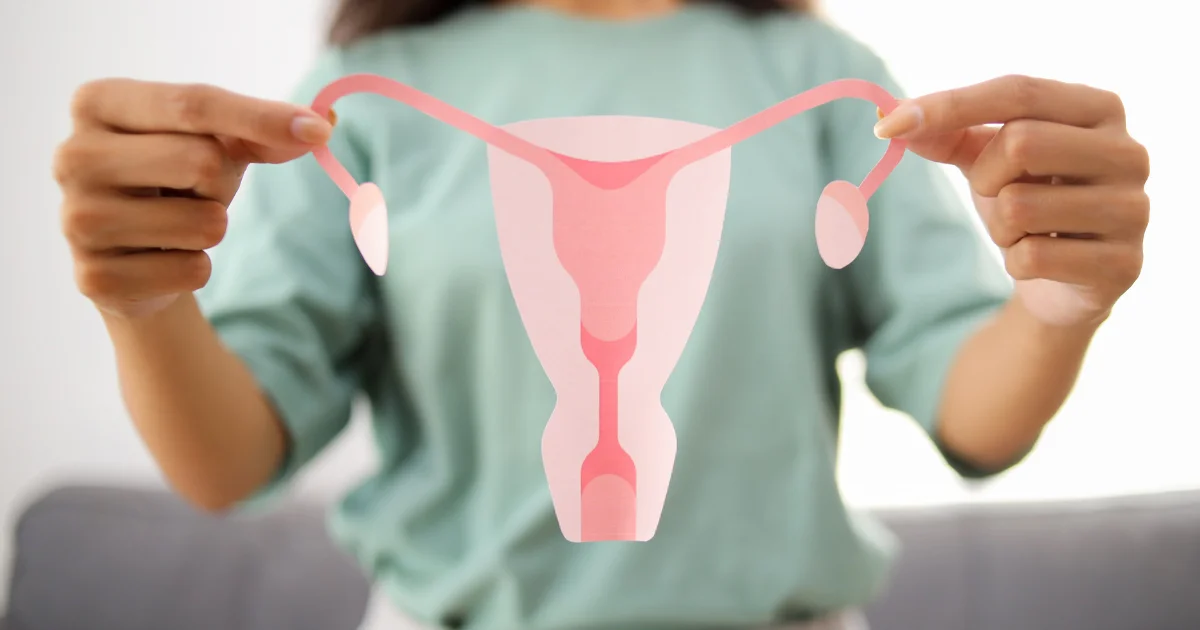
When the cycle is normal, your brain sends a hormonal signal to your ovaries each month to mature and release one egg. This process is called ovulation. If it doesn’t happen in a particular month, then you can’t get pregnant naturally in that month.
In PCOS, this process is disrupted. The elevated levels of androgens (male-type hormones) interfere with egg development, and prevent any single egg from fully maturing. No mature egg means no release and no release means no ovulation. The cycles become infrequent, unpredictable, or absent altogether, which makes conception harder to time and less likely to happen in any given month.
You can read more about why this happens at a hormone level: PCOS and insulin resistance: the connection explained →
Does PCOS Mean You Can't Get Pregnant?
No. Women with PCOS face irregular ovulation, which makes conception harder to time. But pregnancy is still very much possible and common. Many women with PCOS ovulate intermittently, even with irregular cycles, and can conceive naturally.
PCOS doesn’t really affect egg quality. The eggs are usually healthy. It’s just that they are not being released reliably. And it is very important for you to know, as it means treatment focused on restoring ovulation is often very effective.
If you have PCOS and are worried about getting pregnant: please know that worry is completely understandable, and also that many women sitting exactly where you are have gone on to have healthy pregnancies. The headline is not ‘PCOS causes infertility.’ The more accurate version is: PCOS can make ovulation less predictable, which means you may need more support to time things or stimulate ovulation. That support exists, it works well, and your GP or a fertility clinic can guide you through it.
Tracking Ovulation With PCOS
Why Standard Ovulation Tests Can Be Unreliable
Standard ovulation predictor kits work by detecting a surge in a hormone called LH, which rises just before an egg is released. But for women with PCOS, the LH levels are already elevated. This means that you’ll be shown a positive result even when you are not about to ovulate. This makes standard ovulation tests less reliable as a standalone fertility tool in PCOS.
This doesn’t mean there are no other options, though -
Signs of Ovulation to Watch For
While LH levels fail to give us an accurate picture, they can still be useful alongside other signs:
- Changes in cervical mucus: around ovulation, cervical mucus typically becomes clearer and more slippery, similar to raw egg white. This is one of the most reliable natural signs of approaching ovulation
- Basal body temperature (BBT): your resting temperature rises slightly after ovulation, typically by 0.2 to 0.5 degrees Celsius. If you track it over several weeks, you will be able to identify when ovulation has occurred, though it confirms ovulation after the fact rather than predicting it
- Mild one-sided pain: some women feel a brief twinge or ache on one side of the lower abdomen around ovulation. This is called mittelschmerz and can help pinpoint timing when it occurs
- LH monitoring apps: There are apps now that can track multiple data points, including LH levels over time, cycle history, and physical signs. They can help you build a more reliable picture than a single test result
If you are one of them with irregular cycles, tracking signs of ovulation alongside or instead of standard kits can give more useful information. You can then discuss a monitoring plan with your GP or a fertility specialist for the most reliable route.
Here’s an article we’ve written about PCOS periods and pain: what’s normal and what isn’t →
Getting Pregnant With PCOS
Lifestyle and Medical Approaches That Can Help
Before you consider fertility treatments, it’s worth considering lifestyle changes as they can make a significant difference, and not just for overweight issues.
You can improve insulin sensitivity through low-glycaemic eating and regular resistance training, which can lower androgen levels, and thus restore more regular ovulation. Losing a modest 5% of body weight has shown significant improvements in ovulation frequency in women with PCOS who are overweight.
It’s not about reaching a specific number on the weighing scale or a BMI target. They are more about improving the hormonal environment in your body that allows ovulation to happen more reliably.
Here are two related and in-depth articles for you to know more about –
PCOS diet: what to eat to support hormonal balance → PCOS diet guide
Why weight loss with PCOS works differently: PCOS and weight loss: what actually helps →
When to Seek Fertility Support
NHS states that you must see your GP if you’ve been trying to conceive for 12 months without success. If you’ve diagnosed PCOS and face infrequent cycles, it’s better to seek advice earlier, particularly if cycles are very infrequent or absent, as there is no point trying to time conception around a cycle that is not happening reliably.
Your GP may refer you to a fertility specialist, or suggest starting with ovulation-stimulating medication. Letrozole is currently first-line for ovulation induction in PCOS. It replaced Clomifene following a change in international guidelines in 2023. It stimulates the ovaries to develop and release an egg.
Metformin is also sometimes used alongside ovulation induction, particularly in women with confirmed insulin resistance. It can reduce miscarriage risk and improve ovulation response.
A Note on GLP-1 Medications and Trying to Conceive
If you’re taking any kind of GLP-1 medications (semaglutide or tirzepatide) as part of your weight management programme, you will need to stop them before you try to conceive. The current guidance is to stop at least two months before attempting pregnancy, as the effects on fetal development have not been studied and cannot be ruled out. We advise discussing this with your clinician well in advance.
If you are on GLP-1 medication, here’s an interesting read for you: Mounjaro and PCOS: what the evidence says →
PCOS During Pregnancy: What Changes and What to Monitor
What Changes Once You Conceive
PCOS does not affect pregnancy in the same way it affects fertility. There is no impact on how the baby develops. The condition itself does not impact how the baby develops. Many of the hormonal and metabolic features of PCOS can actually improve during pregnancy as the body's hormonal environment shifts dramatically to support the child’s growth.
We’ve seen some women that find symptoms like acne and excess hair improve during pregnancy because of the rise in progesterone and oestrogen levels and a shift in the hormonal balance. Some women can experience no change, though. So, the pattern varies between individuals.
On the other hand, there are some -
Risks to Be Aware of and Monitor For
There can be higher odds of certain pregnancy complications for women with PCOS. Below are the conditions that a 2024 meta-analysis published in Nature Communications, covering 104 studies and 106,690 pregnancies found that women with PCOS had significantly higher odds of experiencing irrespective of their age or BMI -
- Gestational diabetes: This is driven by the insulin resistance that is already present in most women with PCOS. Women with the condition should be screened for gestational diabetes by 20 weeks, earlier than the standard 24 to 28 week screen if risk factors are present
- Miscarriage: the odds are higher here. Metformin continued through the first trimester may reduce this risk in some women, but you must discuss it with your GP or midwife before taking anything
- Pre-eclampsia and gestational high blood pressure: blood pressure should be monitored regularly throughout pregnancy
- Preterm birth: the slightly higher odds, which means that closer monitoring in later pregnancy is recommended
The idea here is not to scare you, but to keep you informed. These are increased odds, not certainties. Many women with PCOS have smooth pregnancies (not counting the late night food cravings and mood swings). The important thing is that your maternity team knows about your PCOS from the start, so that monitoring can be appropriately tailored.
Tell your midwife early and repeat it: "I have PCOS" should be one of the first things in your maternity notes. It affects which screening tests you get, when you get them, and how closely your blood sugar and blood pressure are monitored. Some women find this detail gets missed if they don’t actively raise it at their first appointment.
Write it on your notes, mention it at every scan, and don’t assume it has been communicated between departments. You are your own best advocate here.
Here’s an important article on why blood sugar monitoring matters: PCOS and insulin resistance: the connection explained →
PCOS After Pregnancy: What to Expect
Do Symptoms Change After Having a Baby?
The postpartum period in itself is difficult. For women with PCOS, it can become unpredictable. Some find their cycles become more regular after pregnancy, at least temporarily, as if the hormonal reset of pregnancy has recalibrated things. Others find their PCOS symptoms return quickly after delivery, especially if the breastfeeding hormones are affecting the cycle.
Talking about breastfeeding, it can suppress ovulation in most women. This means that their cycles may not return to normal for several months regardless of PCOS. Once breastfeeding reduces or stops, the hidden PCOS picture starts to show.
Managing Insulin Resistance Postpartum
If you develop gestational diabetes during pregnancy, you can be at a significantly higher risk of type 2 diabetes within 5 to 10 years, and if you also suffer from PCOS, insulin resistance risk was already present.
In such a case, a glucose test around 6 to 12 weeks postpartum is recommended. It is also important to constantly monitor the metabolic markers as part of long-term PCOS care.
We’ve written two related articles on long-term metabolic monitoring with PCOS in case you have a little more appetite left for reading important stuff about your body –
- PCOS and menopause: what changes →
- PCOS and insulin resistance →
- PCOS and weight loss: why it's harder and what actually helps →
- PCOS and hair loss: causes and treatment options →
- PCOS (PMOS): Symptoms, Causes and Treatment Explained →
- Mounjaro and PCOS: what the evidence says →
- PCOS Diagnosis: Blood Tests, Criteria and How to Know If You Have It→
- GLP-1 Medications for PCOS: How They Help with Insulin Resistance →
- PCOS Diet: What to Eat, What to Limit, and What Actually Helps →
- PCOS, Periods and Pelvic Pain: What's Normal and What Isn't
- What Is PCOS (PMOS)? A Clear Explanation of Symptoms, Causes and Diagnosis→
Know your metabolic picture before trying to conceive.
SheMed’s free at-home blood test covers fasting glucose, HbA1c, thyroid function, cholesterol, and liver enzymes. Understanding your baseline insulin resistance and hormonal picture before pregnancy is genuinely useful for both fertility planning and antenatal risk management
You can start only from £59 for your first month. Start your consultation →
Frequently Asked Questions
Can you get pregnant naturally with PCOS?
Yes. Many women with PCOS do, though it may take longer than average because ovulation is less predictable. Women with PCOS who have infrequent cycles can still ovulate intermittently, and pregnancy is possible during those cycles.
Does PCOS cause infertility?
PCOS is the leading hormonal cause of ovulation-related difficulty conceiving, but it is not a permanent barrier to pregnancy. Most women with PCOS who want to conceive can do so, either naturally or with the support of ovulation induction. PCOS does not affect egg quality, and the ovaries retain normal function. The main challenge is the irregular release of eggs.
How can I tell if I'm ovulating with PCOS?
Standard LH ovulation test kits can be unreliable with PCOS because LH is often chronically elevated, which can produce false positives. More reliable indicators include changes in cervical mucus (clear and slippery around ovulation), a slight rise in basal body temperature after ovulation, and mild one-sided lower abdominal pain around the time of release. Apps that track multiple data points over time tend to give more useful information than single test results.
Does treating PCOS improve fertility?
Yes. Treatments that reduce insulin resistance and lower androgen levels, whether through lifestyle changes, metformin, or weight loss, directly address the hormonal disruption that prevents regular ovulation. Even modest improvements in insulin sensitivity can restore more regular cycles and increase the chances of natural conception.
Is pregnancy with PCOS higher risk?
Yes, PCOS is associated with higher odds of gestational diabetes, miscarriage, pre-eclampsia, and preterm birth, independent of age and BMI, according to a 2024 study. But many women with PCOS have healthy, uncomplicated pregnancies. It is about making sure your maternity team knows about your PCOS from the start so monitoring can be appropriately tailored.
Sources and Further Reading
2. Tommy’s – PCOS and Fertility: Everything You Need to Know
3. NHS – Polycystic Ovary Syndrome (PCOS): Treatment
4. NICE CKS – Polycystic Ovary Syndrome: Fertility Management
6. Teede HJ et al. – Polyendocrine Metabolic Ovarian Syndrome, the new name for PCOS. The Lancet. 2026.
7. Cleveland Clinic – Polycystic Ovary Syndrome (PCOS)
8. Johns Hopkins Medicine – Polycystic Ovary Syndrome (PCOS)
The content on the SheMed blog is provided for general informational and educational purposes only. While SheMed provides professional weight loss services and strives to ensure the information shared is accurate and up to date, we make no representations or guarantees as to its accuracy, completeness, or timeliness. This content should not be taken as personal medical advice or a substitute for consultation with a qualified healthcare provider. Always speak with your doctor or licensed medical professional about your individual health or medical needs before starting any new treatment or programme. Never disregard or delay seeking professional medical advice because of something you have read on this site. SheMed is not responsible for any actions you may take based on the information provided in this blog.
Related Articles