
Mounjaro and PCOS (PMOS): What the Evidence Says

Medically reviewed by Puja Vyas, Lead Clinical Pharmacist.
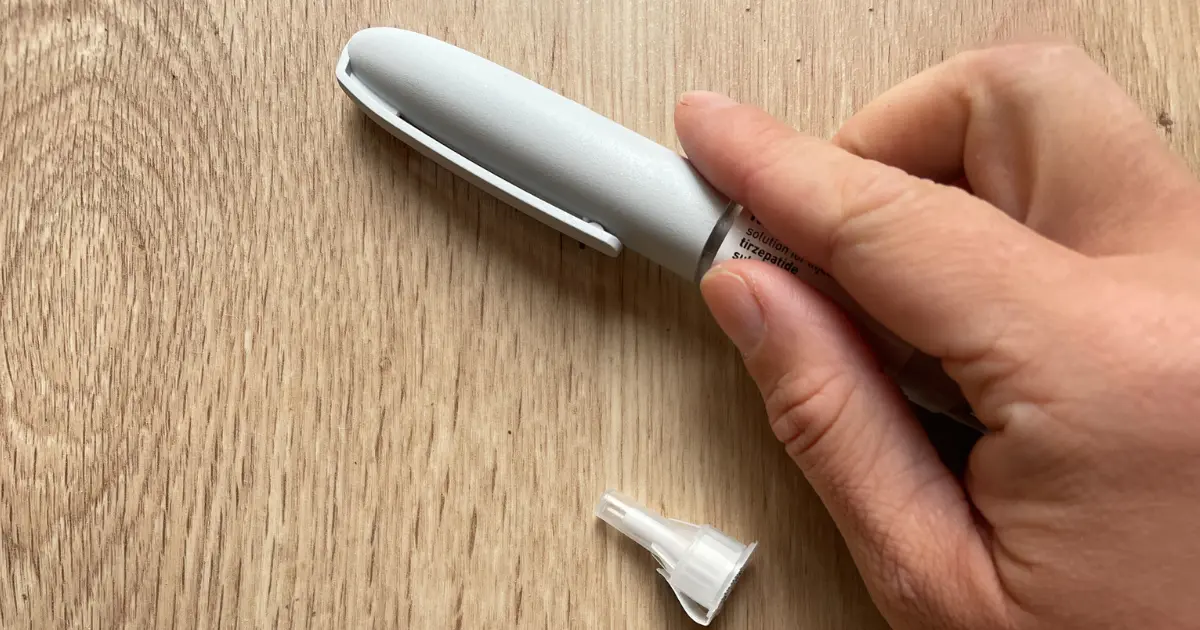
Mounjaro (tirzepatide) is not licensed to treat PCOS/PMOS. But it can make a significant difference in improving the metabolic drivers that make PCOS/PMOS so difficult to manage.
A landmark 2026 Lancet consensus recently renamed PCOS to PMOS (polyendocrine metabolic ovarian syndrome). It is not a mere name change, but rather a statement about this metabolic condition not being an ovarian one. And Mounjaro is a metabolic medication.
What Is Mounjaro, and How Does It Work?
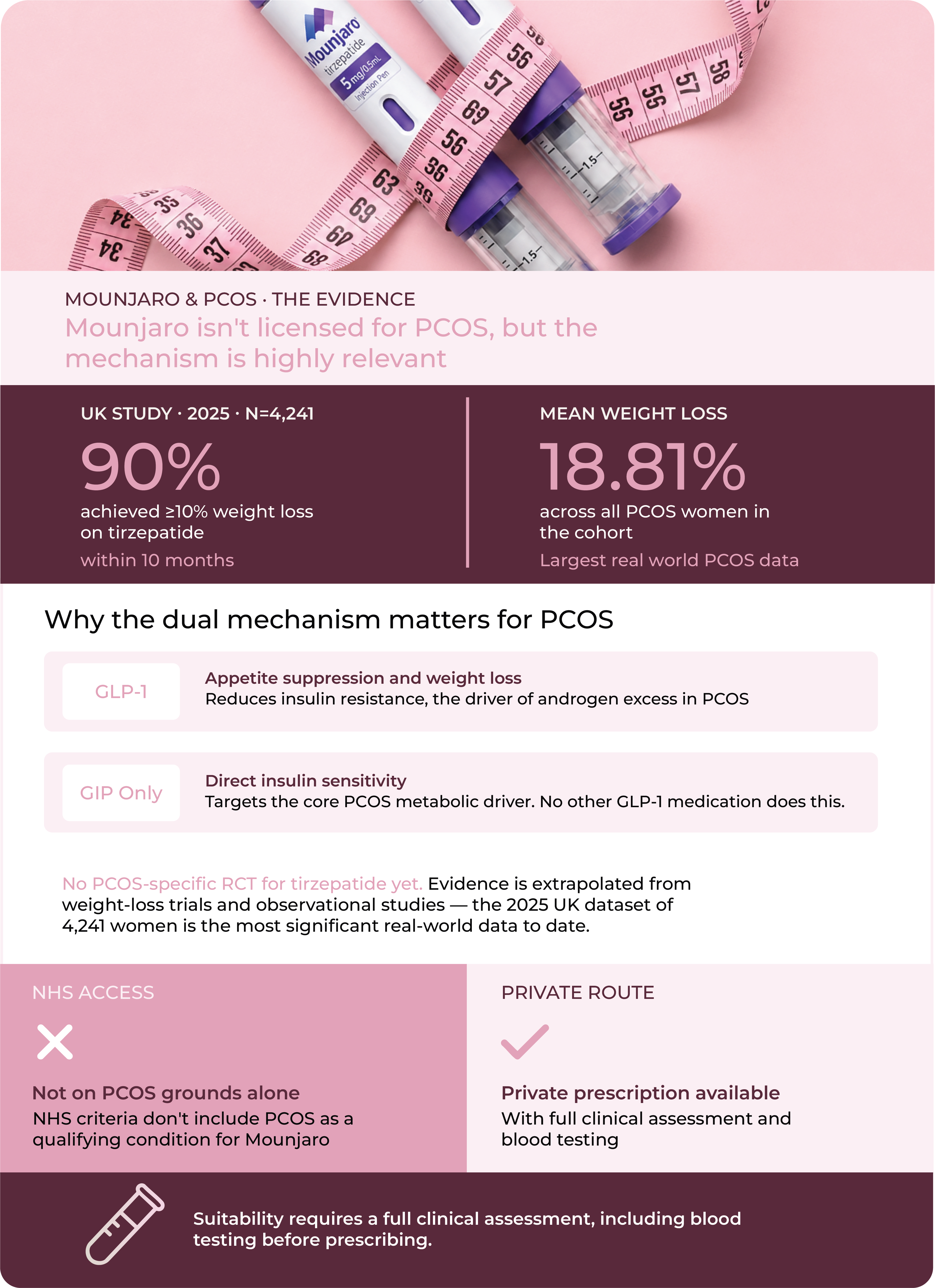
Mounjaro contains tirzepatide, a dual receptor agonist that works on both GLP-1 and GIP mechanisms. It activates two separate hormonal pathways simultaneously making it different from Wegovy that activates only one, GLP-1.
- GLP-1 (glucagon-like peptide-1): Tells your brain that you’re full, slows digestion and regulates blood sugar.
- GIP (glucose-dependent insulinotropic polypeptide): Another gut hormone that directly enhances insulin sensitivity and adds another dimension of appetite regulation.
This additional mechanism is particularly relevant for women with PCOS.
Full mechanism: how Mounjaro works →
The Link Between PCOS, Insulin Resistance and Weight
70-80% of women with PCOS face insulin resistance. This leads to excess insulin production in the body causing androgen production, which in turn disrupts ovulation, and perpetuates the hormonal imbalance.
This is the main reason why women with PCOS/PMOS find it a bit more difficult to lose weight because they are not just fighting will power, but biology. And this is also the very reason why weight loss produces dramatic improvements in PCOS symptoms.
Addressing insulin resistance isn’t just a weight goal for such women. It’s the mechanism that explains why modest weight loss of 5% can restore periods, reduce androgens, and improve metabolic markers simultaneously.
For the full picture: PCOS and weight loss: why it’s harder and what actually helps →
Condition overview: PCOS/PMOS symptoms, causes and treatment →
What Does the Evidence Say About Mounjaro and PCOS?
Weight Loss Outcomes
Obesity Week 2025 in Atlanta witnessed the most significant PCOS-specific tirzepatide data to date. 4,241 women with PCOS who were prescribed tirzepatide were enrolled by researchers from the UK between February 2024 and January 2025. The results were astounding:
- Mean age: 34 years. Median baseline BMI: 35.6
- Mean weight loss at 10 months: 18.81%
- More than 90% of participants achieved at least 10% total body weight loss within 10 months
- Women who also engaged with the digital lifestyle platform lost over 20% more weight than those on tirzepatide alone
For context, even a modest 5% weight loss can result in significant PCOS symptom improvement. The women in the study could achieve almost four times that, on average.
Effects on Insulin Resistance and Metabolic Markers
A separate observational study of 56 women with PCOS and obesity treated with tirzepatide found:
- Significant weight reduction of 9.54% (p = 0.0004)
- Insulin resistance improved significantly: 80.4% of participants had insulin resistance at baseline; 50% did by the end of treatment
- Fasting blood sugar and HbA1c both improved significantly
- BMI reduced from 36.51 to 32.49 kg/m²
These are metabolic markers that directly drive PCOS symptoms. A reduction in insulin resistance from 80% to 50% of participants is not just a number on the chart but a very meaningful clinical shift.
It’s important to know
- There are no randomised controlled trials of tirzepatide specifically designed for PCOS as of July 2026. The ObesityWeek 2025 data is real-world and meaningful, but not the gold standard of a controlled trial.
- Mounjaro is not licensed by the MHRA to treat PCOS. It is licensed for weight management in adults with obesity or overweight with at least one weight-related comorbidity.
- Restored ovulation, reduced androgens, and improved period regularity are inferred from PCOS’s known response to weight loss and insulin sensitivity improvement. They are not from trispeptide-specific hormonal outcome trials.
None of this means that Mounjaro doesn’t work for women with PCOS. It rather means that Mounjaro addresses the metabolic drivers of PCOS powerfully, and the downstream hormonal improvements follow from that.
Why honesty matters here: We know it might feel like we’re being unnecessarily cautious. But when you’re making a decision about your health, you deserve to know the difference between ‘this has been proven in a PCOS-specific RCT’ and ‘this works on the mechanism that drives PCOS and the real-world data looks very promising.’
Is Mounjaro Available for PCOS on the NHS?
No, Mounjaro is not licensed for PCOS and is not available on the NHS for the same. Its NHS access (under NICE TA1026) is based on weight management criteria: BMI 35 or above with at least one weight-related comorbidity, accessed through specialist NHS weight management services. Type 2 diabetes is a separate NHS route.
For many women with PCOS, the BMI and comorbidity criteria may be met. However, the current wait list for specialist weight management services in the NHS is anywhere between 6-16 months. You can access Mounjaro privately through SheMed with eligibility assessed through a full clinical consultation and blood test.
See SheMed’s GLP-1 treatment plans →
Who Should Consider Mounjaro for PCOS and Who Shouldn’t
If..
- Your BMI is 30 kg/m² or above (or 27+ with a weight-related comorbidity including PCOS/PMOS itself)
- You have insulin resistance confirmed on blood tests or strongly indicated by your PCOS/PMOS picture
- Lifestyle changes and/or metformin haven’t produced sufficient results
- You’re not pregnant and not planning to conceive in the near term (stop Mounjaro at least 2 months before trying)
- You have been assessed by a clinician, including relevant blood testing
Mounjaro can make a meaningful difference.
But if
- You are pregnant or planning pregnancy in the near term
- You have a personal or family history of medullary thyroid carcinoma or MEN2 syndrome
- You have a history of pancreatitis
- You have severe gastrointestinal disease
Mounjaro may not be the best option for you.
Compare options: Mounjaro vs Wegovy: which is right for you → · Wegovy pill →
What to Expect If You Start Mounjaro
Mounjaro is a weekly injection, administered subcutaneously, meaning on the upper fat layer and not deep in the blood vessels. It follows a gradual titration schedule.
So, here’s what the journey on Mounjaro typically looks like -
- Starts at 2.5mg for the first 4 weeks
- Increases by 2.5mg every 4 weeks as tolerated: 5mg, 7.5mg, 10mg, 12.5mg, up to 15mg maximum
- Most people reach their effective maintenance dose between 7.5mg and 12.5mg
You may experience some side effects like nausea, constipation and some fatigue. But they are usually present only during the early weeks and during dose upgrades. Once your body adjusts, they tend to calm down. The titration schedule exists specifically to manage this transition.
For women with PCOS, the hormonal changes won’t happen in the first few weeks. You’ll see the improved cycle regularity, reduced androgen symptoms, better insulin markers on blood tests after meaningful weight loss, which builds over months.
The ObesityWeek 2025 UK data showed 18.81% mean weight loss at 10 months. That’s the timeframe you’re looking at.
PCOS/PMOS touches almost every part of a woman's health, from how easily you lose weight, to what's happening with your hair, to which medications might actually help, to what changes when your hormones shift in midlife.
We've written a dedicated guide on each of these so you can go as deep as you need to on the parts that matter most to you right now.
- PCOS and hair loss: causes and treatment options →
- PCOS (PMOS): Symptoms, Causes and Treatment Explained →
- PCOS and menopause: what changes and what doesn't →
- PCOS Diagnosis: Blood Tests, Criteria and How to Know If You Have It→
- PCOS and Insulin Resistance: What's the Connection, and What Helps?→
- GLP-1 Medications for PCOS: How They Help with Insulin Resistance →
- PCOS Diet: What to Eat, What to Limit, and What Actually Helps →
- PCOS and weight loss: why it's harder and what actually helps →
- PCOS, Periods and Pelvic Pain: What's Normal and What Isn't
- What Is PCOS (PMOS)? A Clear Explanation of Symptoms, Causes and Diagnosis→
- PCOS Belly Fat and Bloating: Why It Happens and What Actually Helps→
Think you might have PCOS (now PMOS)? Screen 19 health markers at home, reviewed by a clinician.
Frequently Asked Questions
Can Mounjaro help with PCOS/PMOS symptoms?
Yes, indirectly. While Mounjaro is not licensed to treat PCOS, it can improve insulin resistance and support significant weight loss, as it addresses the metabolic drivers of the condition. Women with PCOS who lose meaningful weight typically see improvements in cycle regularity, androgen levels, and insulin markers as a result. A UK study of 4,241 women with PCOS on tirzepatide found 18.81% mean weight loss at 10 months.
Is Mounjaro the same as Wegovy for PCOS?
Both are GLP-1 medications and both can help address the metabolic drivers of PCOS through weight loss and insulin sensitivity. The difference is Mounjaro activates both GLP-1 and GIP receptors while Wegovy activates GLP-1 only. For PCOS, Mounjaro’s additional GIP mechanism is directly relevant because GIP improves insulin sensitivity, the core driver of the condition. Average weight loss is also higher with Mounjaro in head-to-head data.
Is Mounjaro available on the NHS for PCOS?
No. NHS Mounjaro access is based on weight management eligibility under NICE TA1026, requiring BMI 35+ with at least one weight-related comorbidity, accessed through specialist NHS weight management services. PCOS itself may qualify as a comorbidity, but the pathway is through weight management criteria, not a PCOS-specific route. NHS waiting lists are typically 6–18 months.
How long does Mounjaro take to work for PCOS-related weight gain?
Weight loss begins within the first few weeks but accumulates over months. The UK ObesityWeek 2025 data showed 18.81% mean weight loss at 10 months, with most participants having achieved 10%+ loss by that point.
Is Mounjaro safe to take with PCOS medication like metformin?
Mounjaro and metformin can be taken together and are sometimes prescribed in combination. Both improve insulin sensitivity through different mechanisms. Mounjaro may reduce fasting blood glucose significantly, so blood sugar monitoring is important in women also taking metformin or insulin. Please make sure you review this decision with a clinician before anything.
Sources & Further Reading
2. ResearchGate — Role of Tirzepatide in Obesity Management Among Women with PCOS (2025)
3. NICE TA1026 — Tirzepatide (Mounjaro) for Managing Overweight and Obesity
4. NHS — Tirzepatide (Mounjaro)
5. Teede H, Deeks A, Moran L. — PCOS: A Complex Condition. BMC Medicine, 2010. PMID: 20591140
6. Cleveland Clinic — Polycystic Ovary Syndrome (PCOS)
7. World Health Organization — Polycystic Ovary Syndrome Fact Sheet
8. Endocrine Society — PMOS: New Name to Improve Diagnosis and Care (May 2026)
The content on the SheMed blog is provided for general informational and educational purposes only. While SheMed provides professional weight loss services and strives to ensure the information shared is accurate and up to date, we make no representations or guarantees as to its accuracy, completeness, or timeliness. This content should not be taken as personal medical advice or a substitute for consultation with a qualified healthcare provider. Always speak with your doctor or licensed medical professional about your individual health or medical needs before starting any new treatment or programme. Never disregard or delay seeking professional medical advice because of something you have read on this site. SheMed is not responsible for any actions you may take based on the information provided in this blog.
Related Articles