PCOS Belly Fat and Bloating: Why It Happens and What Actually Helps
Medically reviewed by Puja Vyas, Lead Clinical Pharmacist.
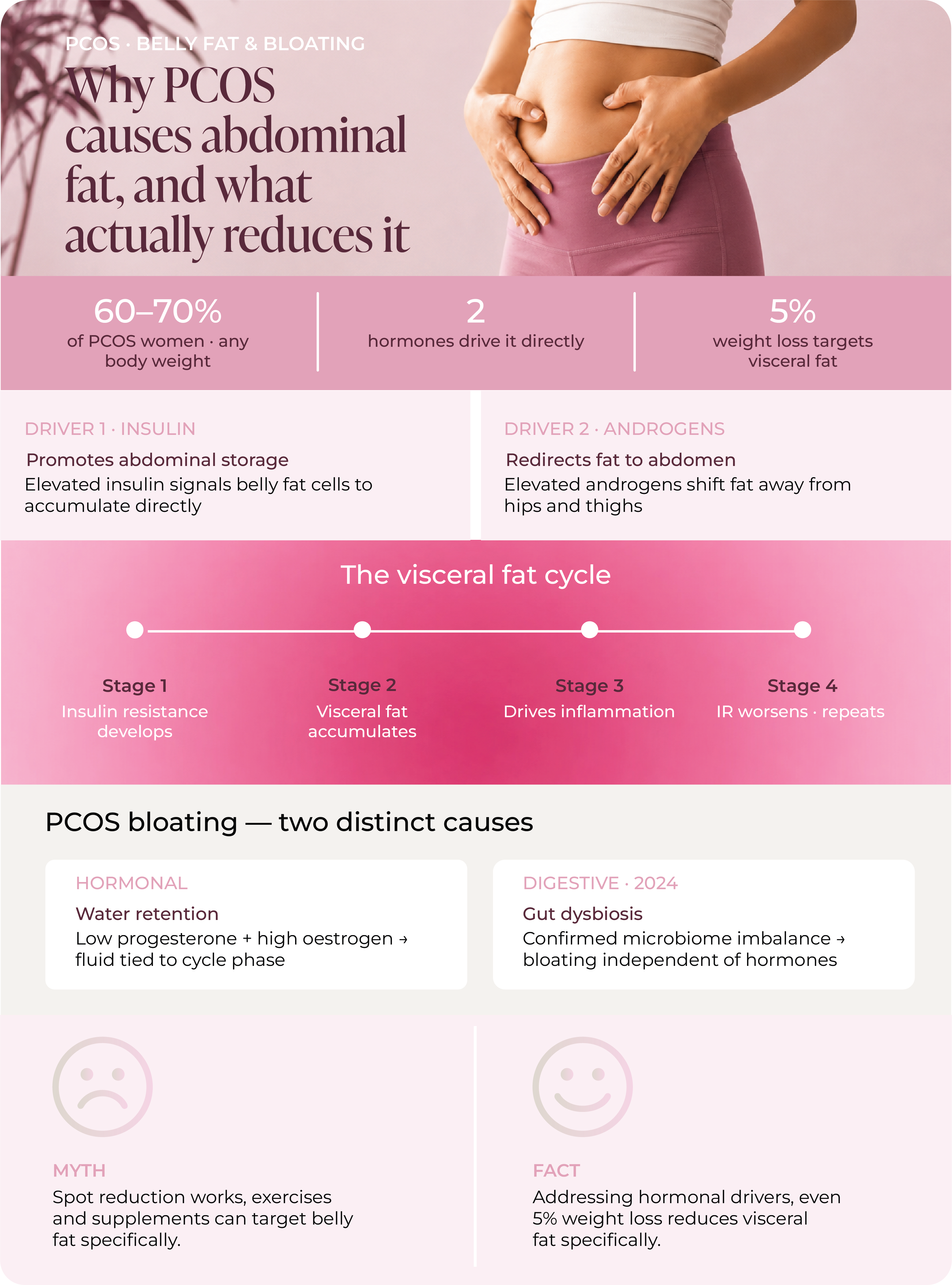
Belly fat in PCOS is a real issue, and is not because of failure of willpower, but completely hormonal. 60 to 70% of women with PCOS experience abdominal fat. It is caused by the same hormonal mechanisms that drive most other PCOS symptoms: insulin resistance and androgen excess working together to redirect fat storage toward the abdomen.
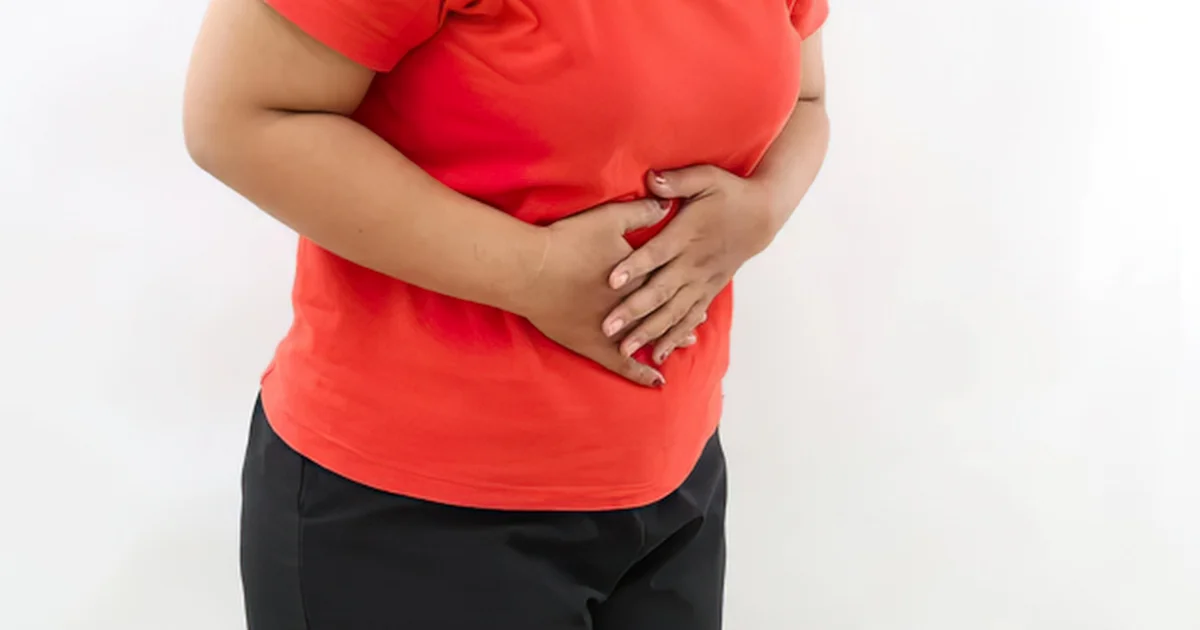
Bloating in PCOS is another separate but related issue. It is mostly driven by hormonal water retention and gut microbiome disruption rather than by what you just ate.
We’ve covered both the issues in this article, including why they are harder to address than ordinary weight gain, and where to start.
Side note: PCOS is now clinically renamed PMOS (polyendocrine metabolic ovarian syndrome) following a May 2026 Lancet consensus. This article uses PCOS throughout as the working term.
Why PCOS Causes Belly Fat
The Role of Insulin and Androgens in Fat Distribution
Oestrogen promotes fat storage in the hips, thighs, and buttocks during reproductive years. This is for women without PCOS. Now those with PCOS, the elevated androgens override this pattern and redirect the fat towards abdomen instead.
On top of this, there’s insulin resistance, which is present in 70 to 80% of women with PCOS. It means that elevated insulin levels are almost always circulating, and insulin is a fat-storage hormone that specifically promotes visceral (around the organs) fat accumulation.
Because of this, the fat distribution looks and feels very different from normal weight gain. You’ll see a heavier middle, with relatively less obvious change at the hips and thighs. The waist-to-hip ratio shifts in a way that cannot be explained by the general weight gain.
You can read more about the full insulin resistance mechanism: PCOS and insulin resistance: what’s the connection and what helps →
Cortisol: The Third Driver Nobody Mentions
Women with PCOS experience elevated cortisol levels at almost all times compared to the ones without. Cortisol is your body’s primary stress hormone, and abdominal fat is directly linked to it.
Abdominal fat cells have four times the cortisol receptors of fat cells elsewhere in the body. When stress in the body rises, so does cortisol, and those abdominal receptors get stimulated, causing fat to accumulate there.

Cortisol also worsens insulin resistance independently, creating another layer of the same self-reinforcing cycle. Poor sleep, chronic stress, and the burden of managing a condition that is poorly understood all raise cortisol. And the cycle continues.
PCOS Belly Fat vs General Weight Gain: What's Different
Visceral Fat vs Subcutaneous Fat
Every big belly is not the same. There’s subcutaneous fat that sits just beneath the skin, and can be pinched. It does have high health implications, but it is not the primary reason for metabolic risks.
Then there’s visceral fat that sits deeper, wrapped around the internal organs: the liver, pancreas, and intestines. It is metabolically active tissue that releases inflammatory compounds (cytokines), disrupts hormone production, and worsens insulin resistance directly. Women with PCOS almost always show higher visceral fat accumulation than women without the condition, even if both weigh similar.
The most important thing to know here is that visceral fat is not captured by a weighing scale or BMI. This is why women with PCOS usually have significantly more visceral fat than what either shows. This is why waist circumference matters much more than BMI for women with PCOS.
Why PCOS Belly Fat Feels Harder to Lose
Because it actually is. And not because of a perception bias or giving up too easily. Three things make visceral fat in PCOS specifically resistant to the usual approaches:
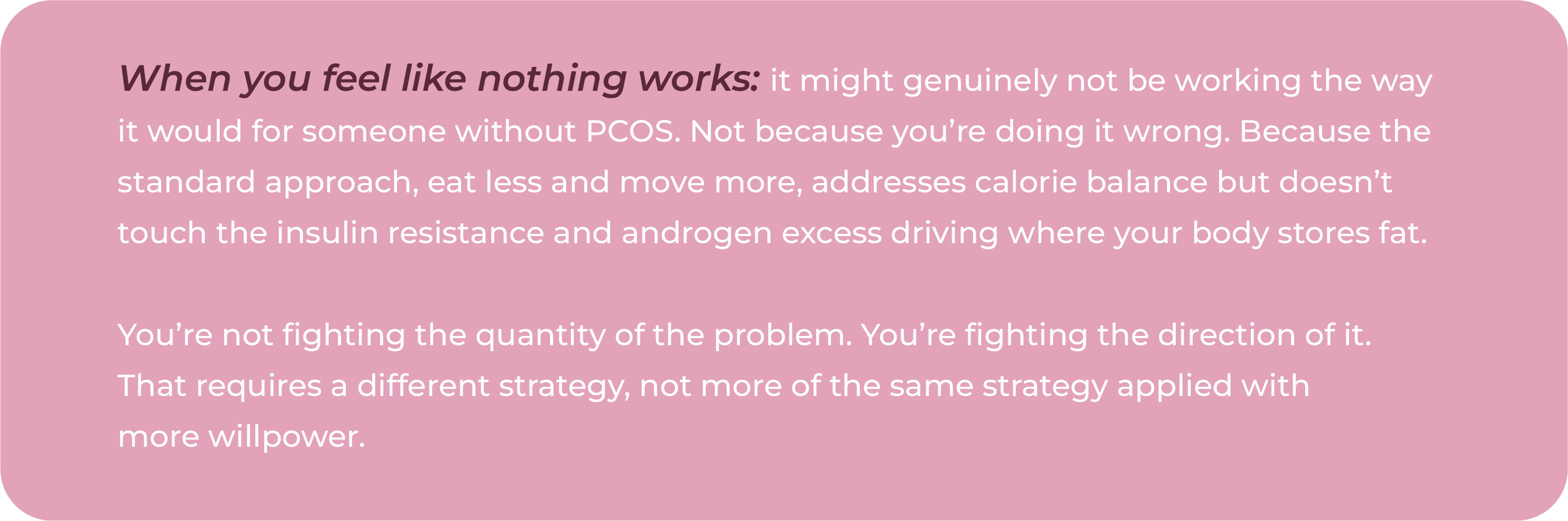
- The insulin resistance cycle: visceral fat itself produces inflammatory compounds that worsen insulin resistance, which then promotes more fat storage in the same area. Losing visceral fat requires breaking the cycle, not just creating a calorie deficit
- Androgen-driven fat distribution: as long as androgens remain elevated, your body, by default, will redistribute fat toward the abdomen. Weight loss achieved without addressing androgen excess often redistributes from elsewhere while abdominal fat is more persistent
- Cortisol amplification: calorie restriction raises cortisol, and elevated cortisol promotes visceral fat retention. Aggressive dieting for PCOS belly fat can paradoxically worsen the visceral component.
Why Waist Circumference Matters More Than Weight in PCOS
Because it is very much possible for you to gain visceral fat without gaining significant weight. Tracking waist circumference alongside weight gives a more clinically useful picture for women with PCOS
A waist measurement above 80cm (31.5 inches) for women is associated with increased cardiometabolic risk regardless of overall BMI. And for women with PCOS, this threshold holds more meaning as the visceral fat is already disproportionately elevated.
PCOS and Bloating: Why They're Linked
Bloating is one of the most commonly reported but least discussed PCOS symptoms. It can feel like a separate issue, but it is not. It has specific hormonal and gut-based causes connected to the same underlying picture.
Hormonal Bloating: Water Retention From Low Progesterone
Progesterone is a natural diuretic, meaning that it helps your body excrete excess water. In PCOS, irregular or absent ovulation means progesterone production is often low or absent in the second half of the cycle. And when this happens, there’s no one to defend oestrogen's water-retaining effect. This causes fluid retention that concentrates in the abdomen, face, and hands.
This type of bloating fluctuates with the cycle (or the absence of one), tends to feel like puffiness or pressure rather than pain, and does not respond to digestive interventions like gas drops or peppermint tea because its cause is hormonal, not digestive.
Gut Microbiome Disruption: The PCOS and IBS Connection
A 2024 study confirmed that women with PCOS are significantly more prone to gastrointestinal problems including irritable bowel syndrome (IBS), with bloating as a key symptom.
PCOS-associated hormonal and metabolic disruption alters gut microbiome composition, reducing populations of beneficial bacteria and increasing those associated with inflammation and digestive dysfunction.
Visceral fat also contributes to this. The inflammatory compounds it releases affect gut motility and permeability, which can worsen bloating, discomfort, and irregularity. This is when the PCOS diet, higher in fibre and fermented foods and lower in ultra-processed foods, can help indirectly by supporting a healthier gut microbiome.
Here’s an entire article if you want to know more about: PCOS diet: what to eat, what to avoid →
When Bloating Calls for a GP visit
PCOS bloating is typically chronic, fluctuating, and linked to cycle timing or food. Below are the signs that call for a separate clinical review rather than being attributed to PCOS.
- If your bloating that is new, sudden, or significantly worse than usual without a clear dietary or hormonal trigger
- If your bloating accompanied by pelvic pain, particularly one-sided pain
- If there is visible abdominal distension that does not reduce with time or position change
- If the bloating alongside changes in bowel habits that have persisted for more than 3 weeks
- Any bloating if you have been given a PCOS diagnosis without a thorough differential diagnosis, since endometriosis, ovarian cysts, and other gynaecological conditions can cause similar symptoms
What Doesn't Work for PCOS Belly Fat
Spot Reduction
You cannot reduce fat in a specific area of the body through exercises targeting that area. Abdominal exercises, core workouts, and anything marketed as "targeting belly fat" do not reduce visceral fat. They do build and strengthen the muscle underneath it (which is great), but the fat you want to disappear needs hormonal improvement and overall energy balance, not locally through targeted exercise.
Detox Approaches and Cleanses
No tea, juice, supplement, or cleanse removes visceral fat. You may have seen many products marketed at PCOS belly fat, and would’ve probably bought some as well. But they are either ineffective supplements, laxatives that produce temporary scale drops through water loss, or products making medicinal claims without evidence or licensing. And laxatives used for this purpose can be unsafe as well.
Your liver, kidneys, and lymphatic system look after detoxification continuously and effectively. All these external supplements do not make a big difference in accelerating the process.
Extreme Calorie Restriction
Severe calorie restriction raises cortisol, and elevated cortisol can particularly lead to visceral fat retention. This is exactly why crash dieting in PCOS can produce disappointing results disproportionate to the restriction applied, and why sustainable moderate deficits consistently outperform dramatic short-term cuts. Extreme restriction also reduces muscle mass, which lowers metabolic rate and worsens insulin sensitivity over time.
What Actually Helps
The thing about PCOS belly fat is that it is a consequence of hormonal and metabolic disruption, and not a primary target in itself. This is why addressing the root causes is what helps.
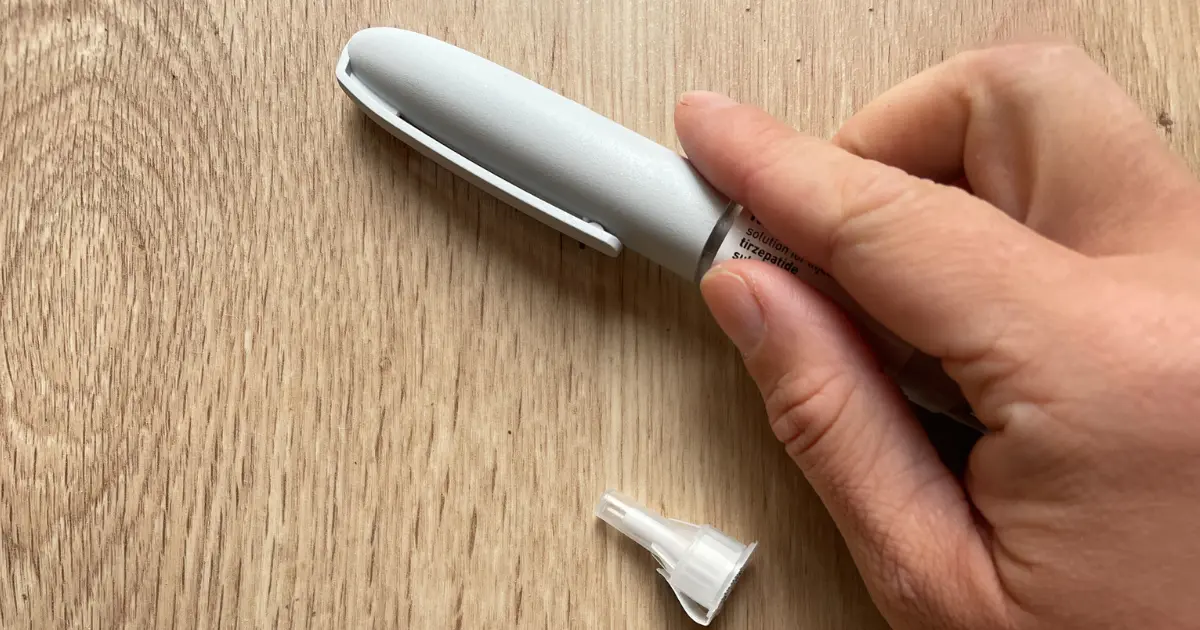
- Reducing insulin resistance: Low-GI eating, resistance training, and medical treatment if and where appropriate (metformin or GLP-1 medications) all reduce insulin levels, which then removes the primary signal promoting visceral fat storage
- Supporting androgen reduction: As insulin falls, androgen stimulation of the ovaries reduces and fat distribution normalises over time
- Consistent moderate activity: resistance training specifically improves insulin sensitivity and builds muscle, raising the resting metabolic rate. Cardio supports cardiovascular health and overall energy balance. Even a mild workout 3-4 times a week helps
- Stress and cortisol management: sleep quality, stress reduction, and avoiding aggressive calorie restriction all reduce cortisol, which directly affects where and how much visceral fat accumulates
You can read more about weight loss and PCOS to understand the full picture:
- PCOS and weight loss: why it's harder and what actually helps →
- PCOS and hair loss: causes and treatment options →
- PCOS (PMOS): Symptoms, Causes and Treatment Explained →
- Mounjaro and PCOS: what the evidence says →
- PCOS Diagnosis: Blood Tests, Criteria and How to Know If You Have It→
- GLP-1 Medications for PCOS: How They Help with Insulin Resistance →
- PCOS Diet: What to Eat, What to Limit, and What Actually Helps →
- PCOS, Periods and Pelvic Pain: What's Normal and What Isn't
- What Is PCOS (PMOS)? A Clear Explanation of Symptoms, Causes and Diagnosis→
When to Speak to a Clinician
While PCOS belly fat and bloating are not medical emergencies, they surely are clinical matters that ask for proper investigation, rather than self-management. You must speak to a GP or clinician if -
- Your waist circumference is above 80cm and your PCOS has not had a recent metabolic review including glucose, HbA1c, and cholesterol
- You have been trying to address belly fat and bloating for 3 or more months without meaningful change
- You have not had your insulin resistance, thyroid function, or androgen levels formally assessed
- Bloating is accompanied by pain, bowel changes, or features that feel different from your usual PCOS pattern
- You want to explore whether metformin or GLP-1 treatment is appropriate for your picture
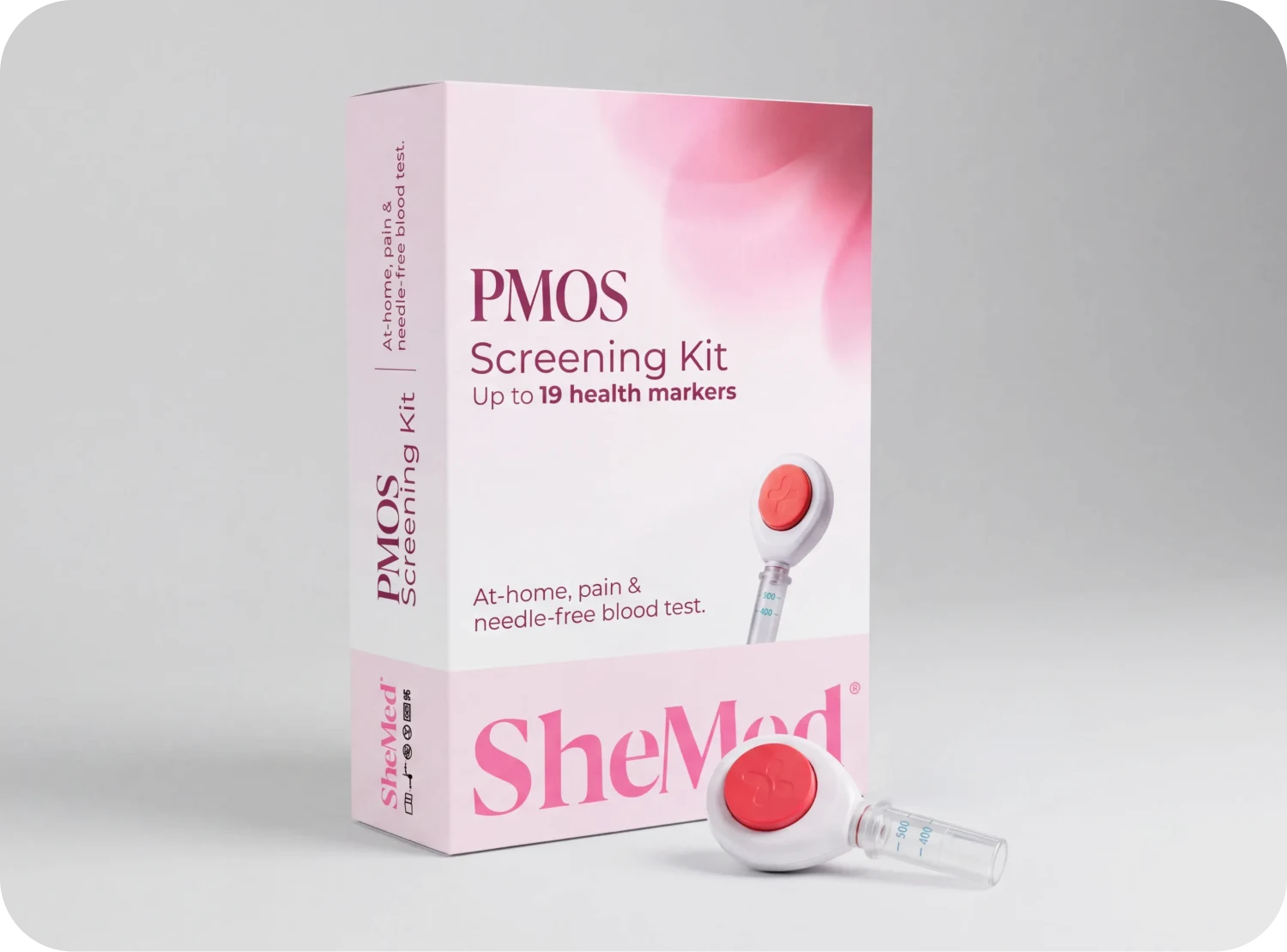
Think you might have PCOS (now PMOS)? Screen 19 health markers at home, reviewed by a clinician.
Frequently Asked Questions
Why is PCOS belly fat so hard to lose?
Because it is not a calorie storage problem, but an insulin resistance one that promotes visceral fat storage, and androgen excess that redirects fat toward the abdomen, and elevated cortisol concentrating fat in the same area. Standard calorie restriction addresses energy balance but does not directly address any of these three hormonal drivers.
Does PCOS cause weight gain?
PCOS does not directly cause weight gain in the sense of adding calories. It creates a hormonal environment that makes fat storage more likely, particularly visceral fat around the abdomen, and makes weight loss harder by disrupting insulin sensitivity, appetite signalling, and fat distribution. Many women with PCOS are not overweight, but those with significant insulin resistance are more prone to gradual abdominal fat accumulation over time.
Is PCOS bloating the same as normal bloating?
No. Standard bloating is typically digestive in origin: gas from certain foods or a reaction to something eaten. PCOS bloating has two additional causes: hormonal water retention from low progesterone and gut microbiome disruption that makes digestive bloating more likely and more severe. Many women with PCOS have all three types overlapping.
Does treating insulin resistance help with belly fat?
Yes, significantly. Insulin resistance is the primary driver of visceral fat accumulation in PCOS. Reducing it, whether through low-GI eating, resistance training, metformin, or GLP-1 medications, removes the main hormonal signal promoting abdominal fat storage. With falling insulin levels, androgen production also falls, which further changes fat distribution patterns over time.
Can you lose PCOS belly fat permanently?
Sustained PCOS belly fat reduction is achievable, but requires ongoing management of the hormonal drivers rather than a time-limited intervention. As long as insulin resistance and androgen excess remain significant, the tendency toward abdominal fat storage will stay. Women who achieve lasting improvement are typically those who have made sustainable dietary changes, incorporated regular resistance training, and where appropriate have used medical treatment to improve insulin sensitivity.
Sources and Further Reading
1. PMC – Visceral and Dysfunctional Adiposity Indices in Women with PCOS (PMC11944119)
2. INTEGRIS Health – What Is PCOS Belly? (Medically reviewed, 2025)
3. The Conversation – Why Losing Belly Fat with PCOS Can Be Difficult (March 2026)
4. BMC Medicine – PCOS: A Complex Condition (Teede, Deeks, Moran, 2010. PMID: 20591140)
5. NHS – Polycystic Ovary Syndrome (PCOS) Overview
6. WHO – Waist Circumference and Waist-Hip Ratio: Report of a WHO Expert Consultation
7. Cleveland Clinic – Polycystic Ovary Syndrome (PCOS)
The content on the SheMed blog is provided for general informational and educational purposes only. While SheMed provides professional weight loss services and strives to ensure the information shared is accurate and up to date, we make no representations or guarantees as to its accuracy, completeness, or timeliness. This content should not be taken as personal medical advice or a substitute for consultation with a qualified healthcare provider. Always speak with your doctor or licensed medical professional about your individual health or medical needs before starting any new treatment or programme. Never disregard or delay seeking professional medical advice because of something you have read on this site. SheMed is not responsible for any actions you may take based on the information provided in this blog.
Related Articles