PCOS and Insulin Resistance: What's the Connection, and What Helps?

Medically reviewed by Puja Vyas, Lead Clinical Pharmacist.
70%-80% of women with PCOS suffer from insulin resistance, irrespective of their weight. It is not a complication of PCOS, but rather a core driver of it.
When your cells stop responding properly to insulin, your body compensates by producing more. The elevated insulin then directly stimulates the ovaries to overproduce androgens, disrupting ovulation and causing many of the symptoms women with PCOS struggle most with. This is why addressing insulin resistance is key in PCOS management.
Side note: PCOS is now also referred to clinically as PMOS (polyendocrine metabolic ovarian syndrome), following a landmark May 2026 Lancet consensus. This article uses PCOS throughout as the working term. You can read more about it: PCOS/PMOS: symptoms, causes and treatment →

What Is Insulin Resistance?
Your pancreas releases a hormone called ‘insulin’ after you eat. It tells your cells to absorb the glucose from the bloodstream and use it for energy. Resistance to insulin means that your cells have stopped listening to that command.
When that happens, your pancreas compensates by producing more and more insulin. And it does work. Your blood sugar stays controlled because the pancreas is working harder. But it also results in elevated insulin levels in your system, and in women with PCOS, those elevated levels have a damaging knock-on effect.
How Insulin Resistance Drives PCOS Symptoms
Your ovaries have insulin receptors. When insulin levels in your body are high, those receptors get constantly stimulated, causing your ovaries to produce more androgens, primarily testosterone.
This androgen excess is what drives all the infamous symptoms of PCOS including disrupted or absent ovulation, irregular or absent periods, acne along the jawline and chin, excess facial or body hair, and scalp thinning.
It also makes weight loss harder. Elevated insulin promotes fat storage, particularly visceral fat around the abdomen. The visceral fat again worsens insulin resistance. And more insulin resistance produces more androgens, more disrupted ovulation, and more of everything else; a vicious cycle that explains why PCOS can feel like a condition that resists every effort to improve it.
Why Insulin Resistance Affects Women With PCOS Who Are Not Overweight
Most of us, including some GPs, get confused here. Insulin resistance in PCOS is not caused by weight. 70%-80% of the women with PCOS suffer from it, irrespective of their weight or BMI. A woman with PCOS who is at a healthy weight can still have significant insulin resistance driven by the hormonal disruption of the condition itself.
Having said that, excess weight does make it worse. More weight means excess visceral fat, which leads to the vicious cycle we mentioned above.

How Do You Know If You Have Insulin Resistance With PCOS?
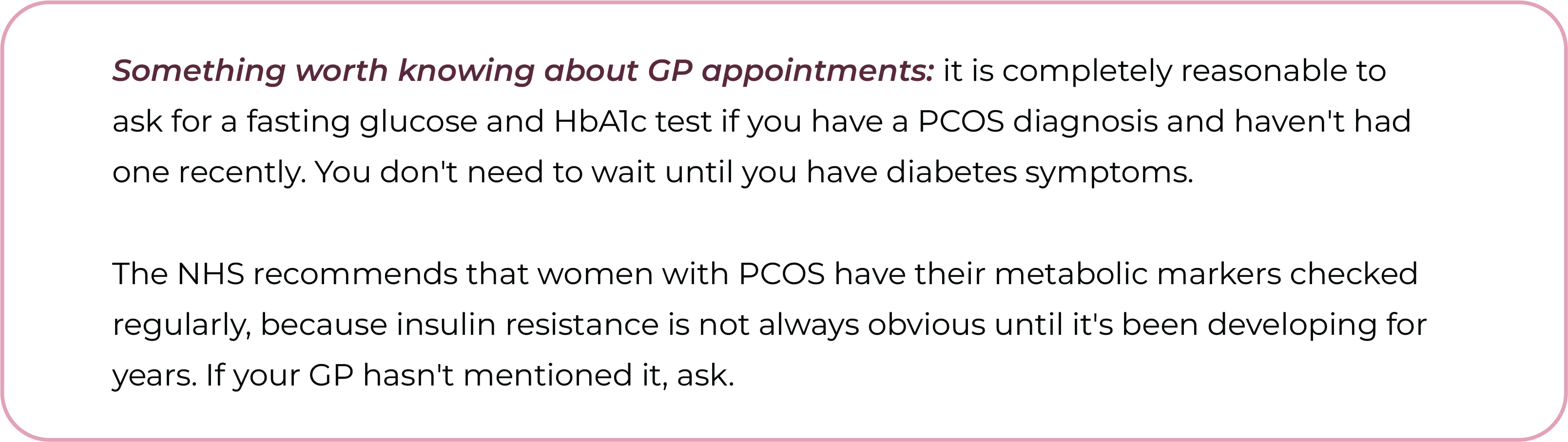
There is no definitive test that GPs routinely use to diagnose insulin resistance. What your clinician will typically look for is a pattern of markers:
- Fasting glucose and HbA1c: raised fasting glucose or HbA1c in the prediabetes range (fasting glucose 5.5 to 6.9 mmol/L, HbA1c 39 to 47 mmol/mol) indicates impaired glucose regulation driven by insulin resistance
- Fasting insulin: not routinely measured in NHS primary care but available privately. Elevated fasting insulin alongside normal blood sugar is a classic early-stage insulin resistance pattern
- HOMA-IR: a calculated score combining fasting glucose and insulin, used in research and some specialist clinics to quantify insulin resistance severity
- Lipid profile: insulin resistance typically raises triglycerides and lowers HDL cholesterol. These markers on their own don't diagnose insulin resistance but support the picture
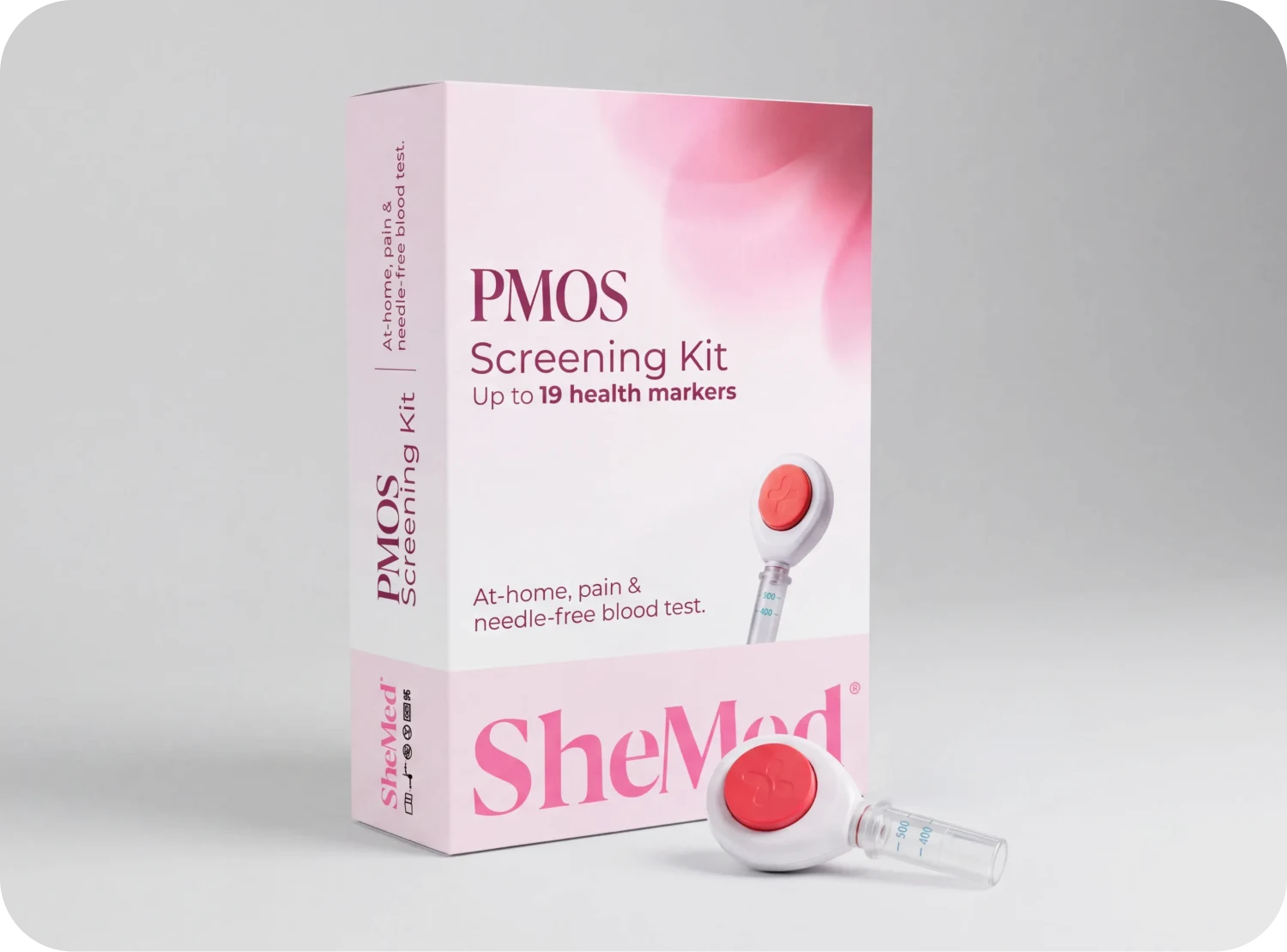
There’s a reason we, at SheMed, include a free at-home blood test before prescribing anything. It tests your fasting glucose, HbA1c, cholesterol, liver enzymes, and thyroid function, giving our clinical team the metabolic picture they need before any treatment decision is made.
Lifestyle Approaches to Insulin Resistance in PCOS
Why 5% Body Weight Loss Changes So Much
The most consistent finding in PCOS research is that a modest weight loss of a mere 5% of total body weight, can produce disproportionately large improvements in insulin sensitivity, androgen levels, and cycle regularity.
For a woman weighing 80kg, that’s 4kg.Not a dramatic transformation, but enough to meaningfully reduce insulin levels, which then allows androgen production to drop, which then allows ovulation to resume.
Low-GI Eating and Protein at Every Meal
If you’re looking for the most effective diet for PCOS insulin resistance management, a low glycaemic index one has the most evidence behind it. It basically includes foods that cause gradual, steady rises in blood sugar like oats, legumes, non-starchy vegetables, berries, etc. Lesser sugar spike means lower insulin response. Foods that are to be avoided here are the high-GI ones like white bread, sugary cereals, processed snacks, etc.
Apart from that protein at each meal, particularly at breakfast, can also moderate the insulin response by slowing gastric emptying.
This doesn’t mean that you need to eat less. It means you need to eat well; choosing lower-GI alternatives with protein alongside them. Small changes done consistently over months produce meaningful metabolic improvements.
Curious to know more about what actually helps reduce weight on PCOS? Here: PCOS and weight loss: what actually helps →
Resistance Training
Muscles are the first ones to take up the glucose in the body. More muscles mean a higher capacity to absorb glucose without requiring as much insulin. Resistance training is one of the best ways to build more muscle. Even two sessions per week of moderate intensity, can consistently improve insulin sensitivity in women with PCOS, even if it doesn’t result in weight loss. The benefit begins before the scale moves.
Metformin for PCOS: How It Works and What to Expect
What Metformin Does
Metformin is a medication that has been used in diabetes management for over 30 years. It works by reducing the amount of glucose the liver releases into the bloodstream and by improving how cells respond to insulin.
For women with PCOS, this means lower insulin levels, which in turn means lesser ovarian stimulus for androgen overproduction.
Metformin does not cause blood sugar to drop dangerously low. It works by sensitising the existing system rather than driving it harder.
How Metformin Is Used for PCOS in the UK
Metformin is not licensed for weight loss in the UK. Its use in PCOS is outside its licensed indication, because PCOS is not type 2 diabetes. However, it is widely used in PCOS management and is acknowledged in NICE Clinical Knowledge Summaries and RCOG guidance as appropriate for improving metabolic outcomes in women with PCOS.
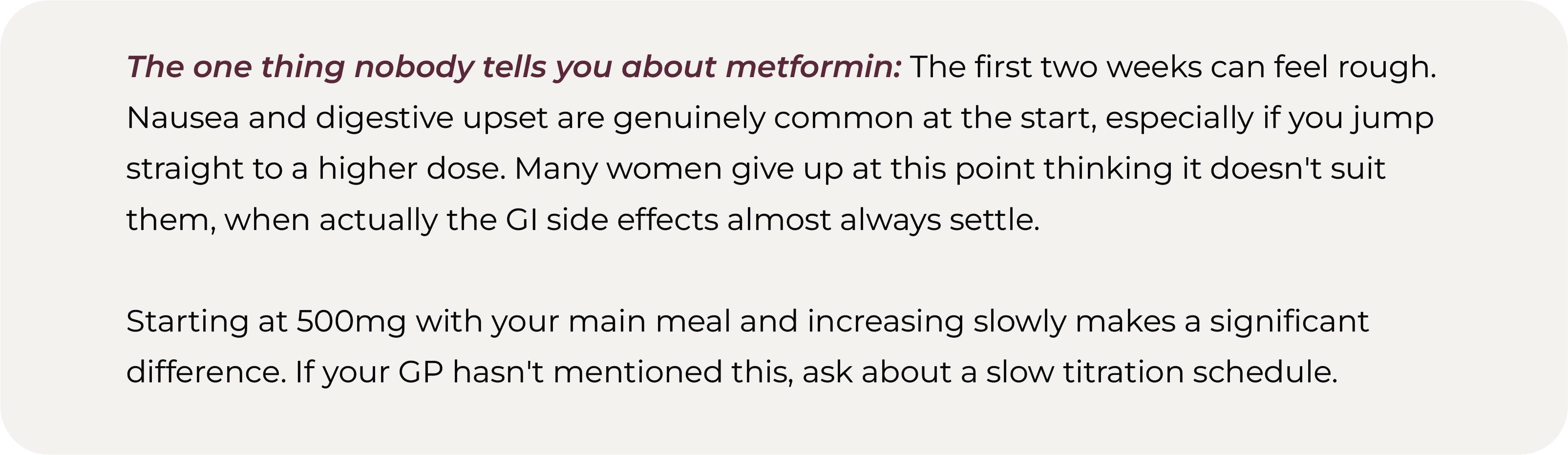
For women with PCOS, metformin is typically prescribed at doses starting at 500mg once daily, increasing gradually to 1,500 to 2,000mg per day in divided doses to reduce GI side effects. It is mostly used in women with confirmed insulin resistance markers on their blood testing, or who are trying to conceive and want to improve ovulation frequency.
What you can Expect on Metformin
- GI side effects: nausea, loose stools, and stomach discomfort are common when starting metformin, especially at higher doses. Taking it with food and starting at a low dose helps reduce this significantly. These effects usually ease within a few weeks
- Cycle changes: You may notice more regular periods within 3 to 6 months as insulin-driven androgen overproduction reduces
- Weight change: You can expect a modest weight loss of about 1 to 3kg. Note that it is not a weight loss medication but can support modest reductions alongside lifestyle changes
- B12 absorption: long-term metformin use is associated with reduced vitamin B12 absorption. Your GP should check B12 levels periodically if you take it long-term
Can GLP-1 Medications Help With PCOS and Insulin Resistance?
Yes, and for many women with PCOS, the evidence for GLP-1 medications is more compelling than for metformin alone.
Why GLP-1 Medicines Address Multiple PCOS Drivers Simultaneously
GLP-1 medications like semaglutide (Wegovy) and tirzepatide (Mounjaro), work by mimicking a gut hormone that tells your brain when you're full, slows digestion, and regulates blood sugar. Hence, it directly improves insulin sensitivity.
For women with PCOS, this means they address the insulin resistance that is driving the androgen overproduction and the hormonal cycle underlying the whole condition, not just the weight.
What the Evidence Shows for Women With PCOS
A clinical study from the University of Pisa found that 80% of PCOS patients on semaglutide achieved at least 5% weight loss, and 80% of those normalised their menstrual cycles. Mean weight loss at six months was 11.5kg.
A larger UK real-world study presented at ObesityWeek 2025 in Atlanta enrolled 4,241 women with PCOS prescribed tirzepatide through a UK digital weight management service. Mean weight loss at 10 months was 18.81%, and more than 90% achieved at least 10% weight loss. Insulin resistance improved from 80.4% to 50% of participants. These are the largest real-world PCOS-specific datasets available.
How GLP-1 Medicines Compare With Metformin for PCOS
Metformin is the most commonly prescribed medication for PCOS insulin resistance in the UK. It is affordable, well understood, and has decades of safety data. GLP-1 medications produce substantially greater improvements in both weight and insulin sensitivity, along with the downstream hormonal effects including cycle normalisation, and reduced androgens. They are more expensive, require prescription and clinical oversight, and are licensed for weight management rather than specifically for PCOS. These two approaches are not mutually exclusive. Some women take both.
Here’s a full article if you feel like reading more on this: Mounjaro and PCOS: what the evidence says →
Who Might Be Suitable for GLP-1 Treatment
Women with BMI of 30 or above, or 27 to 30 with a comorbidity and with a clinical assessment including blood testing are eligible for GLP-1 medications in the UK. PCOS with confirmed insulin resistance is a comorbidity that can qualify women in the 27 to 30 BMI range.
If you fall in the above categories, we at SheMed, have got Wegovy and Mounjaro injections and the Wegovy Pill (Foundayo (Richard to add Foundayo pillar article link here) coming soon) for you. All with a full at-home blood test included before any prescribing.
See SheMed's treatment options: treatment plans → and Wegovy pill →
PCOS/PMOS touches almost every part of a woman's health, from how easily you lose weight, to what's happening with your hair, to which medications might actually help, to what changes when your hormones shift in midlife.
We've written a dedicated guide on each of these so you can go as deep as you need to on the parts that matter most to you right now.
- PCOS and weight loss: why it's harder and what actually helps →
- PCOS and hair loss: causes and treatment options →
- PCOS (PMOS): Symptoms, Causes and Treatment Explained →
- Mounjaro and PCOS: what the evidence says →
- PCOS Diagnosis: Blood Tests, Criteria and How to Know If You Have It→
- GLP-1 Medications for PCOS: How They Help with Insulin Resistance →
- PCOS Diet: What to Eat, What to Limit, and What Actually Helps →
- PCOS, Periods and Pelvic Pain: What's Normal and What Isn't
- What Is PCOS (PMOS)? A Clear Explanation of Symptoms, Causes and Diagnosis→
- PCOS Belly Fat and Bloating: Why It Happens and What Actually Helps→
Think you might have PCOS (now PMOS)? Screen 19 health markers at home, reviewed by a clinician.
Frequently Asked Questions
Does PCOS cause insulin resistance?
Insulin resistance is a core feature of PCOS, present in 70 to 80% of women with the condition regardless of weight. The hormonal disruption of PCOS worsens insulin resistance, and the resulting elevated insulin levels drive androgen overproduction, that further disrupt ovulation. It is a cycle, not a one-way relationship.
What does insulin resistance feel like with PCOS?
Insulin resistance itself is often symptomless until it becomes severe. Difficulty losing weight despite consistent effort, strong cravings for carbohydrates and sugar (particularly in the afternoon), energy crashes after meals, skin tags, darker patches of skin (acanthosis nigricans) in areas like the neck or underarms, and elevated triglycerides or low HDL on blood tests are the signs that suggest that you may have insulin resistance along with PCOS.
How is metformin used for PCOS in the UK?
Metformin is prescribed off-label for PCOS in the UK, acknowledged in NICE and RCOG guidance as appropriate for managing insulin resistance and metabolic outcomes in the condition. It is typically started at 500mg with food and increased gradually to 1,500 to 2,000mg per day to minimise GI side effects. It is most effective when used alongside lifestyle changes and is often prescribed in women with confirmed metabolic markers or who are trying to conceive.
Can GLP-1 medications like Mounjaro help with PCOS?
Yes. GLP-1 medications improve insulin sensitivity, one of the core drivers of PCOS, directly. A UK study of 4,241 women with PCOS on tirzepatide found 18.81% mean weight loss at 10 months, with insulin resistance improving from 80.4% to 50% of participants. They are not licensed to treat PCOS specifically, but they address the metabolic mechanisms that underlie it.
Is insulin resistance the same as diabetes?
No. Insulin resistance is a metabolic state where cells don’t respond well to insulin. It often precedes type 2 diabetes by years but does not become diabetes until the pancreas can no longer compensate and blood sugar rises above the diabetic threshold. Women with PCOS and insulin resistance are at higher risk of developing type 2 diabetes.
Sources and Further Reading
1. Royal Berkshire NHS – Metformin for PCOS Patient Information (January 2025)
2. NICE CKS – Polycystic Ovary Syndrome: Management
3. BMC Medicine – PCOS: A Complex Condition. Teede, Deeks, Moran (2010). PMID: 20591140
6. Teede HJ et al. – Polyendocrine Metabolic Ovarian Syndrome, the new name for PCOS. The Lancet. 2026.
7. NHS – Polycystic Ovary Syndrome (PCOS): Overview
8. Cureus – Effects of GLP-1 Receptor Agonists on Polycystic Ovarian Syndrome: A Scoping Review (2025)
The content on the SheMed blog is provided for general informational and educational purposes only. While SheMed provides professional weight loss services and strives to ensure the information shared is accurate and up to date, we make no representations or guarantees as to its accuracy, completeness, or timeliness. This content should not be taken as personal medical advice or a substitute for consultation with a qualified healthcare provider. Always speak with your doctor or licensed medical professional about your individual health or medical needs before starting any new treatment or programme. Never disregard or delay seeking professional medical advice because of something you have read on this site. SheMed is not responsible for any actions you may take based on the information provided in this blog.
Related Articles