
PCOS and Weight Loss: Why It’s Harder, and What Actually Helps
Medically reviewed by Puja Vyas, Lead Clinical Pharmacist.
Losing weight can be difficult for some people, but losing weight for women with PCOS is another level of difficulty. Because with PCOS (recently renamed PMOS), it’s not just will power you’re fighting against. It’s biology.
If you’ve tried eating less, exercising more, and still don’t see the number moving or are seeing it come back after one cheat day, you’re not failing. You’re dealing with a condition that actively works against the usual rules.
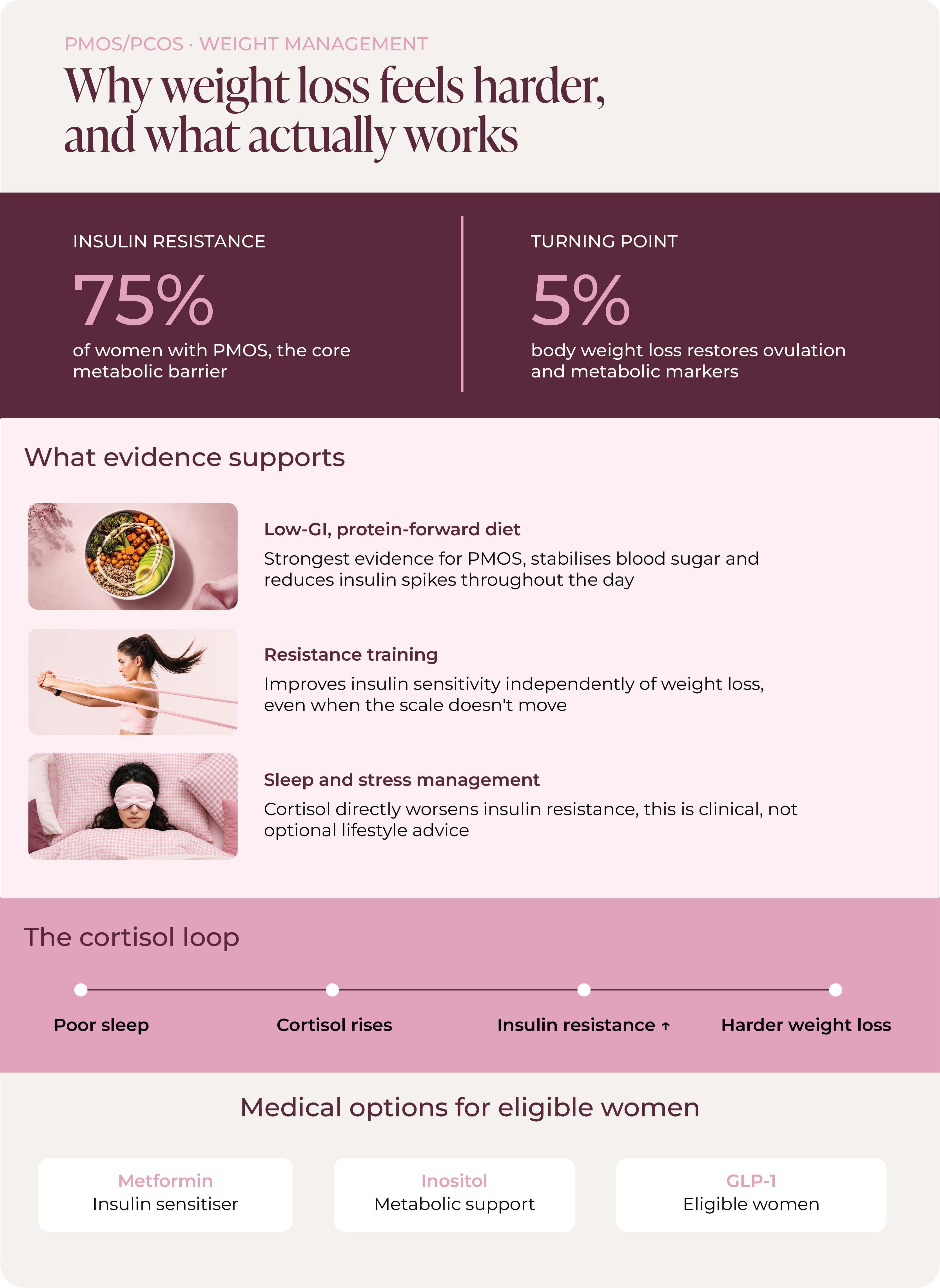
PCOS reshapes how your body stores fat, responds to insulin, and regulates hunger. 75% of the women with PCOS suffer from insulin resistance, which makes weight loss even more difficult.
The good thing is that even with a modest weight loss of around 5% of body weight, you can improve ovulation, reduce androgen levels, and restore cycle regularity.
Why Is It Harder to Lose Weight With PCOS?
The Insulin Resistance Cycle Explained
Insulin is a hormone that instructs your cells to absorb glucose from your blood. But when your cells don’t hear this instruction well, your body compensates by producing more insulin. This increased level of insulin has two primary consequences for weight -
- It signals your body to store fat, particularly visceral fat around the abdomen
- It drives the ovaries to produce more androgens (male hormones), which further disrupt appetite, energy, and metabolism
More visceral fat = more insulin resistance = more androgens = more insulin. This forms an endless cycle that the traditional advice of ‘eat less, move more’ cannot solve. Because there’s biology working against you.
How This Differs From Ordinary Weight Gain
Women with PCOS, or more accurately PMOS, often deal with elevated hunger hormones, disrupted satiety signalling, and a metabolic rate that adapts downward more aggressively in response to calorie restriction.
A 2025 Springer review on the topic confirmed that women with PCOS face “unique metabolic challenges, including heightened insulin resistance, compounded by obesity” that require targeted, not generic, interventions.

How Much Weight Loss Actually Helps?
Much lesser than you would’ve thought.
A weight loss of merely 5% shows improved ovulation, reduced androgen levels, better insulin sensitivity, improved lipid profile, normalised fasting glucose, and better psychological health. A 2025 study in the Personalised Medicine journal confirms it.
To put it in perspective; for a woman weighing 85kg, that’s only 4.25kg. Not a major transformation. Not a target BMI. Just 4.25kg.
Take that number to 10% and you’ll see improved live birth rates in overweight women seeking fertility treatment. These are meaningful, real-world outcomes from modest, sustainable weight loss.
Diet Approaches for PCOS
What the Evidence Supports
There isn't a single diet that has been proven the best for women with PCOS. But here are some general rules that help -
- Low glycaemic index (GI) eating: A low GI diet directly reduces insulin spike. It is also seen to show a threefold improvement in the whole-body insulin sensitivity in women suffering from PCOS, even with a mere 4-5% weight loss. Choose oats, legumes, non-starchy vegetables, berries, and whole grains over white bread, sugary cereals, and processed snacks.
- Protein-forward meals: Protein preserves muscle during weight loss. It also moderates insulin response to carbs. Try including protein in every meal. Eggs, chicken, fish, Greek yoghurt, legumes, etc. are some options.
- Anti-inflammatory foods: Women with PCOS usually face chronic low-grade inflammation. Omega-3 fatty acids (oily fish, walnuts, flaxseed), colourful vegetables, and olive oil support an anti-inflammatory pattern.
- Regular meal timing: Skipping meals, particularly breakfast, can worsen insulin dysregulation in women with PCOS. Try eating a protein rich breakfast regularly. It supports steadier blood glucose across the day.
What to Avoid
Crash diets and extreme restrictions don’t help and usually backfire in PCOS. Severe calorie restriction triggers the metabolic adaptation response more aggressively in insulin-resistant women. This slows metabolism, increases cortisol, and makes the next attempt harder.
A sustainable and consistent 300-500 calorie deficit (following the above rules) would definitely outperform dramatic short-term restriction in long-term metabolic outcomes.
Lifestyle Factors Beyond Diet
Exercise and Insulin Sensitivity
Exercise improves insulin sensitivity independently of weight loss. This means that consistent movement changes the underlying biology of PCOS even before it starts moving the scale.
- Resistance training: Muscle building improves insulin sensitivity in the most efficient way. You can start with 2 sessions per week that include bodyweight, bands, or weights. These have consistently shown benefit in PCOS research.
- Moderate cardio: 150 minutes per week of moderate activities like brisk walking, cycling, swimming, etc. supports metabolic health. It is the baseline recommendation for adults by the NHS.

You don’t need to transform into an athlete. Just build walking and a bit of resistance training in your routine can drive excellent results. Consistency over intensity. Always. (this is why SIPs are usually the best way to invest).
Sleep and Stress: The Cortisol Connection
Cortisol, the stress hormone, when elevated, directly worsens insulin resistance. It also drives cravings for high-sugar, high-fat foods by stimulating the same reward pathways that GLP-1 medications work to quiet. And poor sleep often results in high stress or vice versa, impairing insulin sensitivity within a few days.
Seven to nine hours of sleep with intentional stress management initiatives like walking, therapy, reducing caffeine, sometimes even saying no to more things are highly recommended. These can significantly improve things metabolically for women with PCOS.
Medical and Pharmacological Options
Metformin
Metformin is an insulin-sensitising medication originally developed for type 2 diabetes, which is now being widely used in PCOS management. It works directly on insulin resistance by reducing glucose production in the liver and improving how cells respond to insulin. It can restore ovulation, reduce androgen levels, and support more sustainable weight loss.
There aren’t any major side effects usually. Some women can experience nausea, nausea, and/or loose stools when starting, but they usually settle with gradual dose escalation.
GLP-1 Medications
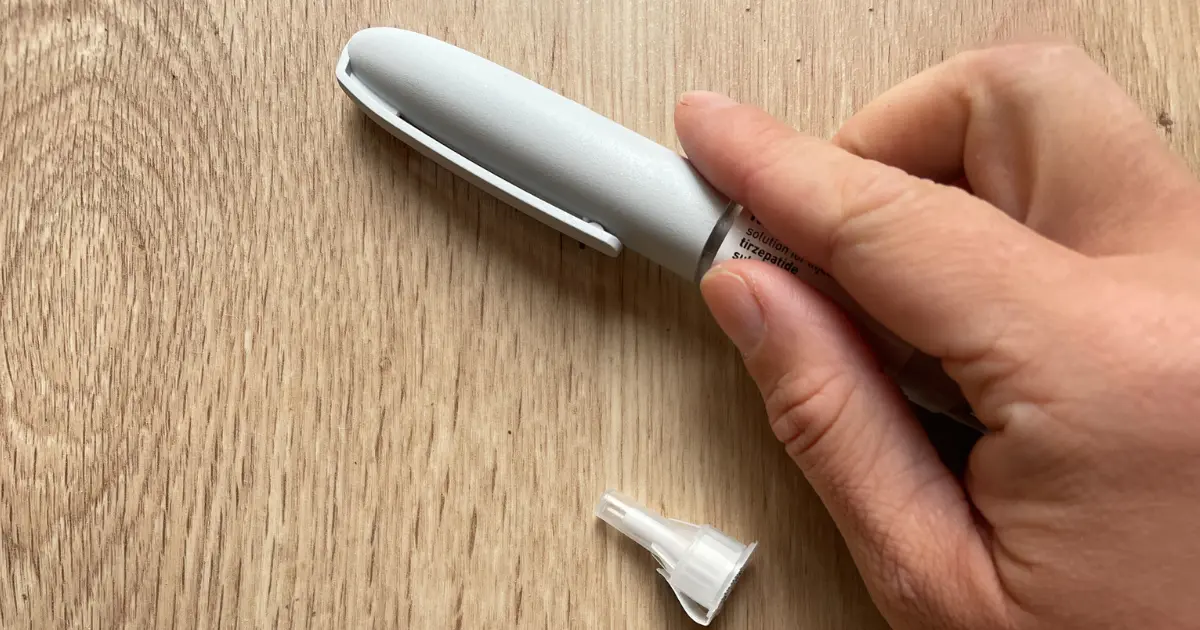
GLP-1 medications can drive meaningful results for women with PCOS, especially for the ones who have tried lifestyle changes and metformin, but couldn’t see much difference.
A clinical study at the University of Pisa found that 80% of PCOS (now PMOS) patients on semaglutide (the active ingredient in Wegovy) achieved at least 5% weight loss. Of those, 80% normalised their menstrual cycles. Mean weight loss at six months was 11.5kg.
These medications work by improving insulin sensitivity, reducing appetite and food noise, and lowering visceral fat. All of these directly address the metabolic drivers of PCOS, not just the weight.
Our study here at SheMed explores how weight loss treatments may benefit women's health in broader, more impactful ways. We're examining their potential to address PMOS, endometriosis, menopause symptoms, and other under-researched areas.
Most supplements marketed as hormone-balancing, cycle-regulating, or fat-burning outside of inositol are not supported by robust evidence in PCOS. Don’t let a supplement delay you from accessing treatments with a stronger evidence base.

PCOS/PMOS touches almost every part of a woman's health, from how easily you lose weight, to what's happening with your hair, to which medications might actually help, to what changes when your hormones shift in midlife.
We've written a dedicated guide on each of these so you can go as deep as you need to on the parts that matter most to you right now.
- PCOS and hair loss: causes and treatment options →
- PCOS (PMOS): Symptoms, Causes and Treatment Explained
- Mounjaro and PCOS: what the evidence says →
- PCOS and menopause: what changes and what doesn't →
- PCOS Diagnosis: Blood Tests, Criteria and How to Know If You Have It→
- PCOS and Insulin Resistance: What's the Connection, and What Helps?→
- GLP-1 Medications for PCOS: How They Help with Insulin Resistance →
- PCOS Diet: What to Eat, What to Limit, and What Actually Helps →PCOS, Periods and Pelvic Pain: What's Normal and What Isn't
- What Is PCOS (PMOS)? A Clear Explanation of Symptoms, Causes and Diagnosis→
- PCOS Belly Fat and Bloating: Why It Happens and What Actually Helps→
Related -
See SheMed’s GLP-1 treatment plans for women →
Read our co-founder Olivia’s Personal Journey with PCOS and GLP-1 Medications
Know more about - Wegovy pill →
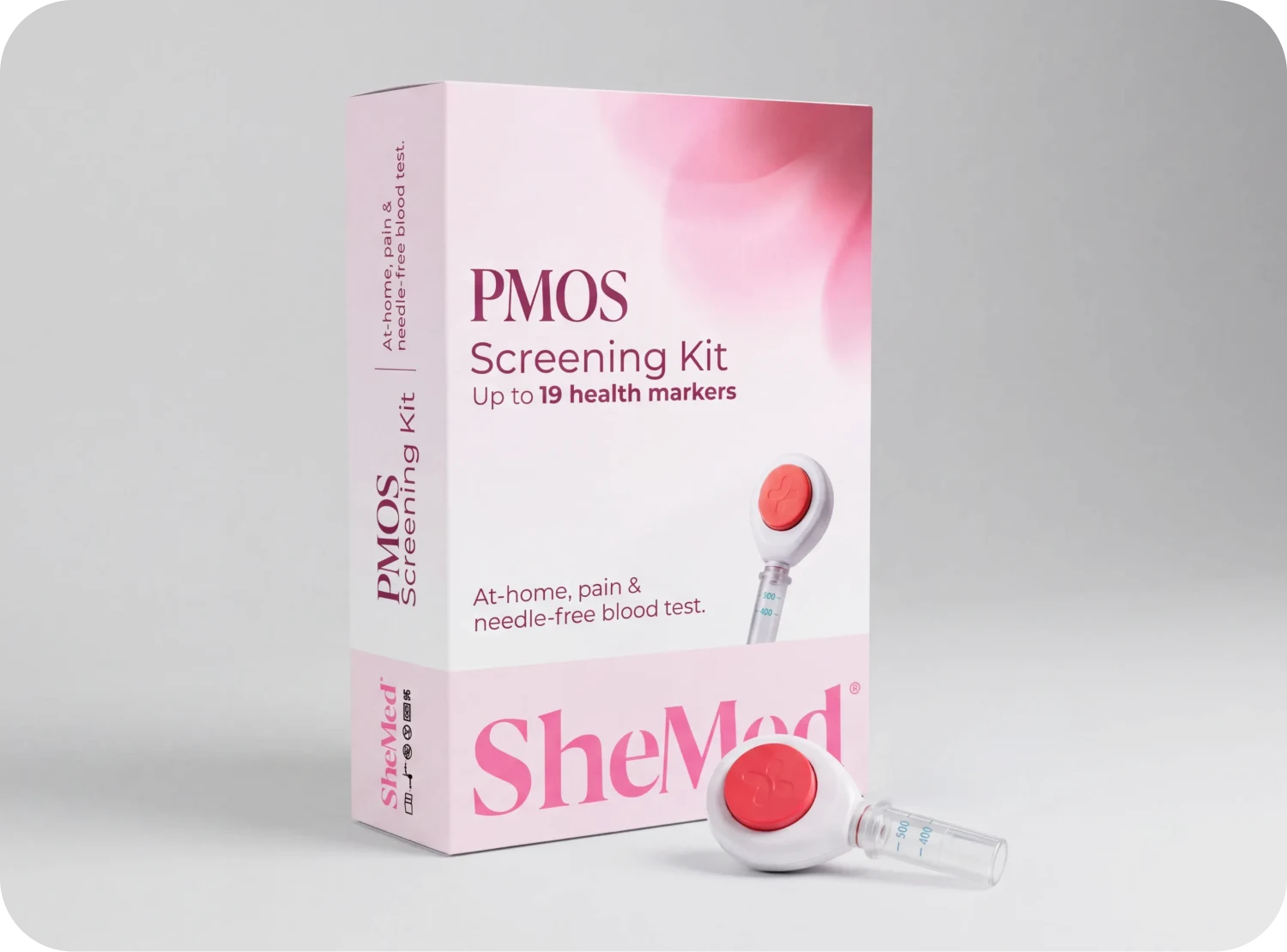
Think you might have PCOS (now PMOS)? Screen 19 health markers at home, reviewed by a clinician.
Frequently Asked Questions
Why can’t I lose weight with PCOS/PMOS?
70-80% of women with PCOS (PMOS) face insulin resistance. Your body produces excess insulin in such a case. And elevated insulin signals your body to store fat and disrupts appetite-regulating hormones.
How much weight loss improves PCOS/PMOS symptoms?
As little as 5% of body weight. For a woman weighing 80kg, that’s 4kg. Studies have shown improved ovulation, reduced androgen levels, better insulin sensitivity, and better psychological health in women with PCOS/PMOS after the weight loss.
What is the best diet for PCOS/PMOS weight loss?
A low glycaemic index, protein-forward eating pattern with regular meals and anti-inflammatory foods has the strongest evidence. No single diet is universally superior, but this approach directly targets insulin resistance. Crash diets and extreme restriction usually backfire in women with PCOS (PMOS).
Can Wegovy or Mounjaro help with PCOS/PMOS weight loss?
Yes. A clinical study found that 80% of obese PCOS patients unresponsive to lifestyle changes achieved at least 5% weight loss on semaglutide (Wegovy’s active ingredient), with 80% of those normalising their menstrual cycles. GLP-1 medications improve insulin sensitivity and reduce visceral fat, hence, directly addressing the metabolic drivers of PCOS/PMOS, not just appetite.
Does PCOS/PMOS weight gain reverse with treatment?
With the right approach, yes. Lifestyle changes, metformin, GLP-1 medications, etc. can improve insulin sensitivity, reduce visceral fat, improve androgen levels, and restore cycle regularity. The underlying predisposition to insulin resistance doesn’t disappear, which is why maintenance and ongoing metabolic monitoring matter as much as the initial weight loss.
Sources & Further Reading
1. NHS — Polycystic Ovary Syndrome (PCOS): Treatment
3. PMC — Impact of Reducing Obesity in PCOS (full text)
4. BMC Medicine — PCOS: A Complex Condition. Teede, Deeks, Moran. 2010. PMID: 20591140
5. Springer — Weight Management Strategies to Reduce Metabolic Morbidity in Women With PCOS (2025)
6. PMC — Semaglutide Treatment in Obese PCOS Patients Unresponsive to Lifestyle (PMC10531549)
7. SOGC Position Statement — Inositol for the Management of PCOS (2025)
8. WHO — Polycystic Ovary Syndrome Fact Sheet
9. Johns Hopkins Medicine — Polycystic Ovary Syndrome (PCOS)
10. Cleveland Clinic — Polycystic Ovary Syndrome (PCOS)
The content on the SheMed blog is provided for general informational and educational purposes only. While SheMed provides professional weight loss services and strives to ensure the information shared is accurate and up to date, we make no representations or guarantees as to its accuracy, completeness, or timeliness. This content should not be taken as personal medical advice or a substitute for consultation with a qualified healthcare provider. Always speak with your doctor or licensed medical professional about your individual health or medical needs before starting any new treatment or programme. Never disregard or delay seeking professional medical advice because of something you have read on this site. SheMed is not responsible for any actions you may take based on the information provided in this blog.
Related Articles