PCOS and Exercise: What Actually Helps

Medically reviewed by Puja Vyas, Lead Clinical Pharmacist.
If you have PCOS and feel like you work out harder than anyone you know but see less in return, you’re not imagining.
The relationship between exercise and women with PCOS is different from what it is for other women because their underlying hormonal and metabolic picture is different. But once you understand the types of movement that target that picture, the entire equation gets clearer and a lot more manageable.
Side note: PCOS is now clinically referred to as PMOS (polyendocrine metabolic ovarian syndrome) following a May 2026 Lancet rename. We’ve used PCOS throughout. You can know more about what PCOS is and how it works here:
PCOS symptoms, causes and treatment →
Key Takeaways
- Exercise improves insulin resistance in PCOS independently of weight loss, meaning the metabolic benefits begin before the scales move
- Resistance training is the most evidence-supported type for PCOS: it builds muscle, lowers androgens, and directly improves how the body handles insulin
- HIIT shows real benefits for PCOS, but more is not better. One to two sessions a week is the evidence-supported sweet spot. Doing it five or six days a week raises cortisol, which worsens insulin resistance
- Walking after meals is one of the most underrated tools for PCOS blood sugar management
- Extreme cardio alone, without strength work, consistently underperforms for PCOS-specific outcomes
- Consistency over months matters far more than intensity in any single session
Why Exercise Affects PCOS Differently
For most of us, the rules of exercise are pretty simple: move more, burn more calories, lose weight. But for women with PCOS, it is about what exercise does to insulin sensitivity because that is the root of most PCOS symptoms.
Your muscles are your body’s primary glucose uptake site. When you use your muscles, they absorb glucose from the bloodstream without the help of insulin. This means that more muscle, or more activated muscle, means lower insulin levels circulating through your body. And lower insulin means your ovaries are less stimulated to overproduce androgens, which indeed leads to less hormonal disruption.
Here’s an article if you want to understand the insulin resistance and PCOS connection in detail: PCOS and insulin resistance: what’s the connection and what helps →
Best Types of Exercise for PCOS
Resistance and Strength Training
Any form of resistance training, including lifting weights, using resistance bands, or doing bodyweight exercises like squats, lunges, and push-ups, has consistently shown results in PCOS research.
A network meta-analysis of 19 randomised controlled trials found resistance training was more effective than other exercise types for reducing the free androgen index, a measure that talks about the active testosterone in the body.
The best thing here is that you don’t need to wait for your body to lose a significant amount of weight to see the difference. Even just two sessions per week, when done consistently over several weeks, show measurable metabolic improvements.
You don’t necessarily need a gym, and you do not need to start with weights. You can find many quality YouTube videos, or even free training apps that can guide you with some at-home workouts either using resistance bands or bodyweight. You can even opt for a kettlebell if you like.
What matters is pushing yourself just a bit harder than the previous day so your muscles keep adapting.
If you hate the gym: resistance training does not mean a weights rack and a room full of mirrors. A set of resistance bands costs around £10 and fits in a drawer. Thirty minutes twice a week of banded squats, glute bridges, rows, and press-ups is genuinely effective for PCOS insulin sensitivity. It is also the exercise type most women with PCOS report sticking to long-term, because the results are more obvious than endless cardio that leaves you hungry and frustrated.
HIIT for PCOS
HIIT or high-intensity interval training, which is basically short bursts of intense effort followed by recovery, has been the most popular exercise topic for PCOS on the internet. And there’s a reason for it -
A 2025 study in women with overweight PCOS found HIIT improved insulin sensitivity, reduced body fat, and improved quality of life. A 2026 network meta-analysis found HIIT enhanced cardiorespiratory fitness and reduced LDL cholesterol in PCOS more effectively than moderate continuous exercise.
So HIIT does work for PCOS. One to two sessions a week, 20 to 30 minutes each, can get you those benefits. However, stretching it to five or six days a week can raise your cortisol (the stress hormone) levels significantly, which can worsen your insulin resistance, making periods more irregular.
You may have seen or heard from women who find that intense gym programmes seem to make their PCOS worse. In most of those cases, it’s not choosing the wrong exercise, but doing too much of it too often.
Walking and Low-Intensity Movement: Underrated but Effective
Walking is underrated when it comes to PCOS, probably because it does not feel as intense as a HIIT workout. But it can surely make a big difference, especially after eating meals. It can significantly reduce the blood sugar spike that follows after eating.
With blood sugar, insulin in your body rises too. In women with PCOS, those insulin spikes are already higher and more disruptive than they are for women without insulin resistance. A ten-to-fifteen-minute walk after eating blunts that spike, because your muscles absorb the glucose directly. And with 3 meals a day, it means three separate opportunities to reduce the insulin load on your system.
Another big advantage of walking is almost no cortisol cost, as it’s uncommon for it to put stress on your body. If you’ve got PCOS, you’re probably already stressed, sleep-deprived, or exhausted. In such a case, adding a gentle daily movement is better than pushing yourself into a high-intensity workout that your body is not ready for.
Exercise Mistakes That Can Work Against You With PCOS
Overtraining and Cortisol
Cortisol is the body's primary stress hormone, and it has a direct relationship with insulin resistance. When cortisol levels in your body are elevated, it signals your body to release stored glucose, which then triggers more insulin release to combat the sugar.
It also promotes fat storage, especially in the abdomen as it has four times the cortisol receptors of fat cells elsewhere.
Women with PCOS usually have higher cortisol levels in general compared to women without the condition. Adding intense workouts like HIIT or long cardio sessions can increase the cortisol levels even further.
Here are some signs that show that your exercise routine is worsening your situation rather than helping -
· Worsening sleep despite being physically tired
· More intense sugar cravings
· Feeling depleted rather than energised after workouts
· Periods becoming more irregular after starting a new training programme.
The counter-intuitive thing about PCOS and exercise: sometimes doing less is the right move. If you are exhausted, sleep-deprived, highly stressed, and pushing through five-day gym weeks out of desperation, your cortisol is almost certainly making your insulin resistance worse. Two strength sessions and daily walking, done consistently, will outperform five brutal sessions that leave you depleted. This is not permission to do nothing. It is permission to stop using intensity as the only measure of whether you are doing enough.
Why Extreme Cardio Alone Often Underperforms for PCOS
You’ve probably felt or heard that sticking to the treadmill for hours will sort your PCOS problems. But just relying on hours of steady-state cardio, running, cycling, or spinning often disappoints women with PCOS. It does burn calories, but it does not address insulin resistance in the way resistance training does. Moreover, it can raise cortisol levels without building the muscle that improves insulin handling.
Does this mean you should dump cardio and just start lifting weights? No.
A regular 30-minute walk or a couple of moderate cardio sessions a week is genuinely good for cardiovascular health and metabolic markers. The problem is when cardio alone is your strategy. Burning more calories will not fix what is fundamentally a hormonal and metabolic problem.
Building a Realistic Weekly Routine
What a Sustainable Week Looks Like
There is no perfect routine. But if you are starting from scratch and want a framework that covers the key bases for PCOS, here’s something you can follow:
- Two resistance training sessions: 30 to 45 minutes each, targeting large muscle groups. Squats, deadlifts, rows, presses. At home or in the gym. Bands or weights.
- One HIIT or moderate cardio session: 20 to 30 minutes. Could be a spin class, a run with intervals, or a circuit-style workout. Not more than one or two of these per week.
- Daily walking: aim for 7,000 to 10,000 steps, but most importantly, a ten-to-fifteen-minute walk after at least one main meal.
- One full rest day: non-negotiable. Your body adapts to exercise during recovery, not during the session itself. Rest is not wasted time.
In total, you’re looking at four active days, three rest or low-movement days. We feel this should be manageable for you alongside work, family and life. In the end, consistency is what brings results.
Working Around Fatigue and Low Motivation
PCOS usually comes with poor sleep because of disrupted hormonal fluctuations, elevated cortisol levels and the metabolic drag of insulin resistance. All of these lead to mental and physical fatigue. In this case, just pushing yourself through tiredness is not the solution.
Try to anchor exercise to existing habits rather than relying on motivation. Keep your resistance bands next to your bed for a morning session that you don’t have to think about too much. Take the walking route as a part of your daily commute. Book a gym class in advance with a friend.
Motivation comes after action, not before it, and removing the decision from the equation by building habits removes the moment where motivation needs to show up.
Here’s an article we’ve written on how diet and exercise work together for PCOS: PCOS diet: what to eat and why →
Exercise Alone vs Exercise Alongside Medical Treatment
While exercise is one of the most important things you can do for PCOS, it is not the whole picture, and it may not be enough for you on its own.
If you’re dealing with significant insulin resistance, weight gain that is not responding to exercise and dietary changes, or hormonal markers that remain elevated despite consistent effort, medical treatment may be part of the solution.
Metformin and GLP-1 medications both work on the insulin resistance that exercise is also targeting, but through direct pharmacological action rather than indirect metabolic improvement.
Medication and lifestyle changes are not alternatives, but approaches that complement each other. Exercise makes medical treatment more effective. Medical treatment makes the metabolic environment more responsive to exercise. The combination consistently outperforms either alone.
Here are two more articles for you to learn more about PCOS
- PCOS and weight loss: what actually helps →
- PCOS and insulin resistance: metformin and GLP-1 options →
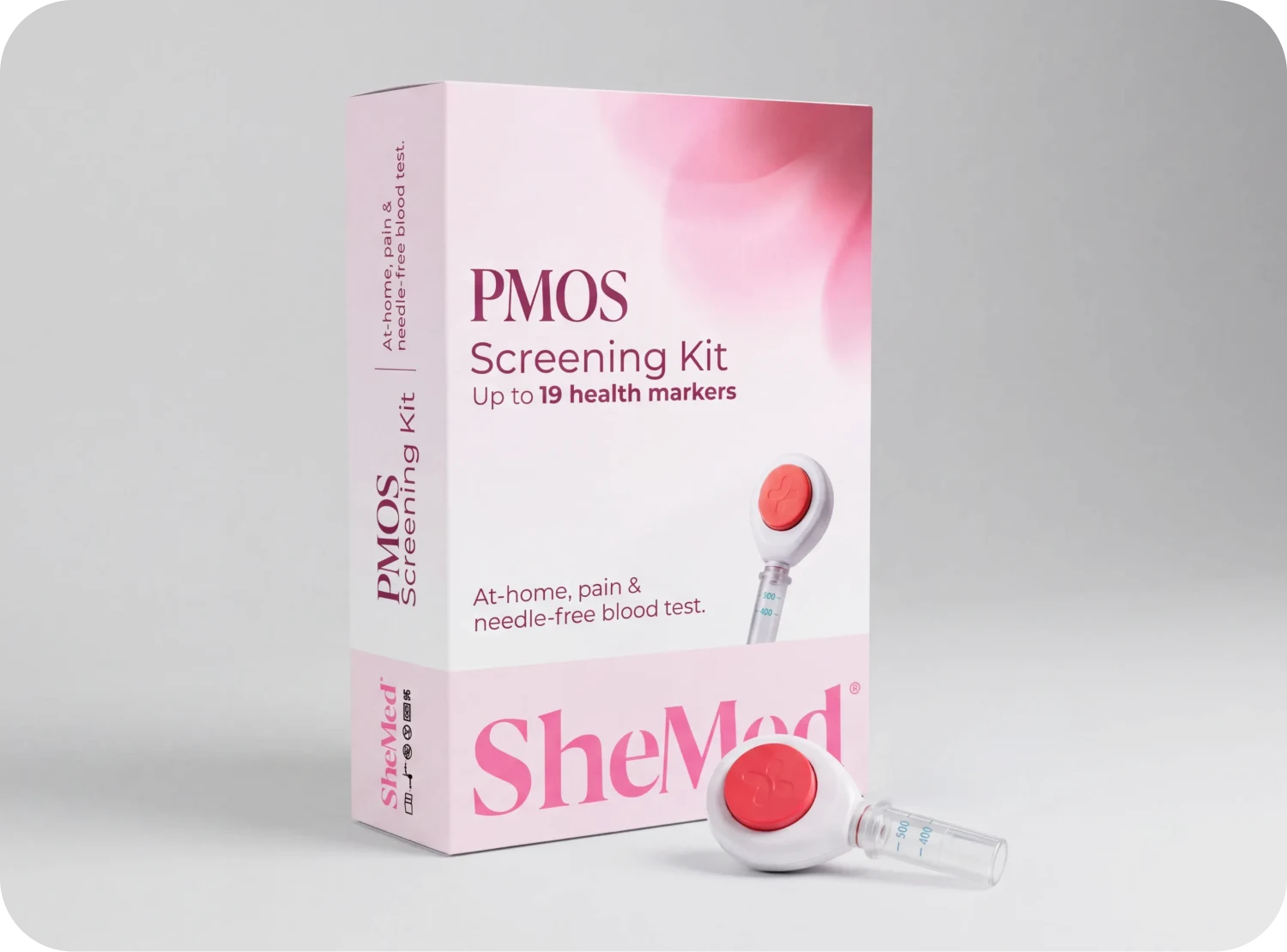
Think you might have PCOS (now PMOS)? Screen 19 health markers at home, reviewed by a clinician.
Frequently Asked Questions
What is the best exercise for PCOS weight loss?
Resistance training has the strongest evidence for PCOS specifically, because it builds muscle, directly improves insulin sensitivity, and reduces androgen levels. Combine it with walking after meals for blood sugar management and one HIIT session a week for cardiorespiratory benefits. The best exercise is also the one you will actually do consistently over months, not the most intense option available.
Is HIIT good or bad for PCOS?
Good, but in the right proportion. One to two HIIT sessions per week improve insulin sensitivity, cardiovascular fitness, and LDL cholesterol in women with PCOS. Doing HIIT five or six days a week raises cortisol significantly, which worsens insulin resistance and can make periods more irregular.
Can exercise alone fix PCOS-related weight gain?
Exercise is one of the most important management tools for PCOS, but it is often not sufficient on its own for significant weight management, particularly in women with marked insulin resistance. Lifestyle changes, including exercise and low-GI eating, do help. But for women who are not seeing results despite consistent effort, medical options, including metformin and GLP-1 medications, address the insulin resistance that is making weight management difficult at a biological level.
How often should you exercise with PCOS?
Around four active days per week, including two resistance sessions, one moderate or HIIT cardio session, and daily walking of 7,000 to 10,000 steps, is a well-supported framework. Rest days are essential, not optional. Exercising every day, particularly at high intensity, elevates cortisol in women with PCOS and can worsen the hormonal picture rather than improving it.
Does strength training help with insulin resistance in PCOS?
Yes, significantly. Muscle is the body’s primary site of glucose uptake. Building and activating muscle through resistance training means cells absorb glucose without requiring as much insulin. Lower circulating insulin then reduces the signal to the ovaries to produce androgens. Resistance training has shown consistent results, with effects measurable even without significant weight loss.
Sources and Further Reading
1. NHS – Polyendocrine Metabolic Ovarian Syndrome (PMOS / PCOS)
2. NICE CKS – Polycystic Ovary Syndrome
6. Monash University – 2023 International Evidence-Based PCOS Guideline Summary
7. Cleveland Clinic – Polycystic Ovary Syndrome (PCOS)
8. Johns Hopkins Medicine – Polycystic Ovary Syndrome (PCOS)
The content on the SheMed blog is provided for general informational and educational purposes only. While SheMed provides professional weight loss services and strives to ensure the information shared is accurate and up to date, we make no representations or guarantees as to its accuracy, completeness, or timeliness. This content should not be taken as personal medical advice or a substitute for consultation with a qualified healthcare provider. Always speak with your doctor or licensed medical professional about your individual health or medical needs before starting any new treatment or programme. Never disregard or delay seeking professional medical advice because of something you have read on this site. SheMed is not responsible for any actions you may take based on the information provided in this blog.
Related Articles