
Wegovy Pill Side Effects: What Women Should Know

Updated 06/07/2026
Medically reviewed by Puja Vyas, Lead Clinical Pharmacist.
You’re searching for Wegovy pill’s side effects and you’re the kind of woman who does her homework. We appreciate that and we’ve got you covered.
Yes, the Wegovy pill has side effects. Most of them are manageable, most of them are temporary, and most importantly most of the time they are a sign of the medication actually working.
There are some things around contraception, hormones, and pregnancy that are very important to know for women.
With the Wegovy pill now approved by the UK's medicines regulator, women now have more options than ever before to help them lose weight.
What Are the Most Common Wegovy Pill Side Effects?
Everything we know about side effects of the Wegovy pill is from the OASIS 4 Phase 3 clinical trial, which is the clinical basis for approval.
307 participants. 79% women. 64 weeks
Here’s what it showed -
Nausea: The Most Common Side Effect
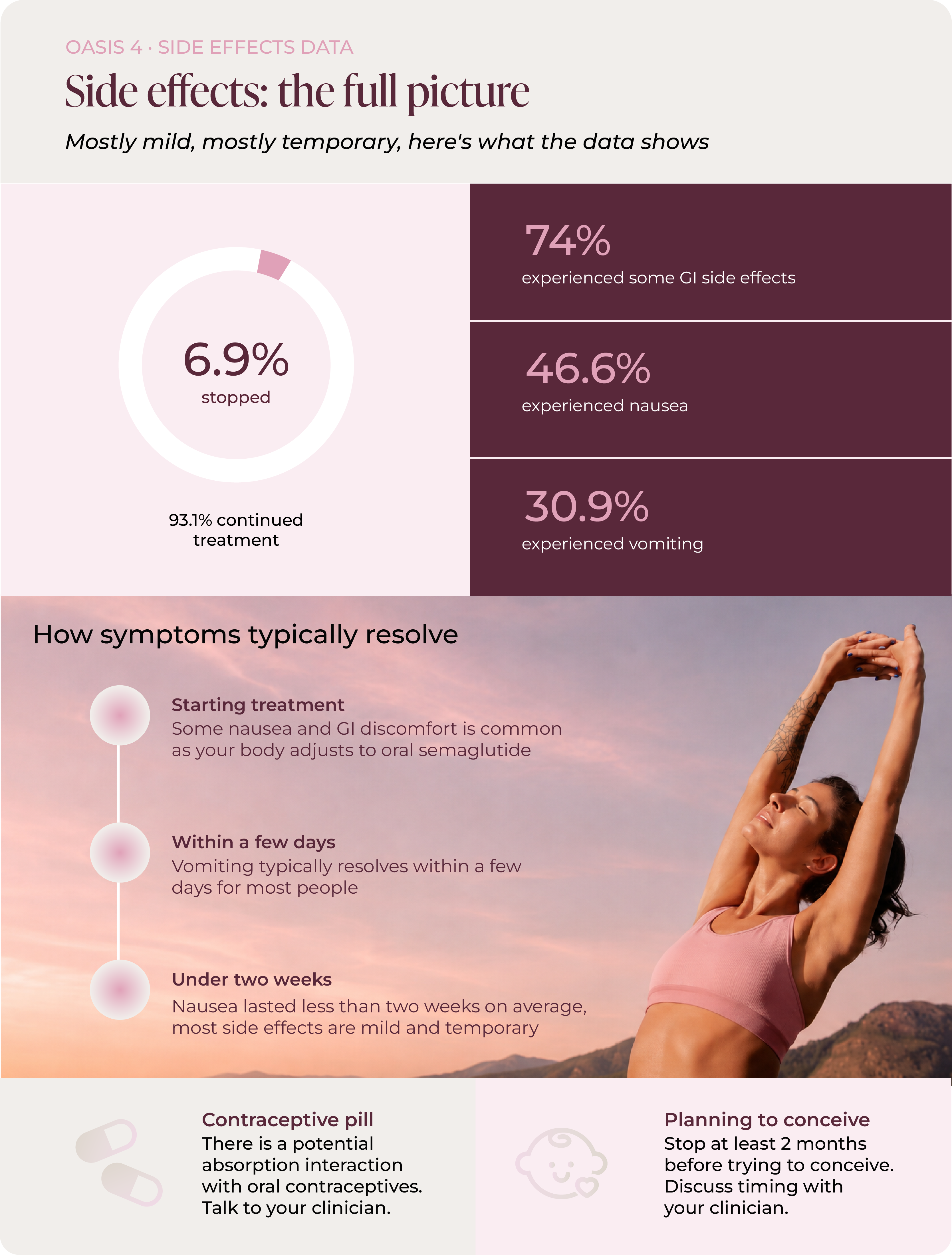
46.6% of people on the Wegovy pill experienced nausea, compared to 18.6% on placebo. Yes, the number is high, but it won’t scare you as much once you understand why that happens and how quickly it goes away.
Semaglutide, the active ingredient in Wegovy, slows how quickly food leaves your stomach. This is how it keeps you full for a longer time. But nobody likes change, including your stomach. The result is nausea, especially in the first few weeks and after each dose increases.
And then, once your stomach realises (usually in less than two weeks), ‘Change is the law of nature’, it settles.
Vomiting: More Common With the Pill Than the Injection
30.9% of pill users experienced vomiting, versus just 5.9% on placebo. This is higher than what the numbers showed for the injection and the reason is SNAC.
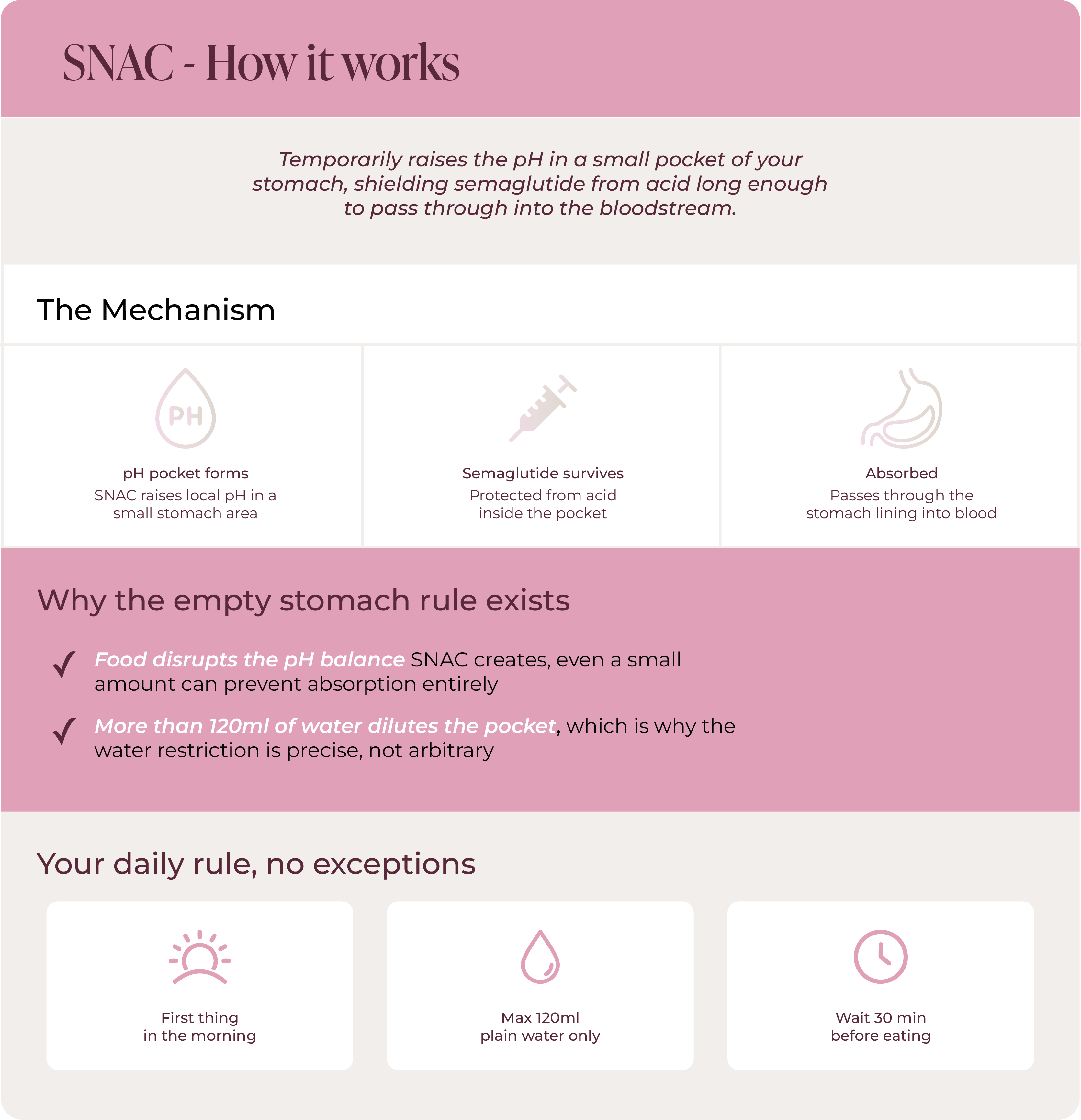
Now like Yin-Yang, there’s a small downside to this. Taking any medication on an empty stomach can trigger nausea and vomiting, especially if you have a sensitive stomach. Hence, the higher vomiting and nausea rates. But again, most cases in the trial were mild and seemed to settle in just a couple of days.
Constipation: Starting days
Around 20% of pill users experienced constipation. Semaglutide slows things down in the entire gut, not just the stomach. This naturally causes constipation. While for most women it goes away on its own, some may need active management (more on that below).
Fatigue: Initial Weeks
Not many people report this, but it’s real. By introducing a drug like semaglutide to your body, you’re asking it to adjust to a significant hormonal shift in how it processes food and regulates appetite. And on top of this, you’re now eating less. Naturally, some women feel tired, foggy, or low-energy in the first few weeks. Adequate protein intake and hydration helps.
Why Do These Side Effects Happen?
We’ve already explained above briefly why these side effects happen. They all have a clear physiological explanation. Here’s the full picture -
· Slowed gastric emptying: With semaglutide, food sits in your stomach longer. This reduces appetite, but also causes nausea, a feeling of fullness that may get uncomfortable at times, even causing vomiting.
· SNAC: The ingredient that allows the pill to survive the stomach acid also creates a small localised chemical change in the stomach environment. And the fact that it only works on an empty stomach amplifies this effect, causing GI irritation in sensitive individuals.
· Dose-dependency: At each new dose level, your body goes through a change and tries to adapt to it. As it does so in 2–4 weeks, symptoms typically reduce significantly.
Are Women More Susceptible to Wegovy Pill Side Effects?
Probably yes, and here’s why -
· Sex differences in GI sensitivity: Women's stomachs usually empty more slowly than men's. Semaglutide slows it further. This is why the GI side effects may be more prominent and last longer in them.
· Perimenopause and GI sensitivity: Hormonal fluctuations during perimenopause can increase GI sensitivity. Women in that stage can experience more pronounced side effects.
· PCOS and insulin sensitivity: Women with PCOS tend to respond more strongly to semaglutide. Yes, it means that it’s working well but it also means that starting low and slow is important.

How to Manage Wegovy Pill Side Effects
What to Eat (and When)
The 30-minute fasting rule after the pill is non-negotiable for absorption. But how and what you eat after that matters:
· Choose smaller, more frequent meals rather than large ones. Your stomach has less capacity now.
· Eat slowly. Your mom and grandma have been telling you this since ages. It genuinely reduces nausea
· Try sticking to bland, low-fat foods like crackers, toast, plain rice, eggs
· Avoid very fatty and greasy meals. Less fried food, takeaways, heavy cream sauces, processed meats, and full-fat cheese
· Ginger, in tea, tablets, or biscuits can also help reduce nausea
Hydration and Protein
· Protein: Aim for 1.2–1.5g per kg of body weight. Adequate protein reduces fatigue, preserves muscle during rapid weight loss, and helps keep you more stable.
· Water: Constipation + dehydration, always a bad idea. Aim for eight glasses or more. If you can also reduce your coffee intake, as it tends to dehydrate your body, it’ll help.
Don’t treat these two as optional extras. They are equally important.
Movement and Constipation
You don’t need to like an Ironman aspirant. Simple daily movement, even a 20-minute walk can stimulate your gut motility. It is actually one of the most effective natural remedies for GLP-1-related constipation. Combine it with fibre from vegetables and hydration, and you might even question if these medications even have side effects.
However, if they persist beyond two weeks, you must speak to your NHS GP or health care professional. There may be something else that needs addressing.
When to Contact Your Prescriber
While most side effects resolve on their own once the body adjusts, the below call for medical attention -
· Vomiting that persists beyond 48 hours
· Severe abdominal pain, especially pain that goes all the way to your back (potential sign of pancreatitis)
· Unable to keep fluids down for more than 24 hours
· Yellowing of skin or eyes (potential sign of liver issues)
· Racing heart, palpitations, or chest discomfort
· Sudden vision changes in one eye (MHRA NAION warning, February 2026)
· Any signs of an allergic reaction like swelling, rash, difficulty breathing
The idea here is not to scare you, but to keep you informed enough so you know what to do once something goes unplanned.
Wegovy Pill Side Effects Specific to Women
These aren’t mentioned on most GLP-1 websites, and they should be. SheMed is specifically built for women. We can’t let these things go unnoticed.
The Contraceptive Pill
Semaglutide (the Wegovy pill’s active ingredient) slows gastric emptying, which in turn, also reduces how well oral medications are absorbed. Currently, for the injectable Wegovy, clinical evidence shows that it does not significantly reduce the bioavailability of combined oral contraceptives, which means the efficacy of the pills is not affected.
However, given the fact that vomiting and diarrhoea are more common with the oral Wegovy pill than with the injection, puking within three hours of taking your contraceptive pill, or having significant diarrhoea for more than 24 hours, can affect the absorption of your contraceptive.
You must follow the standard missed pill guidance in those situations.
One more thing if you're on HRT (Hormone Replacement Therapy) and your treatment includes an oral progesterone tablet (like Utrogestan or norethisterone), there's a concern that this medication may reduce how well it's absorbed. Progesterone protects the womb lining, so if it's not being absorbed properly, the efficacy of your treatment may be affected.
If this applies to you, speak to your GP about switching to a non-oral form of progestogen (such as a combined patch or the Mirena coil).

Hair Loss and Rapid Weight Loss
Some women experience hair shedding (technically called telogen effluvium) when the weight starts reducing due to GLP-1 medication. It’s not due to the drug. It’s the physiological stress of losing weight quickly. Your body temporarily pauses the hair growth cycle as a response to the significant caloric reduction.
It typically starts 2–3 months into treatment, peaks around month 4–6, and normalises once weight loss stabilises. Adequate protein intake (1.2–1.5g/kg body weight) and maintaining iron levels can significantly reduce the severity.
If you’re concerned, ask for a ferritin and thyroid check at your next blood test.
Pregnancy
Animal studies have shown potential risks to foetal development from semaglutide. While we don’t have the findings for humans yet, we would advise that if you are planning to get pregnant, you must stop taking the Wegovy pill at least 2 months before you begin trying to conceive. The two months are for the drug to fully clear from your system.
If you get pregnant while taking the Wegovy pill, stop immediately and contact your GP.
Thyroid Medication (Levothyroxine)
If you’re on levothyroxine, your morning routine should be planned carefully. Both levothyroxine and the Wegovy pill require an empty stomach. But, you cannot take them at the same time. We’ve explain why above (hope you were paying attention).
Standard guidance is to take levothyroxine first thing, then wait 30–60 minutes before the Wegovy pill, or to take the Wegovy pill at a different time altogether. Your prescriber can help you set the routine according to your lifestyle. The important thing is to not skip either.
Do the Side Effects Get Better Over Time?
Yes. Here’s what your journey may look like -
· Weeks 1–4: This is the adjustment phase where you may experience nausea and GI side effects the most, particularly in the first week of each new dose. It’s normal.
· Weeks 4–12: This is where you’ll see a significant improvement as your body gets adapted to the medication. Nausea in particular tends to reduce substantially.
· Weeks 12–24 (higher doses): When you increase your dose, a shorter, milder version of the early side effects can return, but it’ll be much less severe than the previous time. At this stage, your body is familiar with the mechanism; it just needs to adjust to the new level.
· Month 4+: You’ll see your weight loss journey continue while the side effects almost disappear. That’s what most women reported during the trial.
However, If side effects still persist beyond 6 weeks, you must speak with your GP or health care provider. A temporary dose reduction or a different formulation may suit you better.
If you feel like knowing more about the Wegovy pill, we’ve written a series of articles on it. Keep reading -
Complete guide to the Wegovy Pill →
How to take the Wegovy pill →
Weight loss pills in UK →
Wegovy pill vs injection →

Ready to take the next step? SheMed can support your weight loss journey
Frequently Asked Questions
Are Wegovy pill side effects worse than the injection?
Yes for nausea and vomiting. The data shows slightly higher rates with the pill. Vomiting in particular was 30.9% with the pill, much higher than its injection counterpart. It is, most probably, because of the fasting requirement and SNAC’s effect on the stomach. Other side effects are mostly similar in both.
How long do Wegovy pill side effects last?
In the OASIS 4 trial, nausea lasted on average less than two weeks and vomiting lasted a few days at each dose level. Constipation may last a bit longer but hydration, fibre and movement can solve that. For most women, side effects tend to settle at week 4 of each dose.
Can I take the contraceptive pill alongside oral semaglutide?
The evidence currently suggests semaglutide does not significantly reduce the bioavailability of combined oral contraceptives. However, if you experience vomiting within three hours of taking your contraceptive pill, or significant diarrhoea, follow the missed pill guidance.
Will the Wegovy pill affect my thyroid medication?
No but the timing matters. Both levothyroxine and the Wegovy need an empty stomach to work. They cannot be taken simultaneously. Your prescriber can help you set the routine so that you don’t miss either.
What should I do if I’m vomiting on the Wegovy pill?
If vomiting is mild and brief, stay hydrated and allow it to pass. If you’re unable to keep fluids down for more than 24 hours, contact your prescriber.
Does everyone get side effects on the Wegovy pill?
Not everyone, but most people do and it’s normal. 74% in the OASIS 4 trial had at least one GI related event. However, most were mild to moderate, and only 6.9% stopped treatment because of them. The majority continued the treatment.
Sources & Further Reading
1. Wharton S et al. — OASIS 4: Oral Semaglutide 25mg. N Engl J Med, 2025;393(11):1077–87
2. MHRA — Updated Semaglutide Guidance Including NAION Warning (GOV.UK, February 2026)
3. MHRA — GLP-1 Medicines for Weight Loss and Diabetes (GOV.UK, 2026)
4. Primary Care Women’s Health Service — GLP-1 Agonists, Contraception and HRT (April 2025)
5. East Croydon Medical Centre — GLP-1 Medications and Oral Contraception or HRT (August 2025)
7. NHS — Obesity Treatment Overview
8. Novo Nordisk — OASIS 4 Analyses at ObesityWeek 2025 (press release)
9. MHRA — Updated semaglutide guidance including NAION warning (GOV.UK, February 2026)
10. NHS / East Croydon Medical Centre — GLP-1 Agonists and Contraception Guidance (2025)
12. MHRA — GLP-1 Medicines: What You Need to Know (GOV.UK, 2026)
The content on the SheMed blog is provided for general informational and educational purposes only. While SheMed provides professional weight loss services and strives to ensure the information shared is accurate and up to date, we make no representations or guarantees as to its accuracy, completeness, or timeliness. This content should not be taken as personal medical advice or a substitute for consultation with a qualified healthcare provider. Always speak with your doctor or licensed medical professional about your individual health or medical needs before starting any new treatment or programme. Never disregard or delay seeking professional medical advice because of something you have read on this site. SheMed is not responsible for any actions you may take based on the information provided in this blog.
Related Articles