Kind Patches Review: Do GLP-1 Weight Loss Patches Actually Work?
Medically reviewed by Puja Vyas, Lead Clinical Pharmacist.
Firstly, kind patches do not contain GLP-1. They contain berberine, pomegranate extract, cinnamon extract, B vitamins, L-glutamine, and chromium, all of which are delivered through an adhesive skin patch. These patches do not have any clinical evidence behind them.
The brand previously sold these as "GLP-1 Patches" but renamed them "Berberine Patches" in 2024 following regulatory scrutiny and media attention in the US.
We’ll go through what kind patches are, what the evidence says about their ingredients, why the "GLP-1 patch" framing is misleading at a physiological level, and what genuinely good options look like for women who genuinely want effective weight loss support.
Key Takeaways
- Kind Patches contain berberine and other supplements, not GLP-1 medication
- GLP-1 is a peptide molecule too large to cross the skin. No licensed GLP-1 patch exists anywhere in the world
- Clinical studies showing berberine effects on weight use 900 to 1,500mg orally. Each Kind Patch delivers approximately 8 to 9mg through the skin, roughly 100 times less
- Kind Patches are sold as a food supplement, not a licensed medicine. They have not been assessed by the MHRA for safety, quality, or efficacy
- Customer reviews tend to reflect general lifestyle improvement, not a patch-specific pharmacological effect
- Other needle-free weight loss treatment option available
What Are Kind Patches?
Kind Patches is a US-founded wellness brand that sells a range of supplement patches, including products marketed for sleep, energy, and weight management. The weight management one was previously called GLP-1 Patch. Regulatory attention in 2024 forced a name change to Berberine Patch. It’s available in the UK at major retailers.
What's Actually in Them
Here’s what’s written on the back of the pack:
- Berberine HCl: approximately 8 to 9mg per patch
- Pomegranate extract
- Cinnamon extract
- B vitamins (B6 and B12)
- L-glutamine
- Chromium
These are supplements with general health associations, none of which are licensed weight loss medicines, and none of these have been studied in transdermal (skin-absorbed) patch form for weight loss.
How They're Used
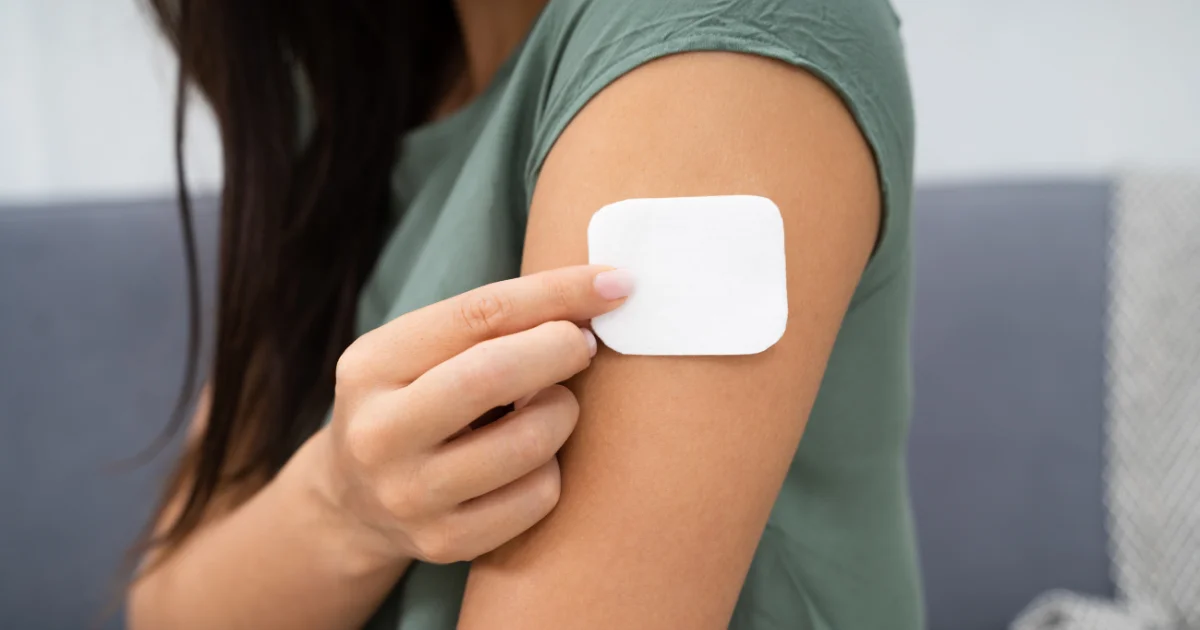
The patches are worn on the skin for up to 8 hours, typically on the arm, abdomen, or thigh. The brand recommends 1-2 per day. No prescription or clinical assessment required.
The Name Change and Why It Happened
In 2024, US doctors and dietitians publicly flagged that calling a berberine supplement, a.k.a. Kind Patches, a "GLP-1 Patch" was misleading. The patch contains no GLP-1 and cannot deliver GLP-1 through the skin. NBC News and TODAY covered the story, and the brand subsequently renamed the product.
Do Kind Patches Actually Contain GLP-1?
No. And you need to know why there are no GLP-1 patches anywhere in the world right now.
What GLP-1 Is and What It Does
GLP-1 (glucagon-like peptide-1) is a hormone your gut releases after you eat. It basically tells your brain when you’re full, so it slows down how quickly food leaves your stomach, and helps regulate blood sugar.
The GLP-1 medications that you see, like Wegovy and Mounjaro, are synthetic versions of this same hormone. The only difference is that the natural one lasts a few minutes in your system, while these are designed to last days.
They work because they reach your bloodstream and bind to GLP-1 receptors throughout your brain and gut. That pharmacological action is what produces the appetite reduction, quietening of food noise, and sustained weight loss seen in clinical trials.
GLP-1 medications require a prescription and a clinical assessment, and hence may not be suitable for everyone.
This was a short and quick explanation. If you feel like knowing more, here’s a full article we’ve written on it - How GLP-1 medicines actually work: peptides for weight loss: what they are and what's legal in the UK →
Why a Patch Cannot Deliver It
Your skin is naturally designed to keep things out. The outer layer, called the stratum corneum, acts as a physical and chemical barrier. For a molecule to pass through skin in meaningful quantities, it needs to be very small (generally under 500 Daltons in molecular weight) and able to dissolve in both water and fats.
GLP-1 peptide molecules, like semaglutide and tirzepatide, are way too large (8-10 times) to cross the skin. This is not a manufacturing limitation that better technology will solve. It is basic physiology.
This is why licensed GLP-1 medicines are injections or specially engineered oral tablets. And this is why there is no MHRA-licensed GLP-1 patch, no FDA-licensed GLP-1 patch, and no clinically tested GLP-1 patch anywhere in the world.
The Dose Gap With Berberine
The effectiveness of berberine patches is also a big question mark. The clinical research on berberine and weight shows modest effects on BMI and waist circumference, but only at oral doses of 900 to 1,500mg per day, taken in divided doses with meals.
Now, each Kind Patch contains approximately 8 to 9mg of berberine. 100 times less than the doses used in clinical studies. And we are not even accounting for the fact that berberine itself is a charged molecule that doesn't cross skin efficiently in the first place. The gap between what the patch delivers and what the evidence requires isn't small. It's enormous.
Let’s look at the ingredients of these patches individually to give you a clearer picture (if it wasn’t already):
Kind Patches Ingredients: What the Evidence Actually Says
Berberine
Berberine is a plant compound with some real research behind it for blood sugar regulation, and, at high oral doses, modest effects on body weight.
The key word here is ‘oral’. All studies that show weight-related effects of berberine talk about berberine taken orally, usually 900 to 1,500mg daily. No studies or any kind of evidence on its patch form.
Pomegranate Extract and Cinnamon Extract
Both have antioxidant and mild insulin-sensitivity associations in some research. But neither have any evidence for producing weight loss in patch form, or even oral form for that matter. They are however great additions for general wellness which includes being used as a supplement to support a weight loss programme.
B Vitamins, L-Glutamine and Chromium
B vitamins support energy metabolism and are essential nutrients. B12 deficiency is worth addressing if you’re deficient. But if you’re not, adding extra B vitamins to your body will not produce any additional energy or weight loss, they’ll just be beneficial to supporting a healthy lifestyle. L-glutamine can support gut health in some cases. Chromium can help regulate blood sugar, but the evidence is not conclusive.
Are Kind Patches Legit? UK Legal and Regulatory Status
Kind Patches are sold in the UK as food supplements, not licensed medicines. This is a meaningful regulatory distinction, not just a labelling technicality.
Why 'GLP-1' Claims Are a Regulatory Red Flag
Under UK law, any product that makes medicinal claims, including implying it works like a prescription weight loss medicine, requires an MHRA marketing authorisation.
A product that calls itself a "GLP-1 Patch" is implying a pharmacological equivalence to licensed semaglutide or tirzepatide treatment. This makes it illegal and this is why the name changed.
Kind Patches Side Effects
The side effects that we’ve most commonly seen and read about with kind patches are redness, itching, or rash where the patch is worn. Most adhesive patches cause these.
Apart from that there are actually no other internal side effects because the ingredients are highly unlikely to reach your bloodstream in a quantity that can cause anything significant.
Kind Patches Reviews: What Customers Actually Say
There is a pattern in reviews of Kind Patches across the UK and US. The positive ones mostly talk about lifestyle changes that came after they start using the patches: drinking more water, paying more attention to what they ate, moving more, generally being more intentional about their health. The negative ones describe seeing no effect beyond what they would expect from general lifestyle changes.
This is what researchers call a "healthy user effect" and non-specific treatment response. When you do something deliberate to address your weight, including buying and wearing a patch, there is a high chance you’ll make other lifestyle changes along with it. It’s those changes that bring the results, not the patch.
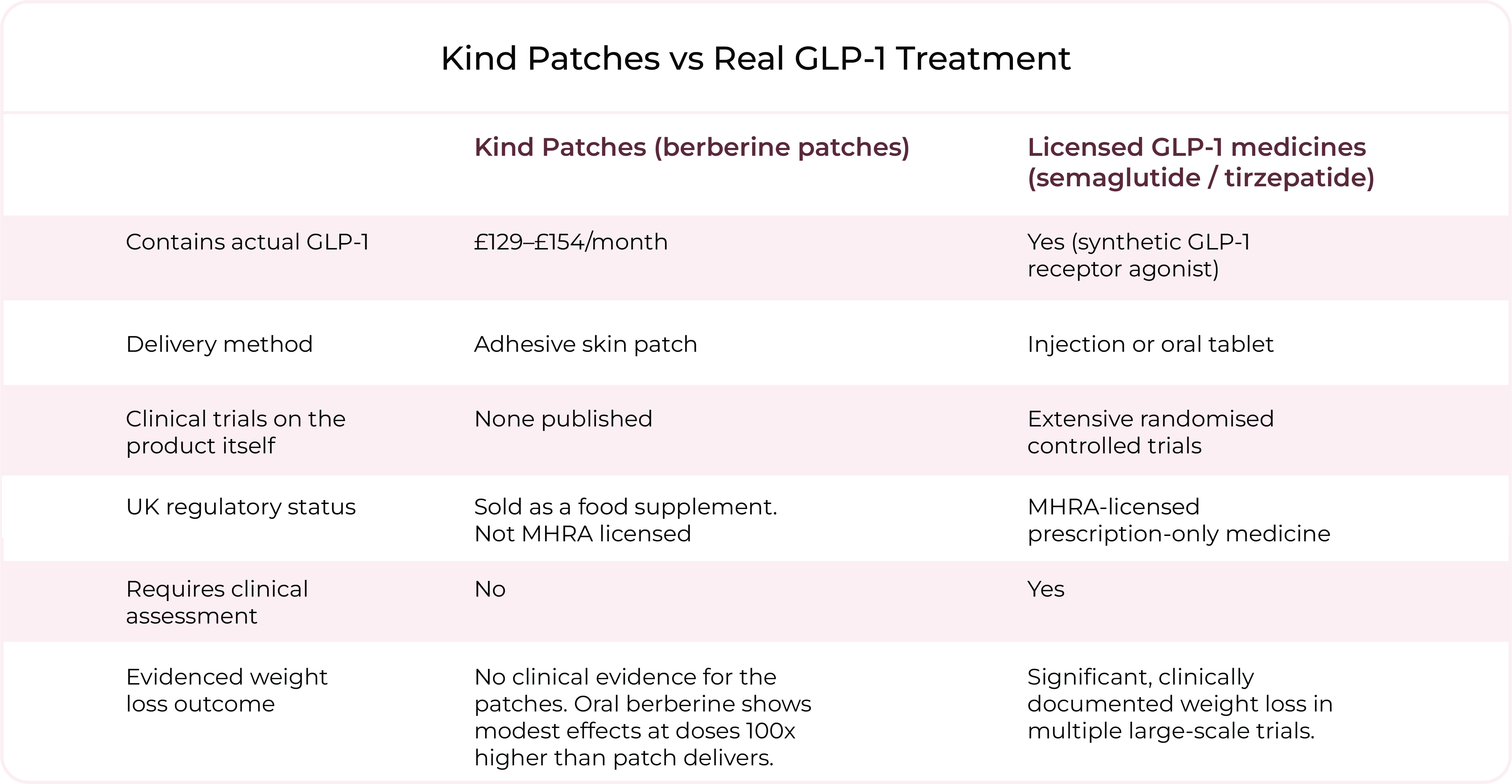
Kind Patches vs Real GLP-1 Treatment
What Actually Helps With Sustainable Weight Loss
Clinically Supported Treatment Options
Oral semaglutide, or the Wegovy Pill, the needle-free alternative to GLP-1 injections is now available in the UK since June 2026. It contains the same active ingredient as the injection, works through the same mechanism, requires no needles and no refrigeration, and has clinical trial evidence showing up to 16.6% average weight loss at 64 weeks with full treatment adherence.
It requires a prescription and hence a clinical assessment, including a blood test to understand your metabolic baseline before. This is what makes it significantly different and effective than the patches.
Sounds like something that would suit your lifestyle? Know more about it - weight loss pills that actually work in the UK →
Diet and Lifestyle Foundations
For women who are not yet eligible for or interested in medication, protein-forward eating, resistance training twice a week, adequate sleep, and blood sugar management have always worked like magic. None of these require buying anything and all of them have evidence.
Practical guidance on our diet and nutrition blog →
Frequently Asked Questions
Do Kind Patches actually work for weight loss?
There is no published clinical evidence that Kind Patches produce weight loss. The patches contain berberine at doses far too low to match any clinical study showing a weight-related effect, and berberine has no evidence for weight loss when applied to the skin in any case.
Are Kind Patches legit?
Yes, when sold as supplements and not GLP-1 patches. But whether they are effective is a separate question, and on that the answer is no. They do not come with MHRA assessment of efficacy.
Do GLP-1 patches work?
No licensed GLP-1 patch exists anywhere in the world. GLP-1 is a peptide molecule that is far too large to cross the skin in amounts that can make a difference. Products calling themselves GLP-1 patches do not contain GLP-1. They are supplement patches using the GLP-1 name to imply a pharmacological equivalence they do not have.
Is there a real Ozempic or GLP-1 patch?
No. There is no licensed semaglutide or tirzepatide patch, and no GLP-1 patch of any kind has been approved by the MHRA or FDA. The needle-free alternative to GLP-1 injections is oral semaglutide in tablet form, approved by the MHRA in June 2026.
What are Kind Patches made of?
The current Kind Patches weight loss product (sold as a Berberine Patch) contains berberine HCl at approximately 8 to 9mg per patch, alongside pomegranate extract, cinnamon extract, B vitamins, L-glutamine, and chromium.
Are Kind Patches safe?
For most healthy adults, the patches are unlikely to cause harm. The most common reported issue is skin irritation at the application site. At the doses delivered through a patch, systemic effects from the ingredients are unlikely. However, a patch delivers too little to cause effect is not the same as independent evidence of safety.
What's the difference between Kind Patches and prescription weight loss medication?
Kind Patches are food supplements containing berberine and other ingredients, with no published clinical trials and no MHRA assessment of efficacy. Licensed GLP-1 medicines (semaglutide, tirzepatide) are prescription-only medicines that have gone through extensive randomised controlled trials, MHRA licensing, and require clinical assessment before prescribing. They produce clinically documented weight loss of 13 to 22% in large-scale trials. Kind Patches have no equivalent evidence.
Sources and Further Reading
1. MHRA – MHRA and Partners Reaffirm Prescription Weight-Loss Medicine Advertising Rules
2. ASA – Warning on Promoting Licensed and Unlicensed Prescription-Only Medicines for Weight Management
3. MHRA – Guidance Note 8: A Guide to What Is a Medicinal Product
4. NCCIH – Berberine and Weight Loss: What You Need to Know
7. NCBI StatPearls – Transdermal Medications (skin barrier and molecular weight limits)
8. PMC – Transdermal Drug Delivery Systems: Methods for Enhancing Skin Permeability
9. TODAY / NBC News – 'GLP-1 Patches' Are Viral Online, But Do They Work? Doctors Weigh In
The content on the SheMed blog is provided for general informational and educational purposes only. While SheMed provides professional weight loss services and strives to ensure the information shared is accurate and up to date, we make no representations or guarantees as to its accuracy, completeness, or timeliness. This content should not be taken as personal medical advice or a substitute for consultation with a qualified healthcare provider. Always speak with your doctor or licensed medical professional about your individual health or medical needs before starting any new treatment or programme. Never disregard or delay seeking professional medical advice because of something you have read on this site. SheMed is not responsible for any actions you may take based on the information provided in this blog.
Related Articles