
Menopause and Weight Gain: Why It Happens and What Actually Helps
Medically reviewed by Puja Vyas, Lead Clinical Pharmacist.
Menopausal weight gain is not a myth or a fad, it’s real. It is biology driven and not exactly by lack of discipline. The declining oestrogen during menopause reshapes how your body stores fat, slows your metabolic rate, and increases insulin resistance, all at the same time.
Up to 70% of women gain weight during perimenopause and menopause. The average is around 2 to 5kg over the transition years. However, the range can vary widely. What makes this phase distinct is not just the amount of weight, but where it lands and why it is harder to overcome it using the traditional methods.
While this article is focused on menopause and weight gain, we’ve written a full guide on the menopause that will give you an overview of menopause symptoms, causes and what to expect →
Why Does Menopause Cause Weight Gain?
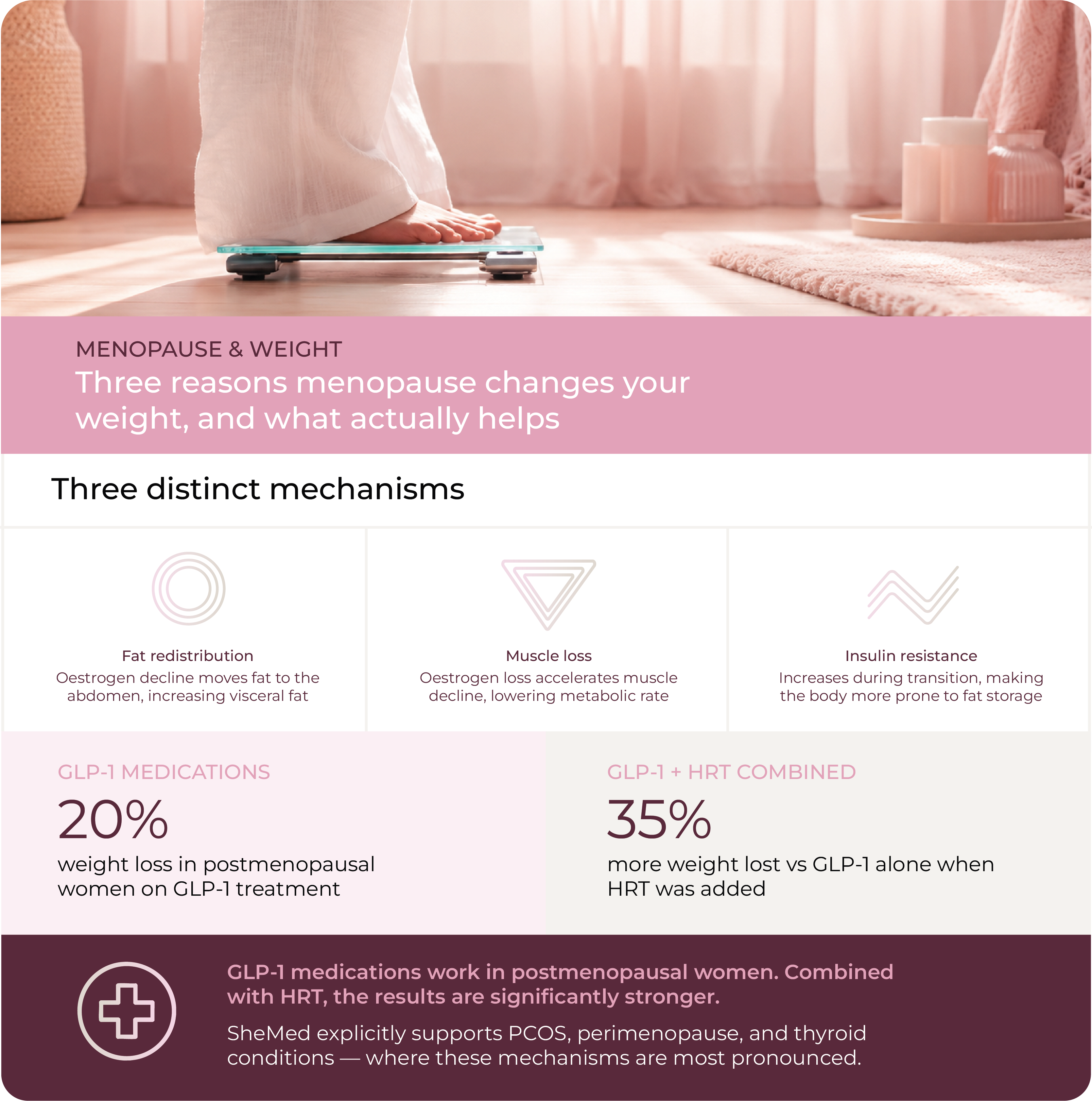
There are mainly three biological mechanisms that happen simultaneously during your menopause transition -
Reducing Oestrogen and Fat Redistribution
During your reproductive years, oestrogen promotes fat storage in your hips, thighs and buttocks. This is what many refer to as the pear shape. But when the oestrogen levels start declining, the hormonal signal disappears, and your body goes back to its default pattern of storing fat centrally, around the abdomen and organs. This is called visceral fat.
Visceral fat is not just a cosmetic change. It is metabolically active tissue that produces inflammatory signals, worsens insulin resistance, and increases cardiovascular risk. This is why the shift in fat distribution caused by menopause is not just an aesthetic problem, but a clinical one.
Slower Metabolism and Muscle Loss
We know that our muscle mass naturally declines with age. Oestrogen protects your muscles by reducing inflammation, stabilizing cell membranes, and supporting cellular energy. So its menopausal loss accelerates muscle loss. And less muscle means a lower resting metabolic rate, meaning fewer calories burnt at rest even when eating and moving the same amount as before.
This is one of the reasons women often say that things that worked in their 30s simply stop working in their late 40s and 50s. It’s because their biology has changed underneath them.
Insulin Resistance During the Menopause Transition
Oestrogen also plays an important role in insulin sensitivity by enhancing cellular signalling pathways, promoting glucose uptake in muscles, and reducing inflammation. As it declines, cells become less responsive to insulin, and the body compensates by producing more of it. The elevated insulin in the body then promotes fat storage, particularly of the visceral kind, and drives cravings for high-sugar, high-carbohydrate foods.
This means that women who already have PCOS or metabolic syndrome enter menopause with a compounded metabolic challenge.
Read to know more about PCOS and menopause: what changes and what doesn't →
You see, none of these three are about eating more. They are all about how your body processes and stores energy differently without oestrogen.
How Much Weight Do Women Typically Gain?
The data
The average weight gain during the menopause transition is approximately 2 to 5kg. However, the range can vary widely from woman to woman. What is more important to know that this weight gain is not simply a gradual one that happens with age. Menopause accelerates it and even changes where your weight gets deposited.
Some women might gain very little on the scales but may notice a significant change in body composition, like less muscle, more fat, particularly centrally. Others gain more weight in a shorter period. The number on the scale often doesn’t show the full picture.
Is Menopause Weight Gain Avoidable?
Yes, partially. You may not be able to prevent the hormonal changes that drive it. But you can surely influence how your body responds to those changes.
- What you cannot fully control: the decline in oestrogen, the shift in fat distribution, the reduction in muscle mass, and the increase in insulin resistance.
- What you can influence: how much muscle you maintain through resistance training, how your diet supports blood sugar stability, how much sleep you prioritise, and whether you address insulin resistance and, if appropriate, hormonal changes with clinical support.
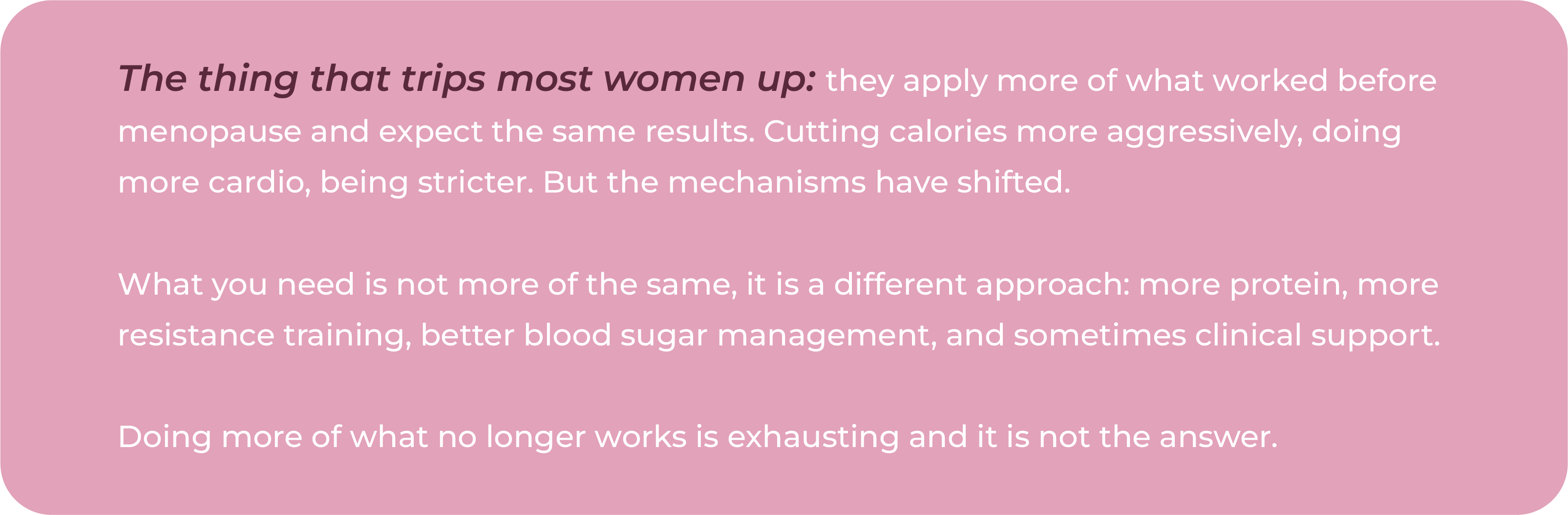
The thing that trips most women up: they apply more of what worked before menopause and expect the same results. Cutting calories more aggressively, doing more cardio, being stricter. But the mechanisms have shifted.
What you need is not more of the same, it is a different approach: more protein, more resistance training, better blood sugar management, and sometimes clinical support.
Doing more of what no longer works is exhausting and it is not the answer.
Lifestyle Approaches That Help
Nutrition: Protein, Fibre and Blood Sugar
The most effective and evidence-supported diet for menopausal weight management is the one that stabilises blood sugar and preserves muscle. This is what it looks like -
- Protein at every meal: 25 to 30g per meal. Eggs, fish, chicken, Greek yoghurt, legumes. Protein preserves muscle mass, extends satiety, and dampens the insulin response to carbohydrates.
- Low glycaemic index carbohydrates: oats, legumes, non-starchy vegetables, berries. These minimise insulin spikes that promote fat storage.
- Reducing alcohol: alcohol worsens night sweats, disrupts sleep, and is processed as sugar.
- Consistent meal timing: skipping meals, particularly breakfast, worsens blood sugar dysregulation.
Resistance Training for Muscle and Bone
Cardio helps, but resistance training is more effective directly for menopausal weight management. Building and maintaining muscle mass increases your resting metabolic rate, the amount of calories your body burns at rest. It also improves insulin sensitivity, and protects bone density, which also declines with oestrogen loss.
Two sessions per week of resistance training, whether that is bodyweight exercise at home, resistance bands, or gym weights, consistently shows benefit. You don’t need to go all-in on day 1. Consistency is what matters the most.
Sleep and Stress
Lack of sleep/poor sleep raises the cortisol (stress) levels in your body. This directly worsens insulin resistance and makes you crave energy-dense foods. Night sweats compound the problem by physically disrupting sleep quality. Managing night sweats, whether through HRT, lifestyle adjustment, or non-hormonal options, can directly help with weight and metabolism.
Chronic stress has the same cortisol effect in your body. Sleep and stress management should not be taken as optional extras by women during menopause. They are metabolically significant.
When Lifestyle Changes Are Not Enough: Medical Options
How GLP-1 Medications Work for Menopausal Weight Gain
Medications like Wegovy and Mounjaro work by mimicking a gut hormone that tells your brain when it’s full, slows digestion and improves insulin sensitivity. These address the same problems that menopause usually causes; insulin resistance, increased appetite, and visceral fat accumulation.
A 2025 post-hoc analysis of the SURMOUNT trial found tirzepatide produced approximately 20% weight loss in postmenopausal women, with a 20cm reduction in waist circumference, consistent with results in premenopausal women. GLP-1 medications appear to work across reproductive stages.
The Wegovy Pill: A Non-Injectable Option
We’ve seen some women who do not prefer injections and that was what stopping them from starting a treatment that actually works. The Wegovy pill has now solved for that.
It was approved by the MHRA in June 2026 and contains the same active ingredient as the Wegovy injection, semaglutide. It achieved an average weight log of 13.6% at 64 weeks in the OASIS 4 trial.
Sounds interesting? Know more about Wegovy pill →
Why Blood Testing Matters Before Starting Treatment
Irrespective of the treatment you choose, it is important to ensure that it is the right one for you. And that can be done only using a blood test.
Thyroid function, HbA1c, fasting glucose, cholesterol, and liver enzymes are all affected by the menopause transition, and all can influence both eligibility and response to treatment.
We do not recommend starting GLP-1 treatment without knowing your metabolic baseline. It’s just not responsible for prescribing. And this is why we, at SheMed, include at-home blood test with every plan.
Start with a clinical assessment: SheMed treatment plans →
Related: perimenopause and GLP-1 agonists →
Menopause, HRT and GLP-1 Together
There’s evidence now that shows that HRT and GLP-1 medications can work beautifully together. A 2026 Mayo Clinic study found that women on both tirzepatide and HRT lost 35% more weight than those on tirzepatide alone.
The logic here seems to be that the oestrogen replacement restores some of the hormonal environment that makes weight management easier. And GLP-1 medications work on the appetite and insulin resistance side. The research in this area is increasing rapidly because of the promising results.
If you are considering both, please do discuss about the the interaction between oral progestogen and GLP-1 with your prescriber.
Menopause touches almost every part of a woman's health, from the symptoms you feel day to day, to whether HRT is right for you, to how your weight changes, to how it overlaps with conditions like PCOS. We've written a dedicated guide on each of these so you can go as deep as you need to on the parts that matter most to you right now.
- Menopause symptoms and causes: what's actually happening →
- Menopause symptoms beyond hot flushes: joint pain, fatigue, anxiety and hair loss →
- HRT for menopause: benefits, risks and alternatives →
- Menopause testing: blood tests, home kits and what they show →
- Average age of menopause in the UK: what shapes your timing →
- PCOS (PMOS) and menopause: how they interact →
Frequently Asked Questions
Why do I only gain weight around my stomach after menopause?
Oestrogen promotes fat storage in the hips and thighs during your reproductive years. When oestrogen declines at menopause, the body defaults to storing fat centrally, around the abdomen and organs.
Can HRT help with menopause weight gain?
HRT does not cause weight loss directly, but by restoring oestrogen it may reduce the hormonal driver of fat redistribution toward the abdomen. A 2026 Mayo Clinic study found that women on both tirzepatide and HRT lost 35% more weight than those on tirzepatide alone.
Do GLP-1 medications work differently during menopause?
No, they appear to work consistently regardless of menopausal status. A 2025 analysis of the SURMOUNT clinical trial found tirzepatide produced approximately 20% weight loss in postmenopausal women, similar to results in premenopausal women. GLP-1 medications are particularly relevant at this stage because they directly address insulin resistance and visceral fat accumulation, the very metabolic changes that menopause drives.
How long does menopause weight gain last?
The changes in fat distribution and metabolic rate typically occur during perimenopause and the first few postmenopausal years. The weight does not keep accumulating, but without active management it often stays, because the underlying hormonal environment that made it easier to maintain weight has changed permanently.
Is it harder to lose weight during perimenopause than after menopause?
Many women find perimenopause the most challenging phase because hormone levels are fluctuating unpredictably, which can drive variable appetite, energy, and mood. After menopause, levels stabilise at a lower baseline, and some women find weight management more consistent. However, the metabolic changes driving weight gain, particularly insulin resistance and visceral fat accumulation, persist postmenopause without active management.
Sources and Further Reading
1. British Menopause Society – What Is the Menopause? (January 2026)
2. NHS – Menopause and Perimenopause Symptoms
3. National Institute on Aging – What Is Menopause?
5. Cureus – GLP-1 Receptor Agonists for Obesity and Symptoms in Menopause: A Review (2025/2026)
6. RAND Corporation – GLP-1 Agonists in Perimenopause: Unique Risks and Potential Opportunities (August 2025)
7. NICE – Semaglutide (Wegovy) for Weight Management, TA875
The content on the SheMed blog is provided for general informational and educational purposes only. While SheMed provides professional weight loss services and strives to ensure the information shared is accurate and up to date, we make no representations or guarantees as to its accuracy, completeness, or timeliness. This content should not be taken as personal medical advice or a substitute for consultation with a qualified healthcare provider. Always speak with your doctor or licensed medical professional about your individual health or medical needs before starting any new treatment or programme. Never disregard or delay seeking professional medical advice because of something you have read on this site. SheMed is not responsible for any actions you may take based on the information provided in this blog.
Related Articles