Average Age of Menopause: What to Expect and When

Medically reviewed by Puja Vyas, Lead Clinical Pharmacist.
The average age of menopause in the UK is 51. Most women here reach menopause between the ages of 45 and 55, with more than 80% by the time they are 54. Menopause is considered early if it comes before 45, while premature if before 40.
It is important to know that these are averages, not predictions, and several factors influence where you personally fall on that range.

What Is the Average Age of Menopause in the UK?
If you do not get a period for 12 consecutive months, you can confirm it to be menopause. In the UK, this usually happens around the age 51. According to the British Menopause Society's January 2026 patient information, more than 80% of the women reach their menopause by the age of 54.
The typical age range for menopause is between 45 and 55. Women from non-white ethnic backgrounds may experience menopause slightly earlier on average. But we do not have sufficient UK-specific data to confirm this.
Why 51 Is an Average, Not a Rule
While 51 is the average menopausal age in the UK, 47 should not be considered early and similarly 54, late. Both are well within the normal range. 51 comes from population data and reflects where most women cluster, not where any individual woman will land.
What does this mean for you? It means that if you are 44 and noticing cycle changes, that can be normal perimenopause, not early menopause. And if you are 53 and still having irregular periods, that too is within the expected range. Your timing is your own.
Read more about symptoms and stages here -> menopause symptoms, causes and what to expect →
What Age Does Perimenopause Start?
Perimenopause is the transition phase before your final period. It usually begins in the mid to late 40s. However, it can start in the early 40s or even late 30s for some women. It can last up to 4 to 8 years, but the range can be wide.
This is the phase when most of the menopausal symptoms begin. These include irregular periods, hot flushes, night sweats, mood changes, and sleep disruption. And because the periods don’t stop during this phase, many women (sometimes even their GPs), attribute these symptoms to stress or other causes, delaying recognition.
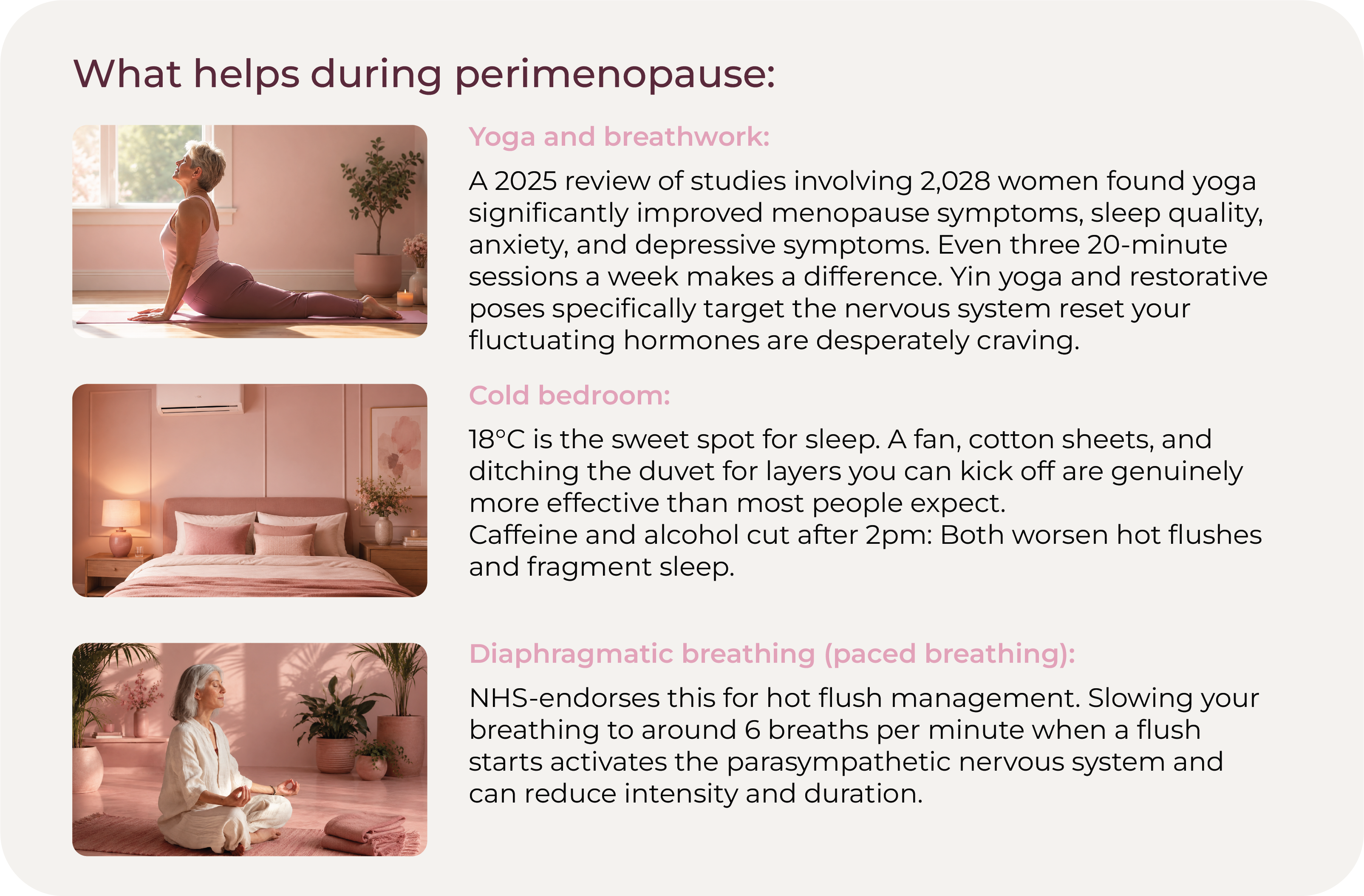
What helps during perimenopause:
Yoga and breathwork:
A 2025 review of studies involving 2,028 women found yoga significantly improved menopause symptoms, sleep quality, anxiety, and depressive symptoms. Even three 20-minute sessions a week makes a difference. Yin yoga and restorative poses specifically target the nervous system reset your fluctuating hormones are desperately craving.
Cold bedroom:
18°C is the sweet spot for sleep. A fan, cotton sheets, and ditching the duvet for layers you can kick off are genuinely more effective than most people expect.
Caffeine and alcohol cut after 2pm: Both worsen hot flushes and fragment sleep.
Diaphragmatic breathing (paced breathing):
NHS-endorses this for hot flush management. Slowing your breathing to around 6 breaths per minute when a flush starts activates the parasympathetic nervous system and can reduce intensity and duration.
Here’s a related article if you’re interested to know more about perimenopause and GLP-1 agonists: what women need to know →
What Affects the Age Menopause Starts?
Genetics and Family History
The age at which your mother got her menopause is going to be the strongest predictor of your own. Research that a family history of early menopause, before age 46, is associated with a 6-fold increased likelihood of early menopause.
So, if your mother, sister, or even maternal grandmother reached menopause early, it is worth mentioning it to your GP or clinician. It’ll get easier for them to attribute symptoms accurately.
Smoking
Smoking is another highly influential factor for your menopausal starting age and a core reason behind early menopause. Studies show that smokers reach menopause 1 to 2 years earlier than non-smokers on average. The heavier and longer you’ve been smoking, the more significant the effects. This is because it directly introduces toxins to the ovarian tissues and accelerates oocyte loss.
Quitting smoking may not restore oocytes that have already been lost, but it can definitely reduce further acceleration of the timeline.
Medical and Surgical Causes
• Chemotherapy and radiotherapy: Cancer treatment can damage the ovaries and bring on menopause early, sometimes immediately. HRT is often discussed in this situation, since the sudden loss of oestrogen at a younger age carries its own health considerations, though suitability depends on individual factors such as cancer type.
• Hysterectomy without ovary removal: does not cause immediate menopause, since the ovaries continue producing hormones, but some research suggests periods stopping can slightly accelerate ovarian ageing.
• Bilateral oophorectomy (removal of both ovaries): causes immediate surgical menopause regardless of age, because the source of oestrogen is removed completely.
• Autoimmune conditions: Conditions like thyroid disease, rheumatoid arthritis, and lupus, are associated with earlier menopause.
• Turner syndrome and other chromosomal conditions: can cause premature ovarian insufficiency from a young age.
Early and Premature Menopause
Early Menopause (Before 45)
40 to 45 is the age that if menopause occurs, it may be called as early. 5 out of 100 women in the UK experience this. The symptoms are the same as normal menopause, but an earlier phase means longer exposure to low oestrogen in the body, which in-turn increases the long-term risks to bone density and cardiovascular health.
Women who go through early menopause are generally advised to consider HRT, until the average age of natural menopause, which is 51 (unless there is a specific reason not to). This advice is not just for symptom management, but long term bone and heart health.
Premature Ovarian Insufficiency (Before 40)
POI or premature ovarian insufficiency is the loss of normal ovarian function before the age of 40. 1 in 100 women under 40, and 1 in 1000 under 30, in the UK experience it. Around 90% of cases are idiopathic, meaning no clear cause is identified.
Don’t confuse POI for early menopause. Unlike natural menopause, POI can be intermittent. The ovaries may occasionally resume some function, which means spontaneous pregnancy is still possible, though uncommon. Diagnosis typically requires two FSH blood tests taken 4 to 6 weeks apart, both in the menopausal range, alongside symptoms.
Surgical Menopause
When and if both ovaries are surgically removed, menopause is immediate (obviously). The hormone levels drop rapidly, rather than gradually here, which can mean more acute symptoms as compared to the natural gradual transition.
Women who have surgical menopause at a young age are at significantly higher risk of bone loss, cardiovascular disease, and cognitive effects from long-term oestrogen deficiency. This makes HRT both important and urgent in most cases.
Later Menopause
Menopause after the age of 55 can be considered a late one. It is less common, but yet within the normal spectrum. It is usually not a problem, however, the longer exposure to oestrogen in the body can have implications for certain hormone-sensitive conditions.
Just to be on the safe side, if you are 56 or older and your periods have not yet stopped, or have only recently become irregular, it is worth a GP review to confirm there is no other cause for the cycle changes.
If you’re one of them or just curious in general, you can know more about GLP-1 agonists and bone health in postmenopausal women →
What Happens After Menopause Starts
After you’ve had 12 consecutive months without a period, menopause is confirmed. Everything after that point is postmenopause and it lasts the rest of your life (this was worth mentioning directly).
You may find some symptoms ease here as your body gets used to the new baseline of lower hormone levels. But other things like bone density loss and cardiovascular risk need more monitoring now as lower oestrogen has lasting effects on both.
For women who reach menopause naturally around the average age (51 in the UK), postmenopausal health is typically about monitoring the metabolic health and staying active.
For the ones with early or premature menopause, active management with HRT and metabolic screening is more urgent.
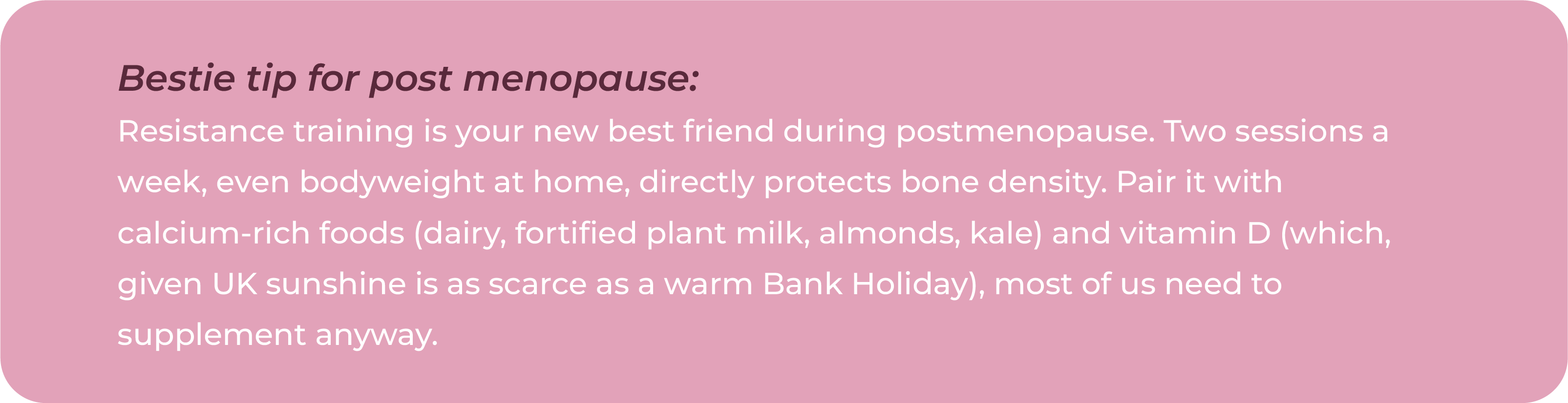
Related: menopause and weight gain: why it happens and what actually helps →
When to Speak to a Clinician About Timing
It is important for you to have a chat with your clinician if -
• You are under 45 and experiencing irregular periods, hot flushes, night sweats, or mood changes
• You have a strong family history of early menopause and want to understand your own risk
• You are experiencing symptoms of menopause before the age of 40
• You have had cancer treatment or surgery affecting your ovaries
• You want to discuss whether HRT is appropriate for your stage and timeline
GP is only the starting point for women in the UK. You may require a referral to a menopause specialist or gynaecological endocrinologist if POI is suspected or if your symptoms are poorly managed.
We can help you with a clinical assessment here. Check out our SheMed treatment plans →
Plans from only £59 for your first month!
To ensure you’re well informed, we’ve written a complete series on Menopause. Explore
Menopause symptoms and causes >
Average age of menopause in the UK: what shapes your timing →
Menopause symptoms beyond hot flushes: joint pain, fatigue, anxiety and hair loss →
HRT for menopause: benefits, risks and alternatives →
Menopause testing: blood tests, home kits and what they show →
Frequently Asked Questions
What is considered early menopause?
If menopause occurs between the age of 40 to 45, it is considered early. It affects around 5 in 100 women in the UK. The symptoms are the same as natural menopause, but the earlier timeline increases long-term risks to bone and cardiovascular health, which is why HRT until at least the average menopause age of 51 is generally recommended.
Can you predict when you'll go through menopause?
Yes, but not with precision. Your family history, including your mother’s, sister’s or even maternal grandmother’s menopause age can give you a strong hint about yours. Smoking, autoimmune conditions, and certain medical treatments can bring it forward. There is no single test that reliably predicts your personal menopause age in advance.
Does family history affect the age of menopause?
Yes, research shows that a family history of early menopause, before age 46, is associated with a 6-fold increased likelihood of you experiencing early menopause. If your mother or sister experienced menopause before their mid-40s, it is worth discussing this with a clinician so that your symptoms, if any, are recognised early and not attributed to other causes.
What is the difference between early menopause and premature ovarian insufficiency?
Early menopause refers to natural menopause occurring between ages 40 and 45. Premature ovarian insufficiency (POI) is the loss of normal ovarian function before age 40. POI is not simply early menopause because ovarian function can be intermittent in POI, meaning occasional periods and even ovulation may still occur, making spontaneous pregnancy possible though uncommon. POI also requires two separate FSH tests for diagnosis.
Does having children affect the age of menopause?
There is mixed evidence here, and tfhe effect, even if any, is not significant. Some research suggests that women who have had children may reach menopause slightly later than nulliparous women, possibly because of periods of reduced ovulation during pregnancy and breastfeeding. However, this is not a strong or consistent finding.
Sources and Further Reading
1. British Menopause Society – What Is the Menopause? (January 2026)
2. NHS – Menopause and Perimenopause Overview
3. NHS inform Scotland – Early and Premature Menopause
4. Leeds Teaching Hospitals NHS – Premature Ovarian Insufficiency (2025)
6. National Institute on Aging – What Is Menopause?
7. WomensHealth.gov – Menopause Basics
The content on the SheMed blog is provided for general informational and educational purposes only. While SheMed provides professional weight loss services and strives to ensure the information shared is accurate and up to date, we make no representations or guarantees as to its accuracy, completeness, or timeliness. This content should not be taken as personal medical advice or a substitute for consultation with a qualified healthcare provider. Always speak with your doctor or licensed medical professional about your individual health or medical needs before starting any new treatment or programme. Never disregard or delay seeking professional medical advice because of something you have read on this site. SheMed is not responsible for any actions you may take based on the information provided in this blog.
Related Articles
.webp)