
Menopause: Symptoms, Causes and What to Expect

Medically reviewed by Puja Vyas, Lead Clinical Pharmacist.
Menopause is a natural transition, not an ending. In the UK, it happens at an average age of 51, though most women notice symptoms years earlier, during perimenopause.
Around 13 million women in the UK are currently peri or menopausal. It is a normal biological process, but its impact on daily life can vary enormously for different people.
What Is Menopause?
12 consecutive months without a menstrual period is when you can confirm menopause. It basically marks the end of ovarian function. It doesn’t happen in one day, but rather the transition spans several years. You may go through 3 phases during these years -
The Three Stages: Perimenopause, Menopause and Postmenopause
- Perimenopause: This is the transition phase before your final period. The oestrogen and progesterone levels in your body will begin to fluctuate and decline, and most symptoms start here. It typically lasts 4 to 8 years, though it varies significantly. Your periods won’t stop but will become irregular.
- Menopause: The specific point that gets confirmed after 12 months without a period. In the UK, this happens at an average age of 51 and more than 80% of women reach it by 54.
- Postmenopause: Basically everything after that 12-month point. Your hormone levels will start to stabilize at a lower level. While some of your symptoms will ease, others, particularly those linked to long-term oestrogen loss, may require ongoing attention.
How Is Menopause Diagnosed
For women over 45, menopause is usually diagnosed on the basis of symptoms and cycle changes alone. You do not need a blood test to confirm it.
For women under the age of 45 who are suspecting an early menopause, blood tests measuring FSH (follicle-stimulating hormone) may be used. However, a single result is not always conclusive.
The NHS and British Menopause Society both advise that healthy women over 45 with typical symptoms do not require hormone testing to start treatment.
What Causes Menopause?
The Natural Decline in Oestrogen and Progesterone
The oestrogen and progesterone production by your ovaries naturally reduce with age. Both of these are the hormones that regulate your menstrual cycle. This is why after an age, once the production completely stops, you enter menopause.
These hormones, however, also affect your brain, bones, cardiovascular system, metabolism, and mood. As they decline, the effects are felt across multiple body systems simultaneously, which is why menopause symptoms are so varied.
Early and Premature Menopause
If your menopause occurs between the ages of 40-45, we can call it an early one, and if it is before 40, it's premature. Around 1 in 100 women in the UK experience premature menopause. It is also called premature ovarian insufficiency (POI).
There can be multiple reasons behind this, including -
- Surgical menopause: Removal of both ovaries causes immediate menopause, regardless of age, because the source of oestrogen is removed at once rather than gradually.
- Chemotherapy or radiotherapy: Cancer treatment can damage the ovaries, triggering early menopause.
- Genetics: A family history of early menopause increases the likelihood you may experience it too.
To protect bone density and cardiovascular health, women who experience early or premature menopause are advised to consider HRT (hormone replacement therapy).
Common Menopause Symptoms
Below are the most commonly seen symptoms during menopause -
Physical Symptoms
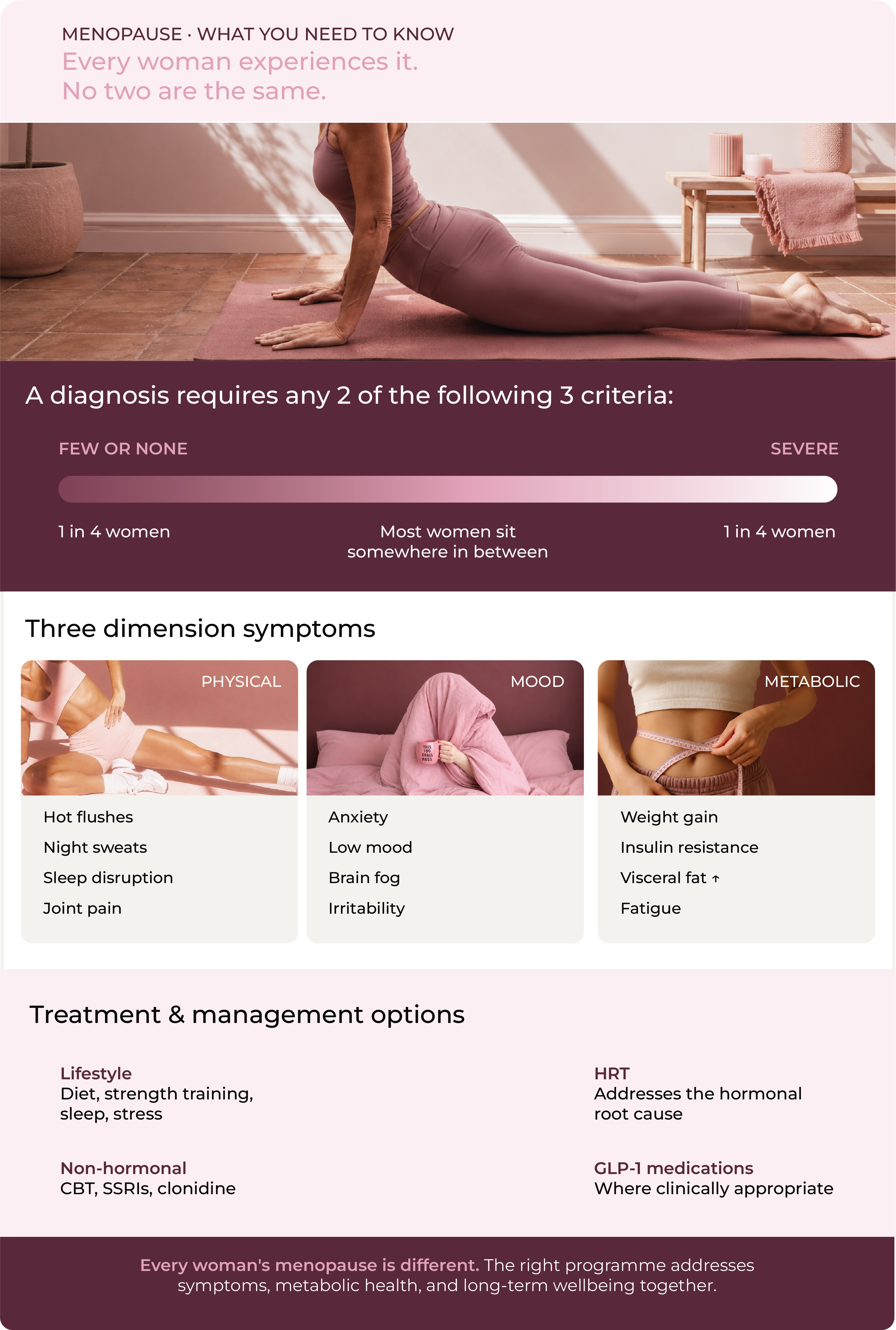
- Hot flushes and night sweats (affecting around 75% of women at some point)
- Irregular periods during perimenopause
- Sleep disruption, often linked to night sweats or changes in sleep architecture
- Joint and muscle pain
- Headaches
- Heart palpitations
- Changes in skin, including dryness and itching
- Vaginal dryness and changes in libido
It is difficult to generalise the symptoms of menopause as it may differ widely from woman to woman. While most women would experience some symptoms, the severity and combination can be very different for each. Around 1 in 4 women report severe symptoms that significantly affect day-to-day life, while 1 in 4 have very few or none.
Emotional and Cognitive Symptoms
These are the ones that we commonly see people on social media talk about -
- Mood changes: low mood, irritability, and heightened emotional sensitivity
- Anxiety, sometimes for the first time for women who have never faced it before
- Brain fog: difficulty concentrating, word-finding problems, and forgetfulness
- Reduced confidence and motivation
While these are very common, women find it difficult to associate them to menopause because they can very easily look like stress, depression, or burnout.
If this feels like you, please know that oestrogen has a direct effect on brain chemistry, including serotonin and dopamine pathways.
When to See a Doctor
Most of you would not think of consulting a doctor thinking of these symptoms as normal. But they can very much affect your day-to-day and even long term health in some cases.
So, please see your GP or a clinician if:
- Symptoms are affecting your sleep, work, relationships, or mood
- You are under 45 and have noticed irregular periods or menopausal-type symptoms
- You experience heavy or irregular bleeding that is new or changing
- You want to discuss HRT or other treatment options
How Long Does Menopause Last?
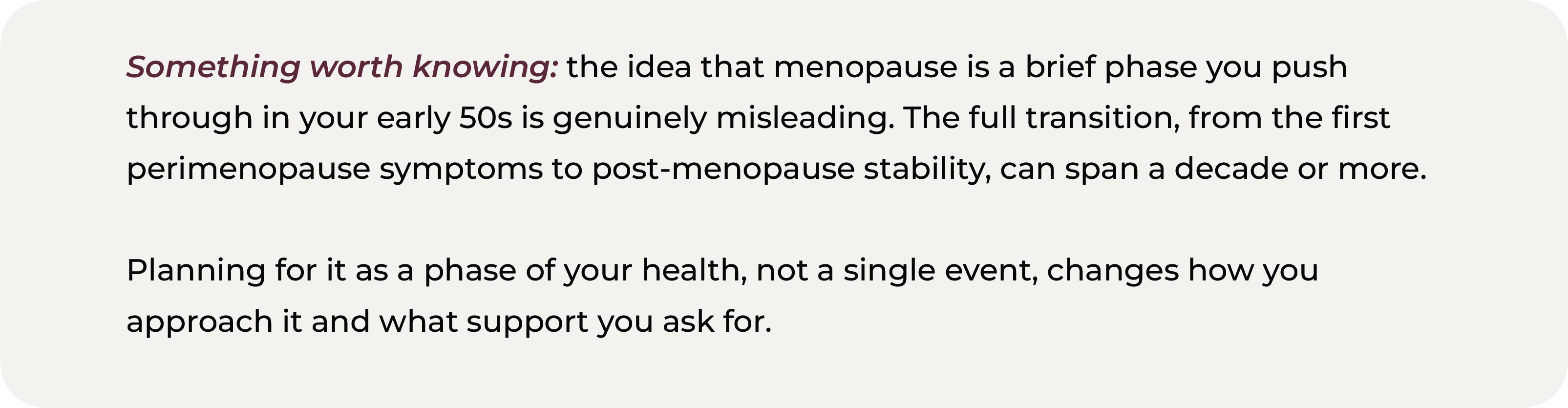
Perimenopause can begin 4 to 8 years before your final period. After menopause is confirmed, some symptoms, particularly hot flushes and night sweats, can continue for an average of 7 years. For some women, they can persist for longer.
The British Menopause Society confirms that for a large population of women, troublesome symptoms may continue long-term, well into the post-menopause phase. This is why an ongoing, well-planned management, rather than a single consultation with a doctor is what most women actually need.
Menopause and Weight: Why It Is Different at This Stage
Weight gain during menopause is one of the most common concerns women raise. It is important to know that it is not because of eating more or moving less.
The declining levels of oestrogen in your body affects how and where your body stores fat, usually increasingly visceral and around the abdomen. It also slows your metabolic rate, disrupts sleep, (which affects hunger hormones), and increases insulin resistance. Here, even the best diet and workout plans can produce less than expected results.
For women where weight is affecting health, quality of life, or menopause symptom severity, and where lifestyle changes have not been sufficient, clinician-led weight management is an option worth exploring.
Read about this more in detail: menopause and weight gain: why it happens and what actually helps →
How to Manage Menopause
Lifestyle Approaches
Changes in lifestyle can contribute a significant amount for most women for managing the menopause symptoms, especially for the ones that are worsened by poor sleep, high stress, and metabolic disruption.
Here are some tips that can help -
- Low-GI, protein-forward eating – It reduces insulin spikes and supports steadier energy
- Resistance training twice a week - It protects bone density and muscle mass, both of which decline with oestrogen loss
- Prioritising sleep – It has downstream effects on weight, mood, and symptom severity
- Reducing alcohol and caffeine, particularly around bedtime - It can significantly reduce night sweats
Evidence-based nutrition guidance on the SheMed diet blog →
Hormone Replacement Therapy (HRT)
HRT replaces the oestrogen (and progesterone, if you have a womb) that your body stops producing during menopause. It is the most effective treatment for hot flushes, night sweats, and mood symptoms. It can also protect your bone density and cardiovascular health when started before 60.
Non-Hormonal Options
- CBT (cognitive behavioural therapy) has good evidence for managing mood symptoms and hot flushes. You can access it via the NHS without a referral
- Antidepressants like SSRIs and SNRIs are sometimes prescribed for hot flushes in women who cannot or choose not to take HRT
- Acupuncture has also shown some evidence for symptom relief. It is available on the NHS in some areas
We've written a dedicated Menopause guide on each of these, so you can deep dive into all of the relevant topics via the links below:
- Menopause symptoms beyond hot flushes: joint pain, fatigue, anxiety and hair loss →
- HRT for menopause: benefits, risks and alternatives →
- Menopause testing: blood tests, home kits and what they show →
- Average age of menopause in the UK: what shapes your timing →
- Menopause weight gain: causes and treatment →
- PCOS (PMOS) and menopause: how they interact →
When Medical Weight Management Is Appropriate
GLP-1 medications like Wegovy and Mounjaro can make a significant difference for women whose weight is affecting health outcomes during or after menopause. They reduce visceral fat and improve insulin sensitivity, both of which directly address the metabolic changes that oestrogen decline drives.
Both are prescription medications available privately. At SheMed, we offer both, Wegovy and Mounjaro, including the newly launched oral pill form of Wegovy.
Explore SheMed's treatments→ or read about the Wegovy pill →
Start your consultation today →
Frequently Asked Questions
What is the average age for menopause to start?
The average age for menopause in the UK is 51, with most women experiencing it between 45 and 55. More than 80% of women are menopausal by age 54, according to the British Menopause Society.
What are the first signs of menopause?
The first signs of menopause include changes in your menstrual cycle, including irregular periods, longer or shorter cycles, or heavier or lighter bleeds. Hot flushes, night sweats, sleep disruption, and mood changes are also commonly seen as early symptoms. These typically occur during perimenopause, before periods have stopped entirely.
How long do menopause symptoms last?
Hot flushes and night sweats last an average of 7 years after menopause is confirmed, though for some women they persist longer. The full transition from the beginning of perimenopause to postmenopause stability can span a decade or more.
Is weight gain during menopause inevitable?
Not inevitable, but common and driven by real biological changes rather than simply lifestyle. Declining oestrogen shifts fat storage toward the abdomen, reduces metabolic rate, and increases insulin resistance. Targeted approaches, including low-GI eating, resistance training, and where appropriate clinical support, can make a meaningful difference.
Do I need a blood test to confirm menopause?
Not if you are over 45 and have typical symptoms. The NHS and British Menopause Society advise that women over 45 with menopausal symptoms can be diagnosed and treated without routine blood tests. For women under 45, or where the diagnosis is uncertain, FSH testing may be used alongside symptom assessment.
What is the difference between perimenopause, menopause and postmenopause?
Perimenopause is the transitional phase before your final period, when hormones fluctuate and symptoms typically begin. Menopause is the specific point confirmed after 12 consecutive months without a period. Postmenopause is everything after that point, when hormone levels have stabilised at a lower level and reproductive cycles have ended permanently.
Sources and Further Reading
1. British Menopause Society – What Is the Menopause? Patient Information Leaflet (January 2026)
2. NHS – Menopause and Perimenopause Overview
4. NHS inform Scotland – Menopause Overview
5. World Health Organization – Menopause Fact Sheet
6. National Institute on Aging – What Is Menopause?
7. Mayo Clinic – Menopause Symptoms and Causes
The content on the SheMed blog is provided for general informational and educational purposes only. While SheMed provides professional weight loss services and strives to ensure the information shared is accurate and up to date, we make no representations or guarantees as to its accuracy, completeness, or timeliness. This content should not be taken as personal medical advice or a substitute for consultation with a qualified healthcare provider. Always speak with your doctor or licensed medical professional about your individual health or medical needs before starting any new treatment or programme. Never disregard or delay seeking professional medical advice because of something you have read on this site. SheMed is not responsible for any actions you may take based on the information provided in this blog.
Related Articles