
PCOS (PMOS) and Mental Health: Anxiety, Depression and Mood Swings
Medically reviewed by Puja Vyas, Lead Clinical Pharmacist.
Been feeling a little low lately? Or just getting anxious, irritated, or emotional for no apparent reason?
If you have PMOS (PCOS before), that may be more to do with your body than your mind. We discuss the physical symptoms related to PMOS; your periods, weight, skin, and fertility. But here's one area that doesn't get enough attention : your mental health.
And honestly, it can be one of the toughest things to overcome. It's well documented that women experiencing PMOS are more likely to experience depression or anxiety than women not experiencing PMOS. So if you've been having difficulties with your emotions, don't ignore them or dismiss them and tell yourself you're just stressed.
You're not hallucinating.
In this article, we’ve covered the potential effects of PMOS on your mental health, the research, and more importantly, what you can do to help yourself.
If you are in crisis or thinking about harming yourself: Please call 999, call 111 and choose the mental health option, or call Samaritans free on 116 123 (available 24 hours, 7 days a week).
Key Takeaways
- Depression and anxiety are significantly more common in people with PMOS. Research shows the risk of depression may be more than twice as high compared with women without PCOS.
- This is an association, not proof that PMOS directly causes depression. Several factors are likely involved.
- Hormones, insulin resistance, visible symptoms, fertility worries, and years of feeling dismissed can all contribute to how you feel.
- Support works. Your GP is the first step, and NHS Talking Therapies is available to self-refer in England.
- Mood symptoms need a clinician, not a self-test. If you are worried about PMOS alongside your mental health, the PMOS Screening Kit checks hormones, not mental health, so please speak to your GP or NHS Talking Therapies too.
Is there any link between PMOS and mental health?
Absolutely yes! In fact, the connection is so significant that the 2023 International Evidence-Based Guideline for the Assessment and Management of Polycystic Ovary Syndrome urges screening for depression and anxiety in all women who have PCOS.
There's a reason you're advised as such. Several research shows that women with PMOS are more likely to experience mental health issues than those without the condition.
What does the research tell us?
Let's take a look at some numbers.
A 2023 review of research in the Journal of Clinical Medicine (Bojar et al.) considered 19 studies of a total of 4,002 women with PCOS. And here's what the researchers found:
- 31 % of women with PCOS were found to have depression.
- A woman with PCOS proved to be more than 2.5 times more likely to have depression than a woman without PCOS.
- The prevalence of depression has been reported to be between 16% and 55.6%.
That's a big difference, right?
Anxiety is also prevalent. Around 37% of women with PCOS are found to have experienced anxiety at some point of time in one study.
A 2024 systematic review overview (Pub Med 39453529) in the same way found a higher prevalence of depression and anxiety among women with PCOS against females from the general population.
And this link has been observed in other countries, ethnic groups and diagnostic criteria.
Does this mean depression is caused by PMOS?
Not quite. And this is an important difference.
Research has also found PMOS is highly correlated with mental health issues. But, this doesn't necessarily suggest PMOS is the cause of depression and anxiety. Actually, that's probably a little simplistic. There could be a cross-influence between the two conditions.
There are a number of ways to measure depression and anxiety, which can result in these figures differing from one study to the next.
One thing still is certain, there is a connection and it deserves our attention.
How PMOS Can Affect Your Mood, Anxiety and Stress?
Now this is where it gets interesting.
Are you thinking "if it messes with my hormones and reproductive health, then how is it affecting my mood"?
If so, there isn't really just one reason. It could be a few things.
1. Hormones & Insulin Resistance
You may already have discovered that PMOS is a hormone destroyer. But did you know you might also experience a change in mood?
PMOS has been linked with higher androgen levels, altered oestrogen and progesterone profile, and increased levels of the luteinising hormone.
Hormones aren't just about your period and your sex life. They also have a role in your brain chemicals, including serotonin and dopamine that are responsible for regulating your mood. In particular, a few studies have linked higher androgen levels with poor mood and heightened irritability.
You also have to consider insulin resistance. Women with PMOS often have insulin resistance. That means the body isn't responding to insulin as well as it should.
You can read moore about this here: Insulin Resistance and PMOS.
You may experience changes in your blood sugars that impact on your energy levels, your ability to concentrate and your mental health. Others also believe depression might be tied to low-grade, chronic inflammation, which occurs in PMOS as well.
This is not to say they are definitely the cause, but they are potential reasons. And they at least give us an idea of why PMOS goes beyond your reproductive health.
2. Dealing with Common Physical Symptoms
We understand that PMOS can be a pain sometimes. You have facial hair or acne, and you lose hair or gain weight. While all these issues are physical problems, they also impact how you perceive yourself.
Perhaps you'd rather not leave the house without covering up your acne. Perhaps you've been self-conscious about unwanted facial hair. Or perhaps you've been struggling to lose weight and aren't seeing the results.
You add these minor daily skirmishes, and eventually, they'll take a toll on you and your appearance. And those aren't the only symptoms. The dreaded skin tags and dark patches can be a nuisance and make most women miserable. We discussed it all in our separate post on acanthosis nigricans and skin tags.
Then you've had these physical transformations impacting your self-esteem, and you are not the only one. It's normal to be down or mad!
3. Fertility Concerns, Late Diagnosis and Feeling Dismissed
And of course, yet another emotionally taxing aspect of PMOS is : not knowing what's going on in your body.
Women give up years of their life trying to find out what is wrong with them before they finally get diagnosed. It takes an average of two years from first symptoms to diagnosis in the UK. Over that time some women will go back to their GP plenty of times and be told everything's down to weight, stress, or just that everyone gets these sorts of aches and pains.
Imagine how frustrating that would be.
One contributor to the Verity PCOS charity research blog called the perceived lack of understanding and support from clinicians "woeful". When you don't feel heard or listened to it makes an already tough thing even tougher.
And then there is fecundity.
For women trying to conceive, being unsure of ovulation and having irregular periods can be a real source of stress and despair.
We’ve written an article on PMOS and fertility if you feel like reading more.
If you're not actually trying to get pregnant, hearing that you have irregular ovulation might make you ask yourself, what does that mean for me? And with managing your symptoms and appointments and getting to know your own body, it can all get to you now and then.
4. Chronic Fatigue and Poor Sleep
Waking up feeling tired the next day? How much more difficult everything is!
That's because sleep and mental health are connected. It is also the case that women who have PMOS often have sleep problems. This could be because sleep problems like obstructive sleep apnoea may be more likely to affect women with PMOS.
It may also cause you to have difficulty initiating sleep or maintaining sleep. And when you're tired all the time, the small inconveniences of day to day living can seem like huge issues.
If you are not sleeping well, it can impact on how you feel, how much energy you have and how easily you can manage with the stresses of daily life.
Typical mood swings you may have with PMS
So what exactly should you be looking for? PMOS can cause many mental and emotional problems. Here are some of the more common ones.
1. Low Mood and Depression
Have you ever just felt sad and couldn't even come up with a reason? Or can't find the motivation to find joy in the things that normally brought you happiness?
There are times that this may happen to women with PMOS. And for some, this may persist and lead to clinical depression. The NHS say that depression is when someone often feels low or hopeless, almost every day, for two weeks or more.
You may find that you are:
- More often feeling sad or hopeless.
- Stop enjoying things you usually love.
- Can't seem to get motivated to do things.
- Feeling emotionally exhausted.
And this is the message we hope you'll remember most: Depression is not your fault.
You didn't do anything wrong. And it doesn't mean you are not strong enough. Hormone, biological, and several day-to-day emotional disturbances linked to PMOS may all be influenced.
So, don't blame yourself for your feelings.
2. Stress and anxiety
A woman with PMOS may sometimes have anxiety and depression at the same time.
Still, anxiety may not be as obvious as you'd think. This could be the case that you: are always in a state of worry, are tense, can't sleep well, and have a deep feeling that something bad is about to happen.
For years these women have been suffering with anxiety and no one has connected it to their PMOS symptoms. One woman was treated for anxiety over years before her PMOS symptoms came to light, a Stylist article says.
That is why there is value in taking a broader view of the problem rather than approaching the symptoms individually. When you're anxious, don't simply think, 'I need to relax and stop stressing out'.
Your feelings matter and it is okay to talk to a health professional.
3. Mood Swings and Irritability
One minute you're fine and the next you're angry, upset, or tearful. Does that strike a bell?
Women with PMOS often experience fluctuations in mood. Sometimes you feel irritable or tearful, but you don't know why.
There are a couple of reasons for this:
- During the menstrual cycle, hormones.
- Blood sugar spikes.
- Poor or disrupted sleep
Although there's one last thing that you should know. Swings of mood are NOT necessarily PMS or PMDD.
The symptoms can also be different for when they occur and how they follow each other. Not sure whether one is there to describe what is happening to you? You can read our article on PCOS vs PMS and PMDD.
Understanding the difference can also help you to have a more fruitful discussion with your GP.
When should you see your doctor?
We really want you to take this seriously. You shouldn't have to reach your breaking point to seek help for your mental health. Guideline recommends depression and anxiety screening for all women with PCOS as part of routine care.
If nobody has ever inquired about your mental health during your PMOS meetings, you can speak up and ask.
Signs You Need to Talk to Someone
Speak to your doctor if:
- You have felt down or hopeless most days for the past two weeks or longer.
- There are constant feelings of anxiousness or worry, and it's difficult to bring it back under control.
- Your sleep is disturbed by feelings of worry or depression.
- You have a sense of being overwhelmed, in tears or emotionally exhausted most of the time.
- You've started cancelling trips or making excuses to not go.
- You are thinking about hurting yourself.
If you are thinking about harming yourself, please seek help now. Below we will provide some resources you can contact for support.
What To Tell Your Doctor?
We know that this can be hard to talk about.
You might feel that you sense that there is something wrong but you are unable to describe it in a brief GP consultation. So, a couple of things might be helpful.
1. Explain your PMOS diagnosis to them
If you are experiencing some mood issues.
You can say:
I have been struggling with my mood recently. I am aware that PMOS can be linked to depression and anxiety and I would like to be assessed.
Ask away, don't be shy. It is recommended in clinical practice guidelines that mental health screening be conducted for women with PCOS.
2. What has changed? Explain.
Be clear with your doctor about what you've been experiencing and the duration of your symptoms.
For instance:
"I have been feeling pretty sad most of the last three months. I also find I can't seem to take any real pleasure in things I used to enjoy."
Providing your GP with a few examples may give him/her a clearer idea of what it is you experience.
3. Ask about available support
Never hesitate to ask what your options are.
You might like to inquire about NHS Talking Therapies - whether a PHQ-9 or GAD-7 assessment would be useful and whether your current PMOS treatment plan includes support for your mental health.
And remember you can ask questions, know your options.
What Makes You Feel Good?
Thankfully, there are many ways you can get help, and you don't have to do this on your own. Here are some effective ones -
1. Discussions on talking therapies and medical support
Sometimes it's good to talk to someone who understands.
Cognitive Behavioural Therapy (CBT) is one treatment for depression and anxiety.
It helps you understand the relationship between your thoughts, feelings, and behaviours, and it teaches you skills to manage difficult emotions.
If you're based in England, you can self refer into NHS Talking Therapies via their website. No referral from your GP required. Your GP may also discuss medical treatment for anxiety or depression, if this is right for you.
But remember, one modality won't be suitable for everyone. It's about the right type of support for your circumstance.
2. Make Small Changes to Your Movement, Sleep and Diet.
You're not expected to change everything immediately. Just a few minor shopping roughness habits to try at the outset might just be a good start.
Get going
Exercise is also good for your mental health and managing PMOS. And no, we are not suggesting you need to spend hours at the gym! Just a walk a few times each week for a 30-minute session can help. Select activities you like and that you will be able to do regularly. For ideas, check out our guide to PCOS-friendly exercise.
Be mindful of what you eat
A low-GI eating pattern might help to stabilise blood glucose levels. It may also help with mood swings. Then take a look at our PMOS-friendly food guide. Keep in mind, this information is meant to be a supplement, not a replacement for professional mental health care.
Treat your sleep with love
A good night's sleep can make more difference than you think.
Attempt to:
- Go to bed and wake up at roughly the same time every day.
- Limit screen time before bed.
- Limit caffeine, mainly in the afternoon.
With a few minor adjustments, you can get a better sleep and eventually help yourself to manage anxiety and low mood.
3. Treat the Symptoms of PMOS That Are Bothering You
This may sometimes be as simple as tackling the physical side of things that are really affecting your confidence, and because of this your mental health.
Could be the facial hair you don't want, acne, hair loss, weight changes or irregular periods. It's even more challenging when you're experiencing them every day.
Collaborating with your GP or specialist to formulate a comprehensive PMOS treatment plan can open the door to possible treatments for hormonal symptoms and insulin resistance. And as the physical symptoms become less of an issue, so too can the emotional struggles every day.
Check out our Complete Guide to PCOS and PMOS for everything you need to know about the condition, and how it is treated.
Where can you get help now?
If you are finding your mental health difficult, please do not think that you have to go at it alone. Here are some places you can visit.
NHS Mental Health Talking Therapies
NHS offers free psychological therapies for depression and anxiety all over England. You can contact them online yourself. There is no need to get a referral from your GP.
nhs.uk/talking-therapies is the place to start.
Need Help Urgently?
If you are in pain right now, seek help.
- 999: Call on emergency.
- 111: dial NHS 111 and choose the mental health option.
- Samaritans 116 123. It is free and runs 24/7.
Don't wait until it's worse to get support.
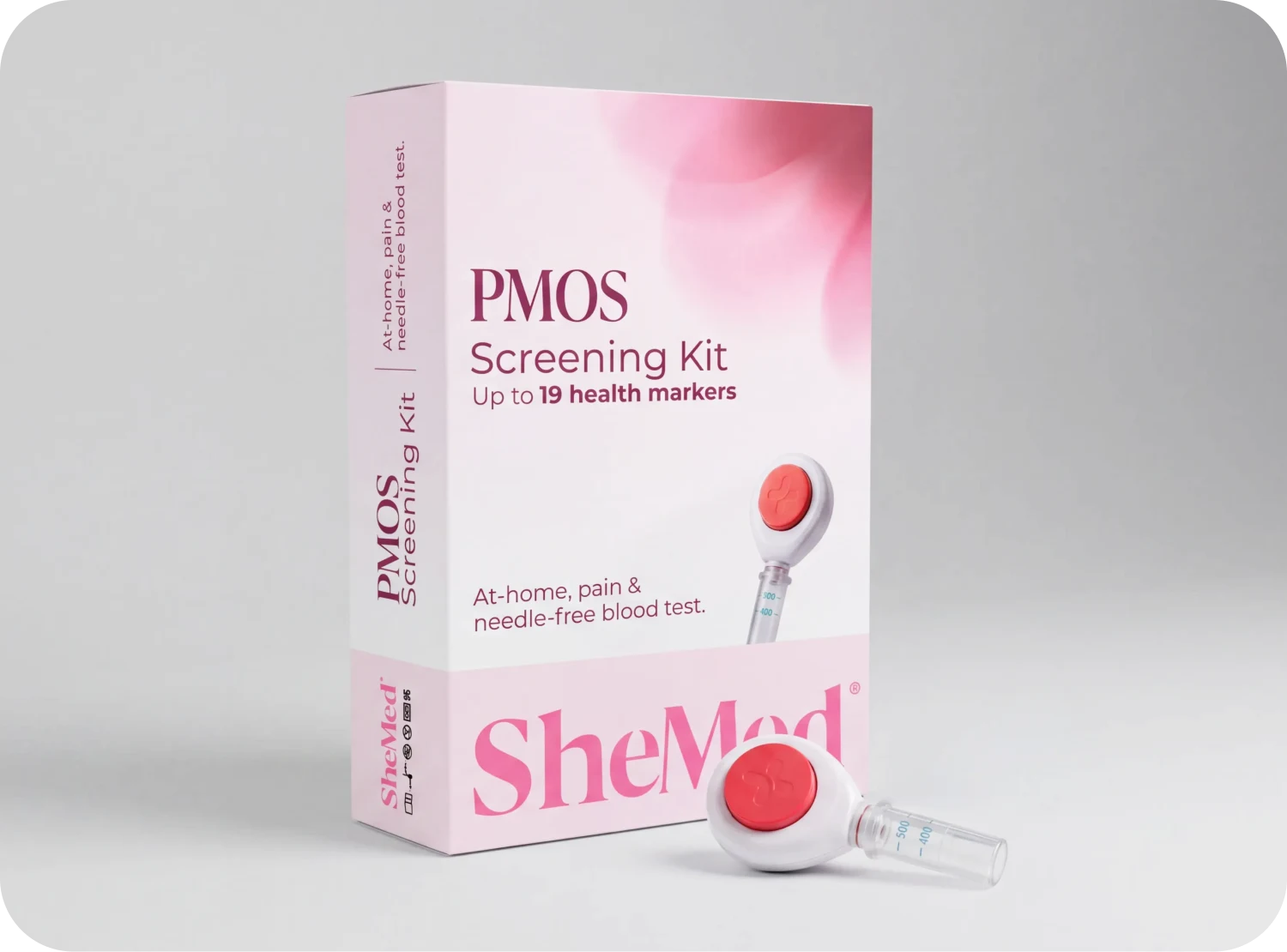
Wondering about your hormones? Try PMOS Screening Kit
You are here because you have been experiencing some symptoms that made you think you may have PMOS.
If you haven't been diagnosed, our PMOS Screening Kit can be used for additional testing. You can screen 19 hormone and metabolic markers at home. And have your results reviewed by a GP.
PINK FRIDAY OFFER
Think you might have PCOS (now PMOS)? Screen 19 health markers at home, reviewed by a clinician
PMOS Screening Kit. Was £149, now £99.
Bestie Tip
It's for the ladies out there who want to know if PMOS is behind the symptoms you're experiencing. The key point that you need to bear in mind is this : the kit itself is not a mental health check.
So if you've been feeling anxious, low, or overwhelmed, please do talk to your GP or NHS Talking Therapies too, apart from any hormone investigation.
Common Questions
Can PCOS cause anxiety and depression?
Women with PCOS have a much higher prevalence of depression and anxiety compared to women without PCOS. A 2023 meta-analysis indicated that women who have PCOS are 2.5 times more likely to be depressed.
Still this doesn't mean that PCOS causes depression. This association has been quite well established but researchers believe the association is much more complex.
Does PCOS cause mood swings?
Mood swings are very common among PCOS women. They can be due to hormonal fluctuations, to fluctuations in blood sugar levels, to interrupted sleep.
If you notice frequent irritability, tearfulness, or emotional changes that are hard to foretell, Remember that mood swings from PMOS are not always the same as PMS or PMDD.
Can depression be related to PCOS?
Depression is not part of Rotterdam formal diagnostic criteria for PCOS. It just doesn't mean that it has nothing to do with the disorder. The guideline also states that the 2023 international PCOS guideline recommends screening all women with PCOS for depression and anxiety.
Can depression cause PCOS?
Not on the evidence we have. Some studies have identified an association between depression and PCOS, although they did not establish that depression causes PCOS.
It may be the other way around. Researchers have speculated that prolonged stress and dysregulation of the cortisol may worsen hormonal imbalances but this has not yet been proved. So, both conditions cannot be defined as the mere result of the other.
How to Cure Depression with PCOS?
There's no one right treatment for everyone. Your GP or mental health specialist will be able to offer you advice about thinking through the options like CBT, Talking Therapies (NHS) and medication. Making adjustments to your lifestyle or medicine, to support your PMOS symptoms, could help you reduce some of the day-to-day stress. Getting the right support is key thing.
Is it common to feel anxious or overwhelmed when you have PMOS?
Yes. Coping with the day-to-day of living with PMOS can be difficult from managing physical symptoms, the confusion of not knowing if you can conceive, the hormonal rollercoaster and even feeling like you're not being heard.
When should I talk to my GP about my mood?
If you have felt depressed, anxious, or emotionally drained for two weeks or more, see your GP. If they are interfering with your daily life or becoming worse, get in touch as well. You can self refer to NHS Talking Therapies if you don't want to see a GP. Please don't wait until you're on the verge of madness to ask for help.
The Bottom Line
Irregular periods, changes in weight, and lack of fertility are just one aspect of the condition. It can have other effects, as well.
If you've been feeling anxious, feeling down or experiencing a change in emotions, this isn't in your head. The connection has been acknowledged by research and GPs are being told to be more aware of this.
But most importantly, you don't have to go through it alone. Speak to your GP. Find out about NHS Talking Therapies. Reach out and talk to someone you trust.
If you still have questions about whether PMOS could be the cause of your symptoms, our PMOS Screening Kit can provide you with a better insight to your hormones.
Take care of yourself. Your mental health is just as important as your physical health.
References
● International evidence-based guideline for the assessment and management of PCOS 2023 (PMC10505534)
● The overlooked mental health burden of PCOS (ScienceDirect, 2025 review)
● Depression in PCOS: pathogenesis and treatment — review of proposed causes (PMC9470949)
● NHS – PMOS (Polyendocrine Metabolic Ovarian Syndrome)
● NHS – Find NHS Talking Therapies for anxiety and depression
● NHS – Where to get urgent help for mental health
The content on the SheMed blog is provided for general informational and educational purposes only. While SheMed provides professional weight loss services and strives to ensure the information shared is accurate and up to date, we make no representations or guarantees as to its accuracy, completeness, or timeliness. This content should not be taken as personal medical advice or a substitute for consultation with a qualified healthcare provider. Always speak with your doctor or licensed medical professional about your individual health or medical needs before starting any new treatment or programme. Never disregard or delay seeking professional medical advice because of something you have read on this site. SheMed is not responsible for any actions you may take based on the information provided in this blog.
Related Articles

